Saint-Pierre-et-Miquelon, a small archipelago located off the coast of Newfoundland, has been a French colony since 1815. The islands have a unique history, having changed hands several times between France and Britain. In 1713, the Treaty of Utrecht ceded the islands to Britain, but they were returned to France in 1763. The Treaty of Paris that year stated that the islands would be used as a refuge for French fishermen and that France would not fortify the islands or establish any military presence.
The islands played a significant role in the American Revolutionary War. In 1778, British forces from Nova Scotia attacked the islands and deported many of the inhabitants, including Acadian refugees who had settled on the islands. The French navy was outraged by the attack, and it was seen as a serious breach of the Treaty of Paris. The islands were returned to France in 1783, but they were occupied by Britain again during the French Revolutionary and Napoleonic Wars.
After the Restoration in 1815, the islands were definitively returned to France. King Louis XVIII encouraged rapid resettlement of the islands, and by the end of 1816, around 600 people had settled there. The population grew further with the arrival of seasonal fishermen from France, who were attracted by the promise of financial incentives. In 1816, the French government offered subsidies to armateurs and négociants who participated in the cod fishery.
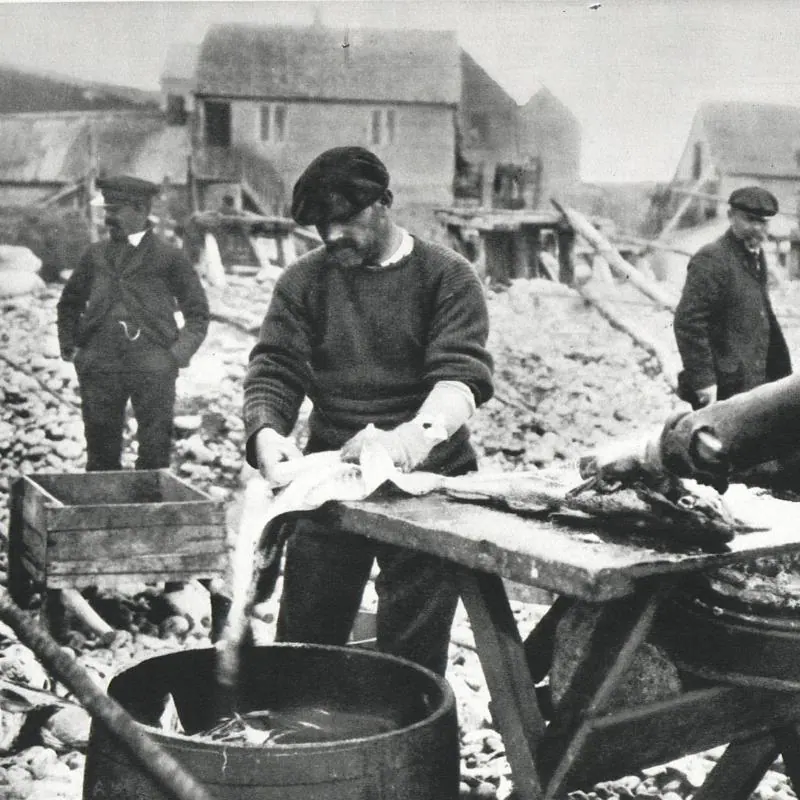
During the second half of the 19th century, the economy of Saint-Pierre-et-Miquelon experienced significant growth, driven primarily by the cod fishery. The islands' population swelled during the summer months with the arrival of thousands of fishermen from metropolitan France. The salted cod was exported to the Caribbean and Europe, and the islands developed modern infrastructure, including a post office in 1854 and municipal institutions in 1872.
Despite the economic growth, there was a lack of knowledge about the daily lives of the inhabitants of the islands. In 1877, the newspaper La Réforme économique attempted to provide a glimpse into life on the islands. The article described the islands' geography and population, which was around 3,704 in 1862. The population was divided between Saint-Pierre and the Miquelons, with 1,665 people living in Saint-Pierre and 670 on the Miquelons.
The French government continued to take an interest in the islands, and in 1889, a local bank was established. The press regularly published statistics on the islands' economy, including the number of boats departing from and arriving at the islands' ports. The islands' unique culture and way of life were shaped by their history and geography.
Key points
- The islands have changed hands several times between France and Britain, with France regaining control in 1815.
- The cod fishery has been a significant driver of the islands' economy since the 19th century.
- The islands have a unique culture and way of life shaped by their history and geography.