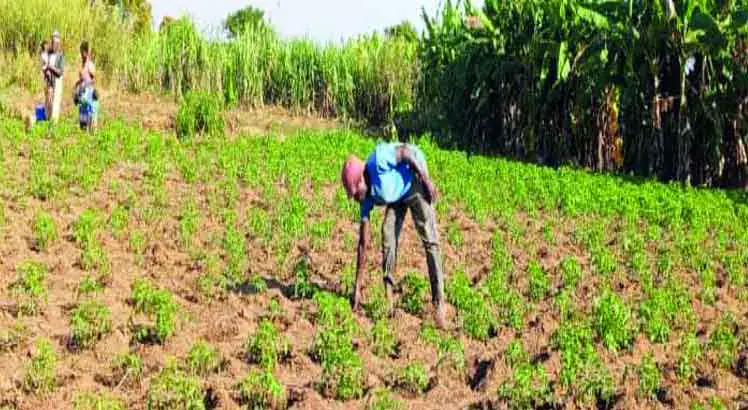
In M'gwali Village, Traditional Authority Chowe in Mangochi District, Malawi, Ajusu Saidi's story is one of resilience and determination. Like many young men in the district, Saidi initially sought greener pastures in South Africa but faced numerous challenges, including imprisonment and deportation. Upon his return, he found solace in small-scale irrigation farming, which has transformed his life. Saidi's farm has enabled him to acquire additional gardens, build a house, and purchase livestock.
Saidi's journey to farming was not straightforward. After being deported from South Africa, he felt defeated and welcomed back by his family, but also ridiculed by others. However, he chose to swallow his pride and start anew with irrigation farming. His hard work paid off, and he now boasts a thriving farm, which he credits with improving his life. Saidi regrets his time in South Africa, stating that if he had known how profitable farming was, he would not have wasted his time.
Despite his success, Saidi's irrigation farming faces challenges, including the physical demands of watering crops. He emphasizes the need for modern irrigation systems that utilize machinery to increase efficiency and productivity. Saidi welcomes the government's focus on irrigation farming as a strategy to combat food shortages and boost income but stresses that relying solely on human labor is insufficient.
Centre for Social Accountability and Transparency district officer Jacob Phiri shares Saidi's concerns, citing lack of awareness on how to benefit from irrigation farming as a significant challenge. Phiri suggests that farmers can leverage the Reformed K5 billion Community Development Fund (CDF) to acquire necessary equipment and seeds, thereby increasing production.
Phiri and Saidi agree on the importance of promoting small-scale farmers. Phiri encourages farmers to utilize the CDF effectively, while Saidi advises youths who have escaped xenophobic attacks in South Africa to consider farming as a viable alternative. Saidi sees himself as a prime example of how farming can be a successful and fulfilling venture.
Saidi's story serves as a testament to the potential of irrigation farming in Malawi. His experience highlights the need for support and resources for small-scale farmers, including access to modern irrigation systems and equipment. As the government continues to emphasize irrigation farming, stories like Saidi's demonstrate the positive impact it can have on individuals and communities.
Ultimately, Saidi's farming comeback offers a message of hope to others facing similar challenges. His determination and resilience have enabled him to build a better life through irrigation farming, and he encourages others to do the same. With the right support and resources, small-scale farmers like Saidi can thrive and contribute to Malawi's agricultural sector.
Key points
- Saidi's story highlights the potential of irrigation farming in Malawi as a means to improve livelihoods and combat food shortages.
Reporting sources
- Saidi’s farming comeback · The Nation