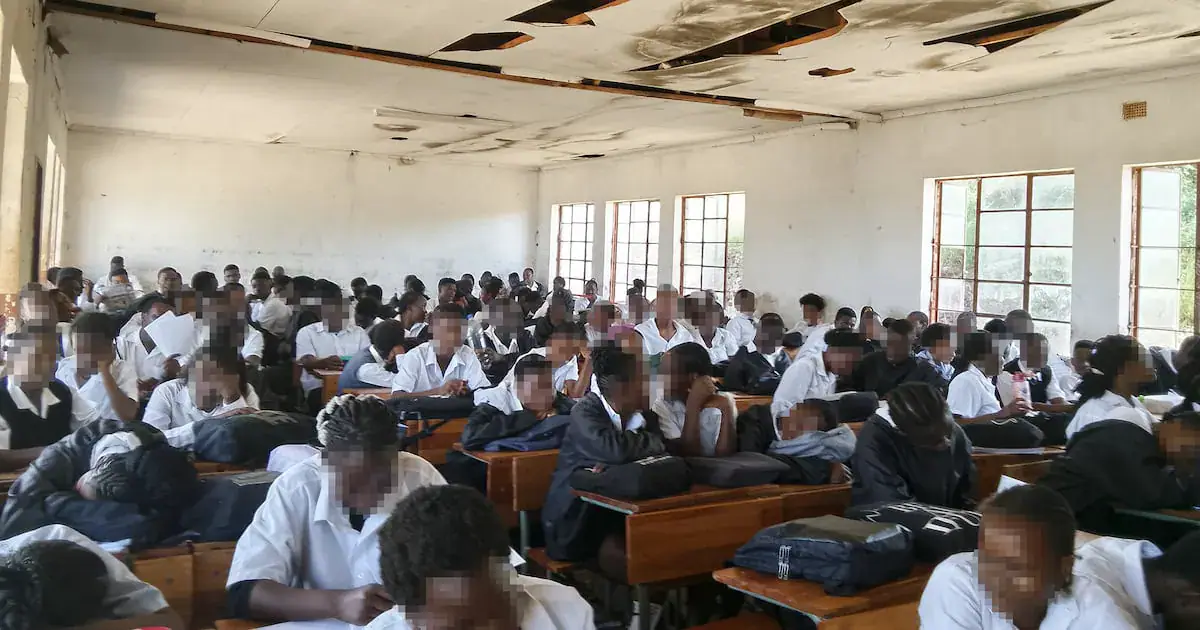
The South African Human Rights Commission (SAHRC) has raised concerns over the poor conditions in public schools across the country. According to their 2026 State of South African Schools report, dilapidated buildings, overcrowded classrooms, poor sanitation, and water shortages continue to undermine learners' right to basic education. The report was based on monitoring visits to 173 public schools in all nine provinces.
The commission's monitoring exercise, conducted during the first quarter of 2026, assessed various aspects of school infrastructure and services. These included infrastructure, water and sanitation, school safety, learner placement, learning and teaching support materials, scholar transport, nutrition, staffing, and learner support systems. The report highlighted that some provincial education departments, including Gauteng, Limpopo, and Free State, failed to respond to questions raised by the commission.
In Gauteng, commissioner Thonolo Modise noted that while schools were generally operational with adequate learning materials and functioning nutrition programs, concerns remained regarding infrastructure, overcrowding, sanitation, school security, and inclusive education. He cited delays in referring learners who required specialized educational support, with some cases taking up to a year to resolve due to limited capacity. Modise also highlighted challenges with learner placement and admission administration.
The SAHRC report also identified severe challenges in other provinces. In the Eastern Cape, monitors found dilapidated infrastructure, overcrowding, inadequate sanitation, water shortages, and shortages of textbooks and furniture. The province also faced educator vacancies and insufficient security. In Mpumalanga, monitors observed unsafe infrastructure, electricity and sanitation problems, and shortages of learning materials and staff.
Responding to the findings, acting Eastern Cape education representative Bathandwa Sonamzi acknowledged the province's infrastructure challenges. He attributed these to historical underdevelopment and insufficient funding, which continued to affect the province's ability to meet its constitutional obligations. Sonamzi stated that the province received approximately R2.3 billion annually through the Education Infrastructure Grant but needed an estimated R72 billion to address its infrastructure needs.
The SAHRC has made several recommendations to address the challenges facing public schools. These include developing time-bound infrastructure recovery plans, prioritizing structurally unsafe schools, and conducting province-wide audits of sanitation facilities. The commission also called for increased funding to address systemic problems facing schools and for provincial education departments to fill funded vacancies within defined recruitment cycles.
SAHRC commissioner Tshepo Madlingozi emphasized the need for increased funding to address the challenges facing schools. While acknowledging challenges related to poor planning and mismanagement in the education sector, Madlingozi stressed that additional funding was necessary to address systemic problems. The commission's recommendations aim to ensure that learners receive a quality education in safe and conducive environments.
Key points
- The SAHRC has called on provincial education departments to develop time-bound infrastructure recovery plans to address the dire conditions in public schools.
- The commission's report highlighted challenges in provinces such as Gauteng, Eastern Cape, and Mpumalanga, including dilapidated infrastructure, overcrowding, and inadequate sanitation.
- The SAHRC has recommended increased funding to address systemic problems facing schools and for provincial education departments to fill funded vacancies within defined recruitment cycles.
Reporting sources
- # 3 SAHRC raises alarm over school conditions nationwide · The Sowetan