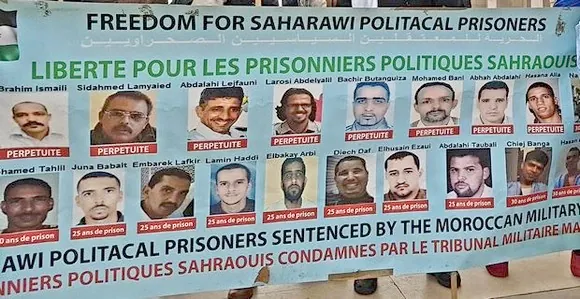
Khatri Dada, a Sahrawi civil detainee held in Asfi prison, Morocco, has started a 48-hour hunger strike to protest his detention conditions and show solidarity with fellow detainees from the Gdeim Izik group, who have been on hunger strike since September 23. His family reports that Dada has made multiple requests to be transferred to the occupied city of Smara, but to no avail. If his demands are not met, he may begin an open-ended hunger strike soon.
The Ligue pour la protection des prisonniers sahraouis dans les prisons marocaines is closely monitoring the situation and has called for intervention to address the detainees' demands. The organization holds the Moroccan prison administration responsible for the safety and well-being of the detainees. Meanwhile, several Sahrawi detainees from the Gdeim Izik group have been on an open-ended hunger strike for 12 days, with their families and Sahrawi organizations expressing concern about their health.
The families of Mohamed Bachir Boutenkiza and Abdallah Abhah, detained in Kénitra and Tiflet 2 prisons, respectively, have not been able to visit them or receive updates on their health since the start of their hunger strike. Two other detainees, Ahmed Sebaï and El-Houssein Zaoui, who suffer from chronic health conditions, have been placed in isolation and denied access to basic privileges.
Journalist Hassan Dahi has been subjected to severe disciplinary measures, including being stripped of his clothes and held in a disciplinary cell for six days. He was later transferred to Benguerir prison, where he was placed in a high-security quarter and denied basic privileges. His health has reportedly deteriorated due to the harsh conditions and his ongoing hunger strike.
The detainees' demands focus on being transferred closer to their families and improving their detention conditions. These concerns have been documented by international organizations, including Human Rights Watch, which has highlighted the dispersal of detainees from the Aqdeim Izik group across various Moroccan prisons and their use of hunger strikes to protest restrictions on family visits, medical care, and isolation.
The situation has raised concerns among human rights organizations and the Sahrawi community. The Ligue pour la protection des prisonniers sahraouis dans les prisons marocaines is advocating for the detainees' rights and calling for the Moroccan authorities to address their demands. The health and well-being of the hunger strikers remain a pressing concern as the situation continues to unfold.
International attention has been drawn to the plight of Sahrawi detainees in Moroccan prisons, with organizations like Human Rights Watch documenting their experiences. The cases of Khatri Dada and other detainees have highlighted the need for improved detention conditions and greater respect for human rights in Morocco's prison system.
Key points
- Sahrawi detainees in Moroccan prisons have begun hunger strikes to protest detention conditions and demand transfers closer to their families.
- The Ligue pour la protection des prisonniers sahraouis dans les prisons marocaines is advocating for the detainees' rights and calling for the Moroccan authorities to address their demands.
- International organizations, including Human Rights Watch, have documented the concerns of Sahrawi detainees and raised concerns about their treatment in Moroccan prisons.