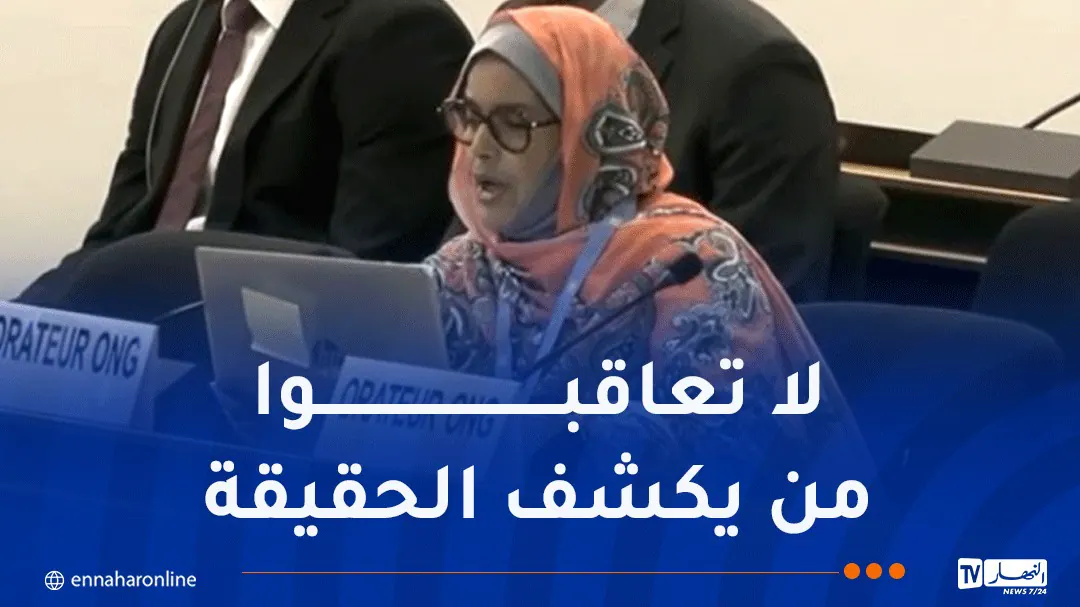
Sahrawi human rights defender Galia Abdullah recently spoke at the 63rd session of the UN Human Rights Council in Geneva, shedding light on the plight of civilians in occupied Western Sahara. She highlighted the suffering of Sahrawi civilians, particularly those who have been subjected to enforced disappearances, torture, and other human rights abuses by Moroccan security and intelligence agencies. Abdullah's testimony emphasized the need for international protection for human rights defenders who are working to expose these abuses.
Abdullah, a survivor of enforced disappearance, revealed that she has been denied basic rights, including access to electricity, despite winning two court judgments in her favor from Moroccan administrative courts. Her case is just one example of the many human rights abuses faced by Sahrawi civilians. The Moroccan government's restrictions on freedom of movement and assembly have created a climate of fear, making it difficult for human rights defenders to operate.
The Sahrawi activist pointed out that the international community's ability to protect human rights is being tested in Western Sahara. She argued that the lack of independent monitoring and the restricted access to the territory have created an environment where human rights abuses can thrive. Abdullah's testimony was supported by recent reports from the Committee Against Torture, which highlighted the cases of Sahrawi human rights defenders who have been imprisoned and tortured.
Abdullah emphasized that the situation in Western Sahara is not just a matter of individual cases, but rather a broader issue of the international community's ability to protect human rights. She called on the Human Rights Council to take action to protect human rights defenders, rather than punishing or silencing them. The Sahrawi activist's testimony was seen as a crucial moment in the ongoing efforts to raise awareness about the situation in Western Sahara.
The occupied territory has been a source of tension between Morocco and the Sahrawi people, who have been fighting for independence and self-determination. The international community has long called for a peaceful resolution to the conflict, but the situation remains unresolved. Abdullah's testimony highlighted the need for sustained international attention and pressure to bring about change.
The Sahrawi activist's case has garnered international attention, with many organizations and governments expressing concern about her situation. Her testimony at the Human Rights Council is part of a broader effort to raise awareness about the situation in Western Sahara and to push for greater accountability from the Moroccan government. The international community has a critical role to play in protecting human rights defenders and promoting justice and self-determination for the Sahrawi people.
As the situation in Western Sahara continues to unfold, human rights defenders like Galia Abdullah remain at the forefront of the struggle for justice and self-determination. Their courage and determination have inspired many, and their testimony has shed light on the darkest corners of human rights abuses. The international community must continue to support and protect human rights defenders, and to push for greater accountability from governments that perpetrate human rights abuses.
Key points
- Galia Abdullah, a Sahrawi human rights defender, testified at the 63rd session of the UN Human Rights Council in Geneva, highlighting the struggles of civilians in occupied Western Sahara.
- Abdullah, a survivor of enforced disappearance, revealed that she has been denied basic rights, including access to electricity, despite winning court judgments in her favor.
- The Sahrawi activist called on the Human Rights Council to protect human rights defenders, rather than punishing or silencing them, and to promote justice and self-determination for the Sahrawi people.