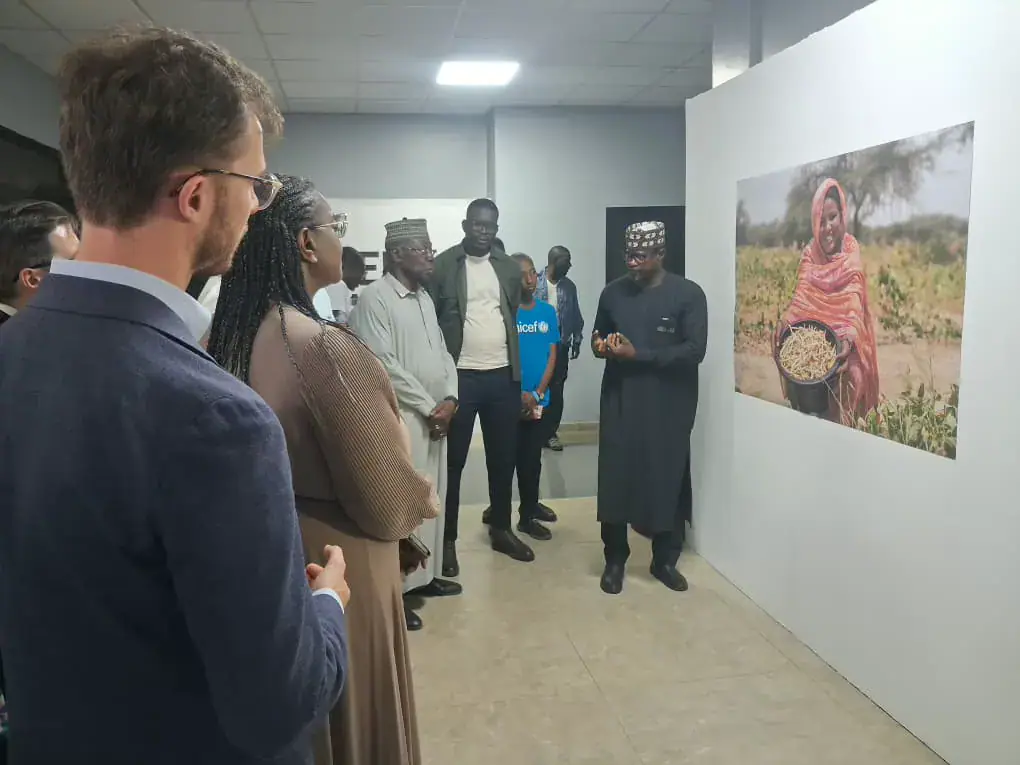
The Sahel Resilient photo exhibition recently opened at the Musée de la Femme Muso Kunda in Bamako, Mali. The event, which ran from November 26 to December 26, 2026, was part of the 15th edition of the Bamako Encounters, a biennial African photography exhibition. The exhibition was organized by the German Cooperation, through the GIZ, in collaboration with the World Food Programme and UNICEF. It showcased photographs and stories that highlight the capacity of Sahel communities to face climate, economic, and social challenges.
The opening ceremony was attended by several high-profile guests, including Amadou Diabaté, representative of the Minister of Handicrafts, Culture, Hospitality, and Tourism. Elhadj Diop, general delegate of the African Photography Biennale, and Juri Wiedemann, representative of the German Ambassador to Mali, were also in attendance. The event drew a large crowd of diplomats, international institutions, and cultural actors. In his speech, Amadou Diabaté praised the technical and financial partners for their support and expressed gratitude for their accompaniment.
Juri Wiedemann highlighted the importance of the Sahel Resilient exhibition, which aims to showcase a different side of the Sahel region. He noted that the region is often portrayed through images of crises, while the exhibition seeks to emphasize the creativity, courage, and initiative of its populations. The exhibited works demonstrate the communities' willingness to take charge of their future. Wiedemann emphasized that this vision aligns with the Partnership for Resilience in the Sahel, which focuses on complementarity of interventions.
The Partnership for Resilience in the Sahel is a collaborative effort between the GIZ, World Food Programme, and UNICEF. The partnership aims to strengthen local capacities and initiatives rather than imposing pre-made solutions. According to Wiedemann, resilience starts within communities, and women, young people, and children are best placed to understand their environment and develop adapted solutions. The partnership seeks to support these local initiatives to better prepare households and communities for various shocks.
The Sahel Resilient exhibition is part of a broader effort to promote resilience in the Sahel region. The region faces significant development challenges, including climate change, poverty, and insecurity. The exhibition's focus on community-led initiatives and solutions is seen as a key aspect of building resilience. By highlighting the creativity and adaptability of Sahel communities, the exhibition aims to inspire new approaches to development and cooperation.
The exhibition has been well-received by the public and stakeholders. Visitors have been invited to discover the exhibited works and learn about the experiences of Sahel communities. The exhibition's organizers hope that it will contribute to a greater understanding of the region and its challenges. By showcasing the resilience and adaptability of Sahel communities, the exhibition aims to promote a more nuanced and informed discussion about development in the region.
The Sahel Resilient exhibition will remain open until December 26, 2026. Interested parties can visit the Musée de la Femme Muso Kunda to view the photographs and learn more about the experiences of Sahel communities. The exhibition is seen as an important contribution to the ongoing discussion about development and resilience in the Sahel region.
Key points
- The Sahel Resilient exhibition showcases the capacity of Sahel communities to face climate, economic, and social challenges through photographs and stories.
Reporting sources
- Exposition « sahel résilient » : la force et la capacité d’adaptation des communautés sahéliennes en images · Agence malienne de presse et de publicité