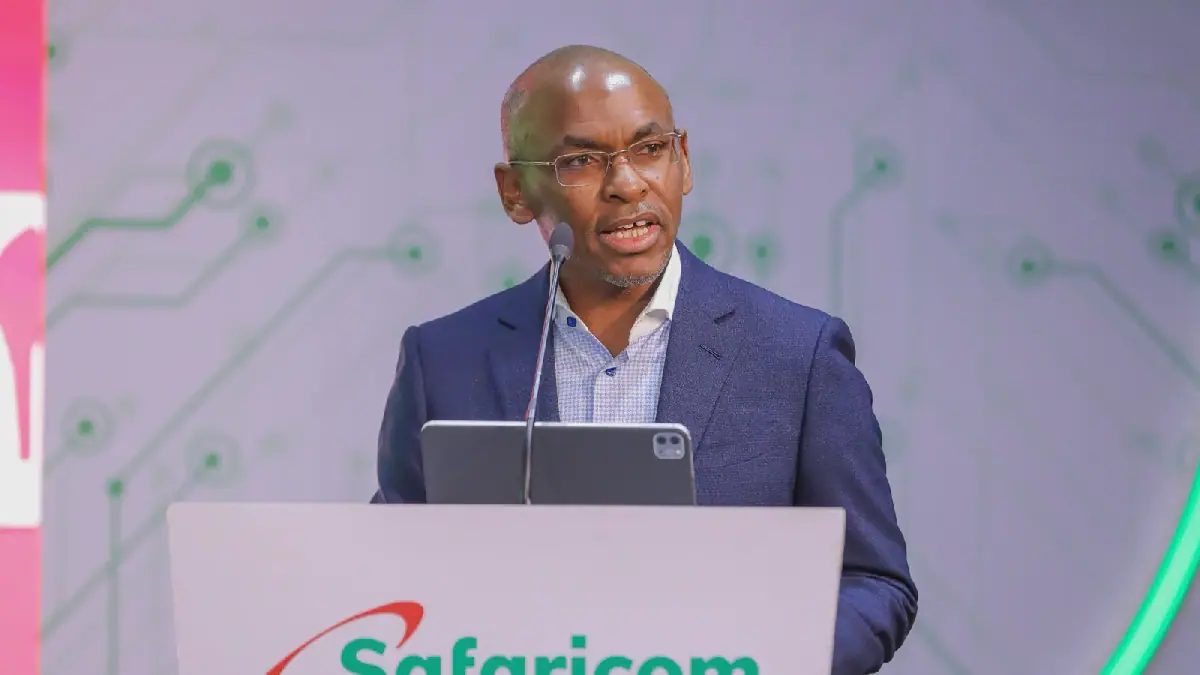
Safaricom, a leading telecommunications company, reported a significant increase in profit after tax, which rose to KES 50.35 billion in the six months to September 30, 2026. This represents a 72% jump from KES 29.19 billion in the same period last year. The company's total revenue grew 14.2% to KES 233.68 billion, with Kenya contributing the bulk of the growth. The profit attributable to Safaricom shareholders was KES 58.15 billion, up 35.9%, while minority shareholders in the Ethiopia business absorbed KES 7.8 billion in losses.
Kenya was the main driver of Safaricom's growth, with service revenue increasing 11.3% to KES 215.96 billion. The company's EBITDA in Kenya grew 13.3% to KES 128.94 billion, and net income rose 13.8% to KES 66.27 billion. M-PESA, the company's mobile money platform, contributed significantly to the growth, with revenue increasing 13.6% to KES 100.07 billion. This represents 46.3% of Kenya's service revenue. The number of merchants using M-PESA jumped 90.3% to 4.51 million, indicating a growing trend of small businesses adopting the platform.
The growth in M-PESA was driven by an increase in transactions, which rose 16.6% to KES 23.56 trillion. The company also saw significant growth in its wealth products, with assets under management increasing 69.7% to KES 25.56 billion. Safaricom launched the ZIIDI Shari'ah Money Market Fund, a Shari'ah-compliant fund available through M-PESA. The network business grew more slowly, with connectivity revenue increasing 7.7% to KES 103.38 billion. Mobile data revenue grew 12.2% to KES 45.24 billion, while voice revenue grew 6.2% to KES 42.20 billion.
Safaricom's Ethiopia business, which is still in the early stages of growth, reported a significant reduction in losses. Service revenue grew 71.6% to KES 10.62 billion, driven by a 90.2% increase in mobile data revenue to KES 7.85 billion. The number of customers active in the last 90 days rose 38.4% to 15.43 million, and one-month active customers increased 43.4% to 12.20 million. The EBITDA loss in Ethiopia shrank by 96.5% to KES 434.4 million, which is a significant improvement from the same period last year.
Despite the progress in Ethiopia, the company still faces challenges in the country. Inflation in Ethiopia reached 14.9% in September, and the currency is under pressure. Safaricom cited these as ongoing headwinds. The company's group costs did not rise in step with revenue, with direct costs increasing 13.3% to KES 57.55 billion. Other operating expenses actually fell 11.1% to KES 44.54 billion. Depreciation and amortization rose 5.5% to KES 38.04 billion.
Safaricom's cash position improved, with cash generated from operating activities rising to KES 91.92 billion from KES 64.74 billion. The company paid KES 45.56 billion in dividends, up from KES 26.33 billion. Investing activities used KES 56.54 billion, and borrowing rose to cover part of the gap. Current borrowings stand at KES 45.65 billion, up from KES 25.54 billion at the end of March.
The company spent KES 40.3 billion on its network, down from KES 43.7 billion in the same period last year. Kenya accounted for KES 35.3 billion of the spending, up 3.3%, with 68.9% going towards network equipment. Ethiopia cut its spending by 47.2% to KES 5.0 billion. As a share of revenue, group capital expenditure fell from 21.3% to 17.3%. The company also reported growth in its customer base, with customers active in the past three months rising 22.3% to 78.99 million.
Key points
- Safaricom's profit after tax surged 72% to KES 50.35 billion in the six months to September 30, 2026.
- The company's Ethiopia business reduced its losses by 96.5% to KES 434.4 million.
- M-PESA revenue increased 13.6% to KES 100.07 billion, representing 46.3% of Kenya's service revenue.