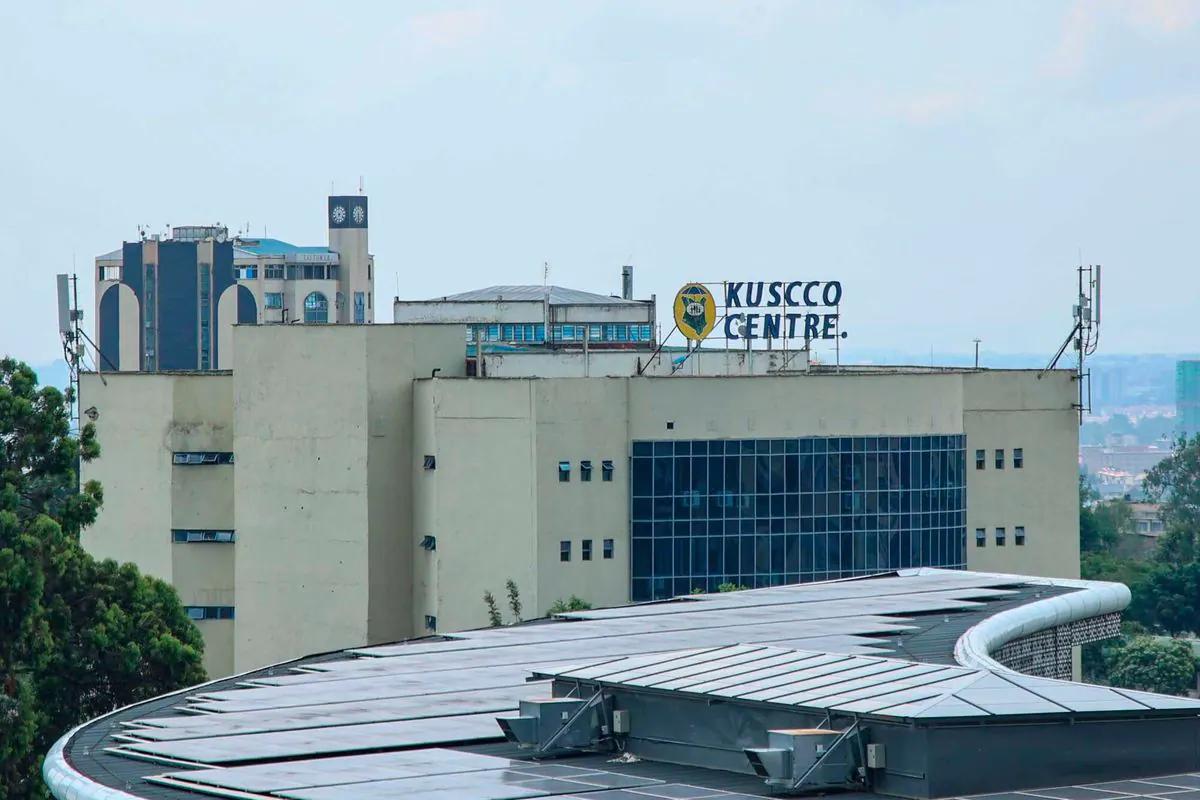
Sacco members in Kenya may experience reduced dividend payouts as the Sacco Societies Regulatory Authority (Sasra) has mandated that cooperatives make provisions of approximately Sh7.67 billion for losses incurred by the insolvent Kenya Union of Savings and Credit Co-operatives (Kuscco). This move is expected to strain the surpluses available for distribution, particularly for Saccos that still carry unprovided Kuscco investments on their books. As a result, Sacco members may face lower average payouts from profits for the second consecutive year.
According to Sasra chief executive David Sandagi, regulated Saccos have made significant progress in providing for their Kuscco investments, but about Sh7.76 billion remains to be fully provided for in line with financial reporting requirements. The additional provisioning required this financial year comes as Saccos already retain a larger share of their surpluses to strengthen their capital. This shift in strategy is reflected in the falling share of payouts in total income, which decreased to 37.39 percent in 2025 from 39.05 percent in 2024.
The cost of Kuscco's failure will be absorbed through the financial statements of individual Saccos rather than being left as an asset whose recovery remains uncertain. In 2025, interest expenses on members' deposits and dividends on share capital amounted to a record Sh64.62 billion, up from Sh59.74 billion in the previous year. However, the average dividend paid on members' share capital fell to 10 percent from 10.46 percent in 2024, while average interest paid on members' deposits declined to 6.72 percent from 7.14 percent.
Co-operatives and Micro, Small and Medium Enterprises (MSMEs) Development Cabinet Secretary Wycliffe Oparanya described the provisioning as "painful" but "necessary" in light of Kuscco's liabilities exceeding its assets and members having recently agreed to liquidate the institution due to a Sh13.3 billion heist under the watch of former officials. The outstanding balance of shares and deposits placed by Saccos in Kuscco had fallen to Sh7.76 billion from Sh16.1 billion after provisions already made by the affected institutions.
Some Saccos had written off their investments in Kuscco, while others opted for staggered provisioning, as Sasra pushed for stronger capital buffers in the industry. The expected Sh7.76 billion additional provisions could impact members' returns, coming against a backdrop of falling Sacco payout rates as institutions increasingly retain earnings to build their capital bases. Aggregate capital reserves rose 16.27 percent to Sh229.67 billion in 2025 from Sh197.54 billion, with retained earnings reaching Sh63.45 billion.
Sasra attributed the lower payouts to Saccos retaining a larger proportion of their surpluses to strengthen capital and cushion themselves against unexpected losses. The regulator has also linked the stronger capital position to interventions limiting dividends, interest on members' deposits, and other costs where necessary. Sandagi emphasized the need to build institutions capable of supporting members over the longer term, noting that retained earnings provide zero-cost capital that reduces reliance on expensive external borrowing.
The tension between payouts and capital building is also emerging as Saccos expand their loan books, with gross loans and advances increasing 12.25 percent to Sh948.67 billion in 2025 from Sh845.11 billion, while member deposits rose 11.12 percent to Sh832.74 billion. As Saccos navigate this challenge, Sasra will continue to evaluate their performance, ensuring that payouts are matched by performance and cash flows and align with the long-term sustainability agenda.
Key points
- Sacco members face potential dividend cuts due to the required provisioning for Kuscco losses.
- Regulated Saccos have made progress in providing for Kuscco investments, but Sh7.76 billion remains to be fully provided for.
- The Sacco industry is shifting towards retaining more earnings to build capital and support lending capacity.