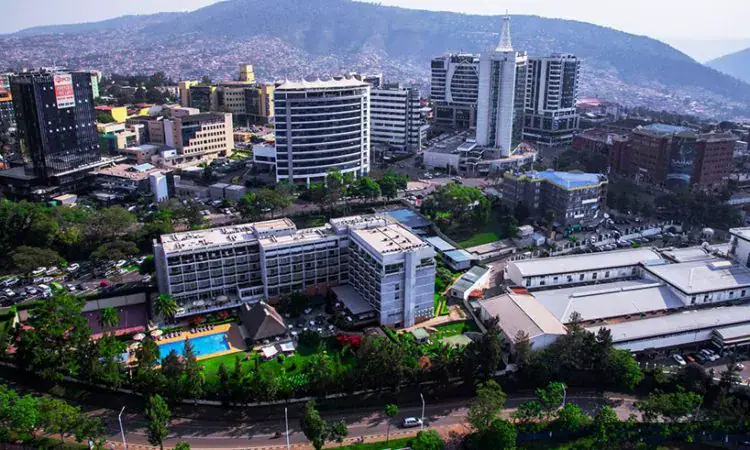
Rwanda's economic outlook has received a boost from international financial markets after S&P Global Ratings maintained the country's B+ sovereign credit rating. The rating is supported by strong economic growth, improved public financial management, and a favourable structure of external debt. According to S&P, the economy grew by 9.3% in 2025 and approximately 10% year-on-year during the first half of 2026, driven by strong performance in manufacturing and services.
The agency projects economic growth of 7.5% in 2026, followed by an average of approximately 7% annually between 2027 and 2029. This growth is supported by continued investment in infrastructure, expanding services, construction, and manufacturing activities. S&P also noted that sound management of public finances was another important factor supporting the rating. The agency projects that the fiscal deficit for the 2025/26 financial year will reach approximately 4.9% of Gross Domestic Product (GDP), lower than the initially planned 5.7%.
The improvement in fiscal deficit is attributed to higher-than-expected tax revenues and reduced expenditure, partly resulting from more favourable financing arrangements for the New Kigali International Airport project. S&P also highlighted the country's debt composition, noting that more than 87% of external debt consists of concessional loans, which generally carry lower interest rates and longer repayment periods than commercial borrowing. This helps limit immediate repayment pressures and gives the government greater flexibility to invest in long-term infrastructure and development programmes.
The New Kigali International Airport features prominently in the economic outlook, with S&P recognising its potential to strengthen international connectivity, expand tourism, facilitate trade, and position the country as a regional transport and business hub. The project has benefited from an innovative financing arrangement involving the World Bank Group's International Development Association (IDA) and Multilateral Investment Guarantee Agency (MIGA). The arrangement helped reduce expenditure on the airport's second phase by Rwf168.2 billion in 2026.
External financial developments have also contributed to the positive assessment. Remittances from citizens living abroad increased by 31.1% during the first half of 2026, while mineral exports recorded strong growth. These developments helped narrow the country's external deficit to 10.9% of GDP, compared with 13.4% during the corresponding period a year earlier. S&P also projects that usable foreign currency reserves will average approximately $2.3 billion between 2026 and 2029.
The agency further recognised progress under the International Monetary Fund (IMF) programme, noting that the government met all the targets assessed during the first review of its 38-month Extended Credit Facility arrangement. The first disbursement under the programme was released in October 2026. The programme supports economic reforms, improved public financial management, domestic revenue mobilisation, and long-term debt sustainability.
However, S&P cautioned that the economy remains exposed to external pressures, particularly rising international prices of fuel, food, and fertilisers linked to geopolitical tensions in the Middle East. The government has responded through targeted subsidies for diesel and fertilisers, while the National Bank of Rwanda has tightened credit conditions to contain inflation. A B+ sovereign credit rating is classified as speculative grade, meaning that the country has the capacity to meet its financial obligations but remains vulnerable to adverse economic and financial conditions.
Key points
- Rwanda's economy is expected to grow by 7.5% in 2026, followed by an average of approximately 7% annually between 2027 and 2029.
- The country's fiscal deficit for the 2025/26 financial year is projected to reach approximately 4.9% of GDP, lower than the initially planned 5.7%.
- S&P projects that usable foreign currency reserves will average approximately $2.3 billion between 2026 and 2029.