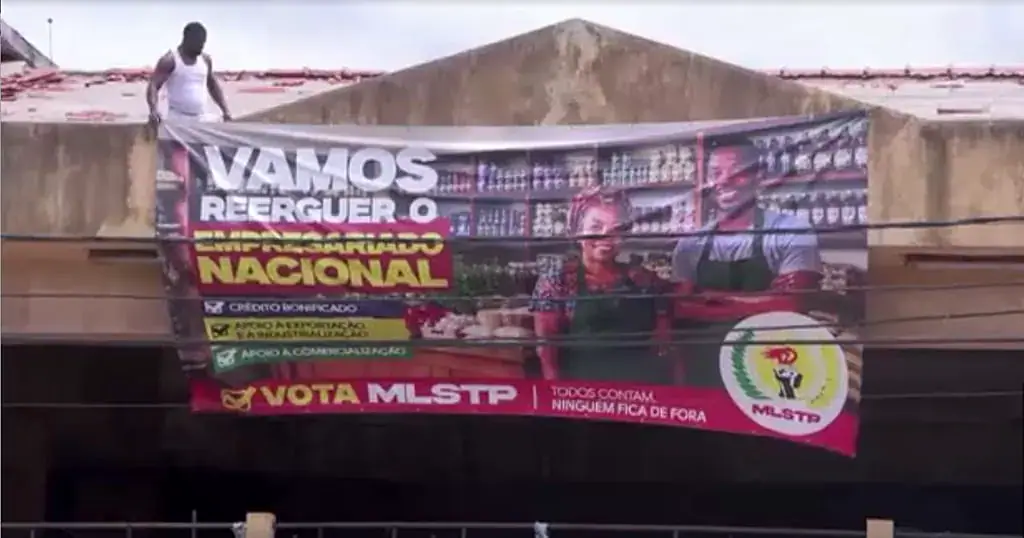
São Tomé and Príncipe's Prime Minister Américo Ramos has been reappointed by President Carlos Vila Nova to lead the country's government for another term. This decision comes after the legislative elections held in September, where Ramos' Independent Democratic Action party secured 23 seats in the National Assembly, making it the second-largest party. The Movement for the Liberation of São Tomé and Príncipe (MLSTP) emerged as the largest party with 24 seats but fell short of achieving an absolute majority.
The MLSTP's 24 seats were insufficient to form a stable government on its own, as it needed 28 seats for an absolute majority. President Vila Nova cited the MLSTP's inability to guarantee sufficient parliamentary support as the reason for turning to Ramos' party to form a government. This move has been disputed by the MLSTP, adding a layer of complexity to the country's political landscape. The distribution of the remaining seats includes six representatives from a coalition of the Independent Citizens' Movement, Socialist Party, and the National Unity Party, and two members of the Basta movement.
The reappointed government, led by Prime Minister Ramos, will face significant challenges in addressing the economic and social difficulties confronting São Tomé and Príncipe. One of the pressing issues is the lack of opportunities, which is driving a considerable number of young people to leave the country. The archipelago's economy and social structures will require attention and reform to stem the tide of emigration and improve living standards for its citizens.
The legislative elections in São Tomé and Príncipe saw a diverse range of political parties participating, reflecting the country's vibrant democracy. However, the absence of a clear majority for any single party has necessitated coalition-building and negotiations to form a stable government. President Vila Nova's decision to reappoint Ramos highlights the importance of political stability in navigating these challenges.
Prime Minister Ramos' reappointment signals a degree of continuity in governance, which could facilitate the implementation of policies and reforms. Nevertheless, the dispute from the MLSTP over the president's decision may indicate potential hurdles in the government's operation. The role of the various political parties and their coalitions will be crucial in shaping the country's future policies and development trajectory.
São Tomé and Príncipe, an archipelago located in the Gulf of Guinea, has been working towards consolidating its democratic institutions and addressing socio-economic challenges. The country's political developments have implications for its relations with international partners and its ability to attract investment. The government's focus on addressing youth emigration and economic difficulties will be critical in improving the livelihoods of its citizens.
As the newly reappointed government begins its term, it will need to engage in dialogue with various stakeholders, including political parties, civil society, and the international community, to address the country's pressing issues. The success of Prime Minister Ramos' government will depend on its ability to build consensus and implement effective policies to drive economic growth and social progress in São Tomé and Príncipe.
Key points
- President Carlos Vila Nova reappointed Prime Minister Américo Ramos despite his party coming second in the legislative elections.