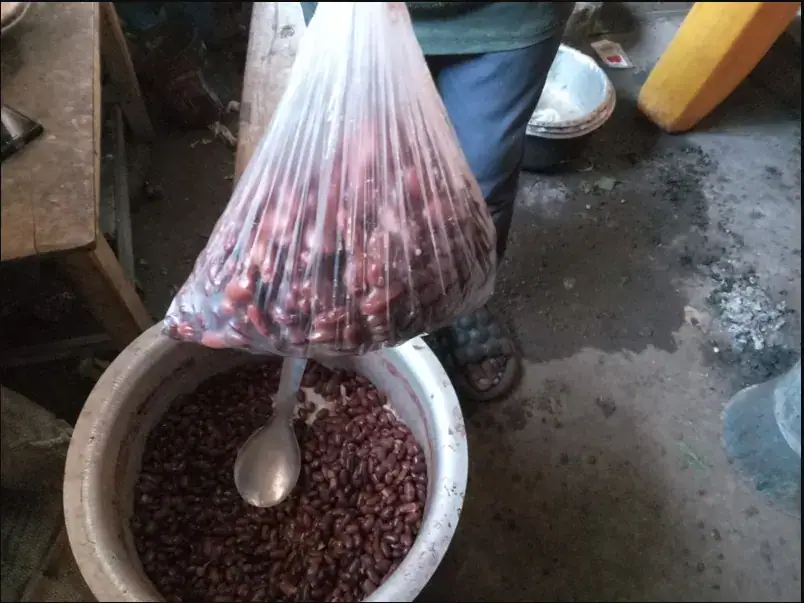
In the bustling streets of Kigali, Rwanda's capital city, low-income earners can be seen gathering in front of small food stalls, eagerly waiting to purchase affordable meals. These individuals, including motorcyclists, small traders, and casual workers, often have limited financial resources, making it challenging for them to afford decent meals. As a result, they turn to cheap street food options, such as fried cassava leaves and beans, to sustain themselves throughout the day.
For many low-income earners, the choice of meal is often dictated by their financial means rather than personal preference. A motorcyclist, who wished to remain anonymous, revealed that he typically spends around 1,000 Rwandan francs (approximately $1) on a meal, which usually consists of a combination of beans, cassava leaves, and a small amount of rice. This meager amount is often stretched to cover multiple meals, with some individuals relying on a single meal a day to make ends meet.
Eric Sibomana, a barber, shared his experience of relying on affordable street food to get by. He often visits a local food stall that offers a meal for 700 Rwandan francs, which includes a plate of rice, vegetables, and sometimes meat. While the meal may not be filling, it provides him with the energy to continue working throughout the day. Sibomana emphasized that these affordable food options are essential for low-income earners like himself, as they enable them to survive on limited budgets.
The owners of these small food stalls, often referred to as "resitora," play a vital role in providing affordable meals to low-income earners. They offer a range of dishes, including fried cassava leaves, beans, and vegetables, at prices that are significantly lower than those found in more upscale restaurants. One food stall owner revealed that he caters to low-income earners, including motorcyclists and casual workers, who rely on his meals to sustain themselves throughout the day.
The popularity of these affordable food options has led to the emergence of new businesses, such as Me2u, which offers pre-cooked beans that can be purchased for as little as 200 Rwandan francs. This innovative approach has made it possible for low-income earners to access affordable meals while also reducing the amount of time and resources required for cooking.
According to food stall owners, the demand for affordable meals is driven by low-income earners who are struggling to make ends meet. These individuals often rely on their daily earnings to purchase food, with some opting for cheaper options like fried cassava leaves and beans. Food stall owners emphasized that their businesses are essential for low-income earners, as they provide a lifeline for those struggling to access decent meals.
The reliance on affordable street food highlights the challenges faced by low-income earners in Rwanda. Despite the limitations, these individuals have found ways to adapt and survive, with many relying on the kindness of food stall owners and innovative businesses like Me2u. As the demand for affordable meals continues to grow, it is clear that these small food stalls and businesses will remain a vital part of the lives of low-income earners in Kigali.
Key points
- Low-income earners in Kigali rely heavily on affordable street food options to survive.
- Small food stalls and businesses like Me2u play a vital role in providing affordable meals to low-income earners.
- The demand for affordable meals is driven by low-income earners who are struggling to make ends meet.