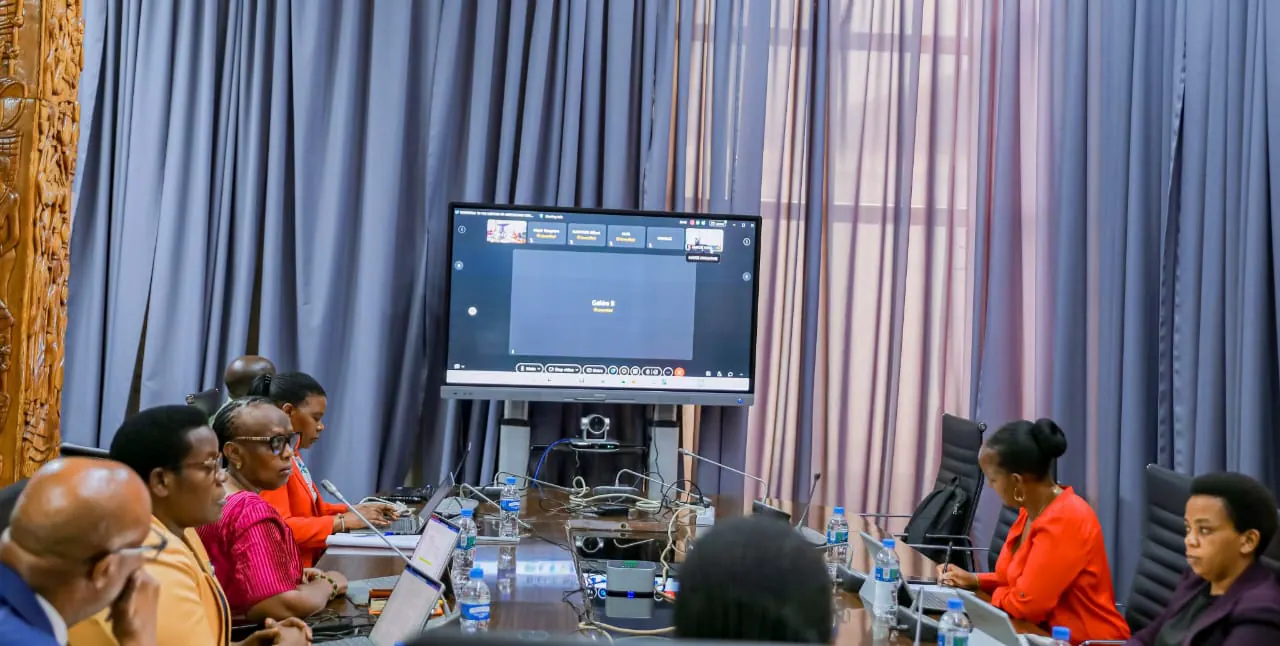
The Land, Agriculture, and Livestock committee of the Rwandan parliament has expressed concerns over the Ministry of Local Government (MINALOC) for withholding information regarding the implementation of the five-year CDAT project aimed at developing agriculture and livestock in the country. The committee, which met with MINALOC and the districts of Nyagatare and Huye via video conference on September 29, 2026, had requested detailed information to prepare for discussions with the Ministry of Agriculture and Livestock (MINAGRI).
The CDAT project, which started in 2022 and is expected to run until 2027, aims to transform traditional agriculture and livestock farming into modern, commercially viable ventures. Key components of the project include assisting residents in creating balanced gardens, planting trees and grasses on hillsides, and providing loans to enhance agricultural productivity. The project also seeks to reclaim large tracts of land in swamps and hillsides and develop irrigation systems on over 17,670 hectares.
According to the committee's chair, Alice Muzana, MINALOC failed to provide comprehensive information, stating that some details would be provided later in writing. Muzana explained that the committee required the information to effectively engage with MINAGRI and ensure the project's objectives are met. She urged MINALOC to prepare detailed information in advance when requested, to facilitate the committee's work.
The committee's concerns were echoed by districts, which reported challenges in implementing certain aspects of the CDAT project. In Huye and Nyagatare, there were significant delays in planting trees on balanced gardens, with Huye achieving 68% of its target and Nyagatare only 5%. The districts attributed these delays to contractors failing to fulfill their obligations and the impact of prolonged drought, which caused seedlings to wither.
Nyagatare district revealed that after terminating a contract with a contractor who failed to meet their obligations, they adopted a community-based approach, where residents are directly involved in planting and monitoring trees. The district reported that seedlings are now ready and awaiting the rainy season for planting. The project has a budget of $300 million, with funds disbursed directly to districts and through projects managed by MINAGRI.
The committee plans to continue monitoring the implementation of the CDAT project, focusing on addressing the challenges identified by districts and other stakeholders to ensure the project's goals are achieved. The project includes significant initiatives such as the reclamation of the Muvumba and Gabiro swamps.
The committee's criticism of MINALOC highlights the importance of inter-ministerial cooperation and timely information sharing to ensure the successful implementation of key development projects in Rwanda. The effectiveness of the CDAT project in transforming Rwanda's agricultural sector remains a priority for lawmakers.
Key points
- The Rwandan parliament's Land, Agriculture, and Livestock committee expressed disappointment with MINALOC for withholding information on the CDAT project's implementation.
- The CDAT project aims to modernize agriculture and livestock farming in Rwanda, with a focus on commercial viability and irrigation development.
- Districts reported challenges in implementing the project, including delays in planting trees and the impact of drought on seedlings.