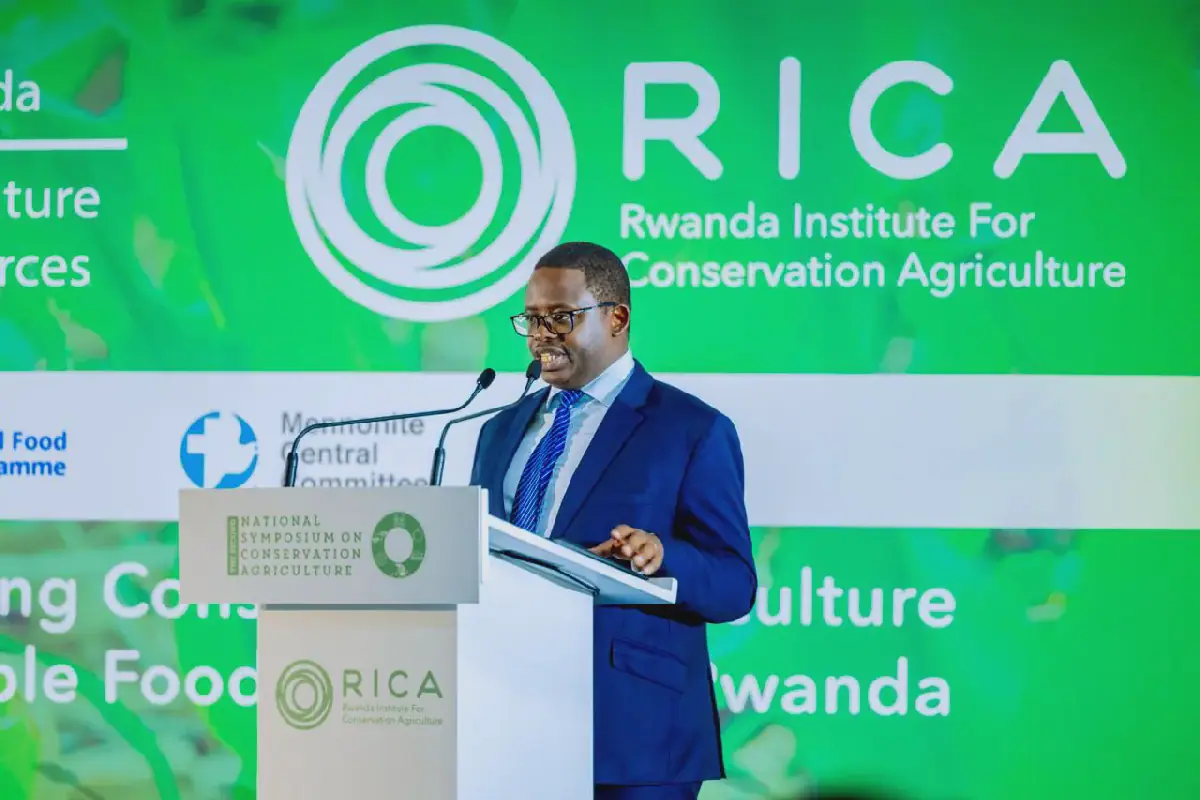
A recent gathering at the Rwanda Institute of Conservation Agriculture (RICA) brought together over 450 farmers, researchers, and government officials to discuss the benefits of conservation agriculture. The event, which took place on November 12, 2026, aimed to promote sustainable agriculture practices and increase crop yields. Farmers who have been trained by RICA reported significant increases in their crop yields, with some reporting increases of up to 10 times their previous yields.
Nyirambonimpa Saidat, a farmer from Kirehe District, was one of the farmers who shared his experience with conservation agriculture. He reported that before adopting the new farming techniques, he would harvest 30 kilograms of maize and 20 kilograms of beans from a plot of land measuring five ares. However, after being trained by RICA, he was able to harvest 300 kilograms of maize and 280 kilograms of beans from the same plot of land.
The training provided by RICA focuses on conservation agriculture practices, which involve minimal disturbance to the soil, permanent soil cover, and crop rotation. Farmers are taught to avoid deep tillage and instead use a technique called "zero-tillage" or "no-till" farming. This approach helps to reduce soil erosion, increase soil fertility, and promote biodiversity.
Nteziryayo Ignace, a member of the Rwanda Farmers' Association, also spoke at the event. He reported that conservation agriculture had increased his crop yields and improved his livelihood. However, he called on the government to increase investment in conservation agriculture to make it more accessible to a wider range of farmers.
Tuyizere Emmanuel, another farmer who has been trained by RICA, reported similar success with conservation agriculture. He stated that before adopting the new farming techniques, his farming practices were damaging the soil due to lack of knowledge. However, after being trained, he was able to increase his crop yields significantly, harvesting 70 kilograms of maize from a plot of land measuring one are.
Momar Dieng, the Director of RICA, emphasized the importance of conservation agriculture in addressing the challenges facing Rwanda's agriculture sector. He stated that the sector is facing challenges such as soil degradation, erosion, and climate change. Dieng called for a collaborative approach to promote conservation agriculture and increase crop yields.
Dr. Olivier Kamana, the Permanent Secretary in the Ministry of Agriculture and Animal Resources, also spoke at the event. He emphasized the importance of conservation agriculture in increasing crop yields and addressing the challenges of climate change. Kamana called on stakeholders to work together to promote conservation agriculture and make it more accessible to a wider range of farmers.
Key points
- Conservation agriculture practices have been shown to increase crop yields and improve soil fertility in Rwanda.
- The Rwandan government and stakeholders are working together to promote conservation agriculture and address the challenges facing the agriculture sector.
- Farmers who have been trained in conservation agriculture report significant increases in their crop yields and improved livelihoods.
Reporting sources
- Abahinzi bigishijwe na RICA bamaze kubona itandukaniro · https://www.kigalitoday.com/