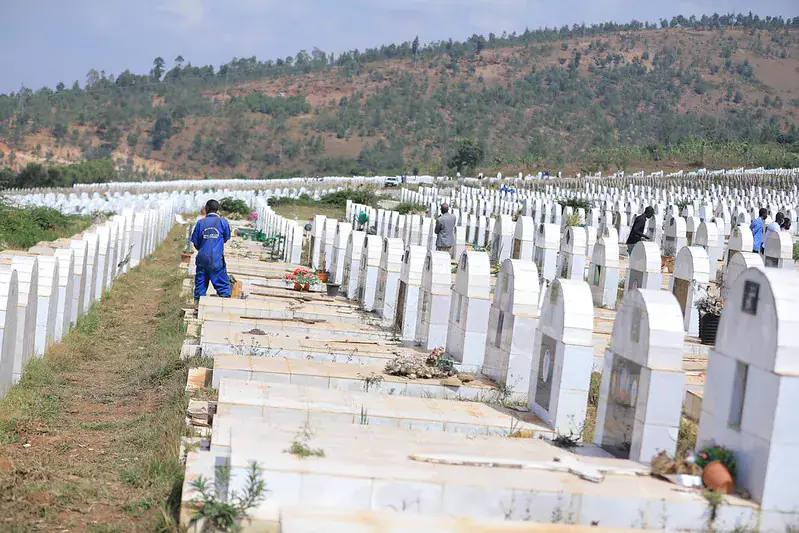
In Rwanda, it is not uncommon for bodies to be found with no relatives to claim them. This can happen when someone dies alone, or when a body is found on the street or in water, and no one comes forward to identify the person. In such cases, the government has a system in place to ensure that the body is buried with dignity. According to the law, the government, through the local authorities, has the responsibility to bury bodies that are found with no relatives.
The law, specifically the Law Nº 11/2013 of 11/03/2013, governs the organization and use of cemeteries in Rwanda. It states that when a body is found with no relatives, the local authorities, in collaboration with security and health organs, have the responsibility to bury the body. The law also provides for the creation of a committee to oversee the burial process. The committee is responsible for ensuring that the body is treated with dignity and that the burial is carried out in a dignified manner.
When a body is found with no relatives, the local authorities and security organs are notified. The body is then taken to a mortuary for examination to determine the cause of death. If the body is not claimed after a certain period, usually three days, the local authorities and the hospital will work together to bury the body. The burial is usually carried out in a government-designated cemetery for people who have no relatives.
The government has a system in place to identify and record the bodies that are buried. The security organs take note of the person's details, including their photo, clothing, and any identifying features. This is done to help identify the person if relatives come forward in the future. The government also works with cooperatives and private companies that specialize in cemetery management to carry out the burial.
The cost of burial is covered by the government, specifically through the local authorities. The government has a budget for social services, which includes the burial of people who have no relatives. In some cases, the hospital may also provide support for the burial. The government works with local authorities and cooperatives to ensure that the burial is carried out in a dignified manner.
Dr. Sebajuri Jean Marie Vianney, the Director General of the Bugesera District Hospital, explained how the process works in practice. He said that when a body is brought to the mortuary with no relatives, the hospital will issue a notice and wait for three days to see if anyone comes forward to claim the body. If no one comes forward, the hospital will work with the local authorities to bury the body.
According to Dr. Sebajuri, the hospital does not have a separate budget for burying people who have no relatives. Instead, the cost is covered by the hospital's general budget. He also noted that the burial process is carried out in a simple and dignified manner, without any special ceremony or ritual. The hospital works with local authorities and cooperatives to ensure that the burial is carried out in a respectful manner.
Key points
- The Rwandan government has a system in place to ensure that bodies found with no relatives are buried with dignity.
- The law governs the organization and use of cemeteries in Rwanda, including the burial of people who have no relatives.
- The government works with local authorities, security organs, and cooperatives to carry out the burial of people who have no relatives.