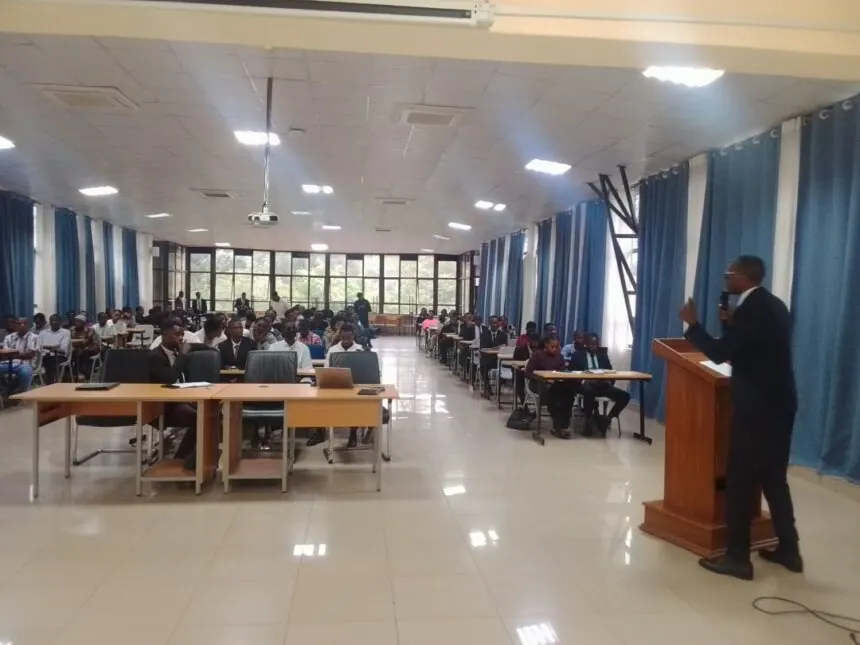
Rwanda's university students have been challenged to rethink the purpose of higher education, with a leadership expert warning that academic qualifications alone will have limited value if graduates cannot use their knowledge to solve real problems and create economic value. Faustin Bagabo, a lawyer and head of Loyal Leadership Institute, made these remarks at the University of Rwanda's Huye campus during a leadership session dubbed "Your Next Destiny".
The session, organised by Loyal Leadership Institute in partnership with the University of Rwanda, aimed to encourage students to develop skills that would enable them to create economic value. According to Bagabo, students should not measure the value of their university education primarily by the salary they expect to earn after graduation. Instead, they should focus on what problems their education will enable them to solve.
Bagabo's argument points to a wider challenge facing higher education: the difference between graduating with a qualification and developing the competence required to perform, innovate and respond to real-world problems. He cited examples of students in fields such as medicine, agriculture, and technology who can build successful careers if they develop deep knowledge and become excellent in their chosen disciplines.
The discussion comes amid financial concerns among university students, some of whom have called for their living allowance to rise from Frw40,000 to between Frw80,000 and Frw100,000. However, Bagabo's message was that financial expectations should not become the defining measure of the value of education. He urged students to start planning their futures early and to regard graduation as the beginning of their professional journey rather than the end of their education.
For Bagabo, students who develop the ability to identify and solve problems are more likely to create lasting economic opportunities than those who simply pursue qualifications in anticipation of a particular salary. He encouraged students to focus on developing skills that would enable them to create economic value, rather than just seeking a high salary.
The challenge, therefore, is not simply how many young people graduate from university, but what they are capable of doing with what they have learned once they leave it. According to Bagabo, education should produce problem-solvers, not simply job-seekers. This requires a shift in mindset among students, who should prioritize skills development over salary expectations.
The leadership session at the University of Rwanda's Huye campus is part of a broader effort to encourage students to think critically about their education and future careers. By prioritizing skills development, students can increase their chances of success in the workforce and create lasting economic opportunities for themselves and their communities.
Key points
- Students should focus on developing skills that enable them to solve real problems and create economic value.
- Financial expectations should not be the defining measure of the value of education.
- Education should produce problem-solvers, not simply job-seekers.