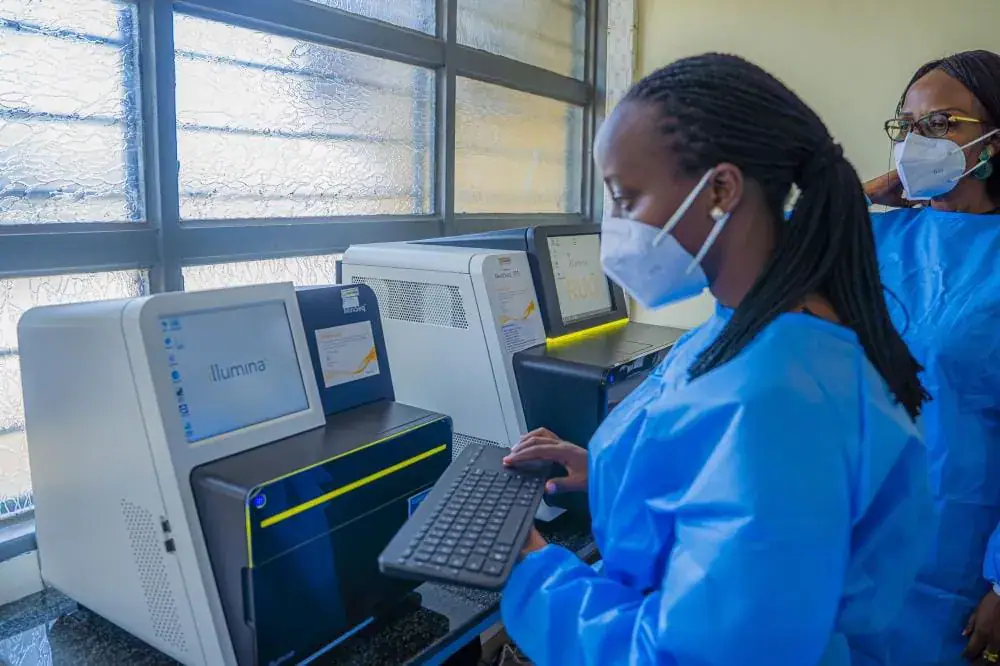
The Government of Rwanda has announced plans to increase the number of laboratories with international standards, known as Reference Laboratories, to 7. This move aims to improve the quality and reliability of healthcare services across the country. Currently, Rwanda has only 3 laboratories that meet international standards, including the National Reference Laboratory, the CHUB laboratory, and the Legacy Clinics laboratory.
The National Reference Laboratory plays a crucial role in overseeing laboratory activities, providing technical guidance, and ensuring the quality of equipment and testing procedures. According to Naasson Tuyiringire, head of the Medical Entomology Unit at the National Reference Laboratory, the plan is to decentralize laboratory services, making them more accessible to the population. This will involve building the capacity of other laboratories to meet international standards.
To achieve international standards, laboratories must meet specific requirements and undergo certification processes. Tuyiringire notes that the National Reference Laboratory, CHUB, and Legacy Clinics already have the necessary certification. The next phase involves building the capacity of 4 other hospitals, including CHUK, Rwamagana, Kacyiru, and Kibuye. These hospitals will not only be equipped to conduct tests but also receive technical support to ensure the accuracy of their results.
A recent 2-day international conference held in Kigali brought together laboratory professionals to share knowledge and expertise. The conference focused on the latest technological advancements in laboratory testing and quality control. Attendees emphasized the importance of continuous learning and professional development in the field of laboratory medicine.
Rwanda has made significant progress in developing its laboratory capacity, particularly in the area of disease surveillance. The country has established a network of laboratories that can quickly detect and respond to outbreaks. During the COVID-19 pandemic, Rwanda's laboratories played a critical role in testing and tracing cases.
The expansion of laboratory services to more hospitals and health centers will improve the timeliness and accuracy of test results. Tuyiringire notes that in the past, test results took up to 24 hours to process, but now results are available within 5-8 hours. This improvement in turnaround time enables healthcare workers to make informed decisions and respond quickly to patient needs.
The development of laboratory capacity is part of Rwanda's broader strategy to strengthen its healthcare system. The country has made significant investments in healthcare infrastructure, including the establishment of new hospitals and health centers. The expansion of laboratory services will complement these efforts and contribute to improved health outcomes for the population.
Key points
- The Government of Rwanda plans to increase the number of laboratories with international standards to 7.
- The National Reference Laboratory plays a crucial role in overseeing laboratory activities and ensuring quality control.
- The expansion of laboratory services aims to improve the timeliness and accuracy of test results, enabling healthcare workers to respond quickly to patient needs.
Reporting sources
- U Rwanda rugiye kongera umubare wa laboratwari zifite ubushobozi mpuzamahanga · https://www.kigalitoday.com/