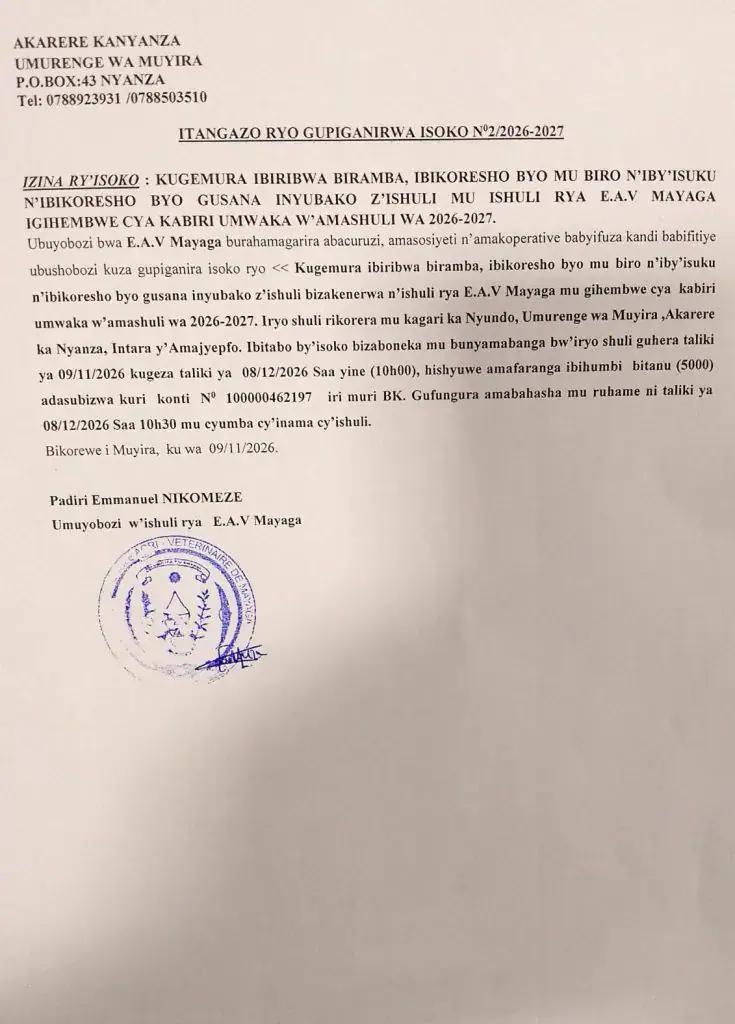
The Rwandan education sector is bracing for a significant challenge in the second half of the 2026-2027 academic year. According to reports from Imvaho Nshya, schools will require urgent supplies of food, office and hygiene materials, and infrastructure repairs. This development has raised concerns among education stakeholders, who are calling for swift action to mitigate the potential impact on students and teachers. The shortages are expected to affect various schools across the country, with the government yet to comment on the situation.
The impending shortages have been attributed to the usual fluctuations in the education sector's supply chain. Education authorities have confirmed that the procurement process for essential supplies is underway, but the exact timeline for delivery remains unclear. In the meantime, schools are expected to operate with reduced capacities, potentially affecting the quality of education. Stakeholders are urging the government to expedite the procurement process to minimize disruptions to the academic calendar.
The shortages are not limited to specific regions or schools, but are expected to have a nationwide impact. Education officials have assured that efforts are being made to address the situation, but have not provided a detailed plan for implementation. The government has been urged to prioritize the education sector and allocate sufficient funds to address the shortages. Failure to do so could have long-term consequences for the country's education system.
The development has sparked concerns about the potential impact on students' academic performance. Education experts have warned that shortages of essential supplies could lead to decreased motivation and engagement among students, ultimately affecting their academic achievement. Furthermore, the situation may exacerbate existing inequalities in the education sector, with disadvantaged schools and students potentially being disproportionately affected.
The Rwandan government has made significant investments in the education sector in recent years, with a focus on improving infrastructure and increasing access to education. However, the current shortages highlight the ongoing challenges facing the sector. Education stakeholders are calling for a comprehensive review of the sector's supply chain and procurement processes to prevent similar shortages in the future.
The situation is being closely monitored by education stakeholders, who are urging the government to take swift action to address the shortages. The government has been urged to provide regular updates on the situation and to engage with stakeholders to find solutions. The education sector is a critical component of Rwanda's development agenda, and the government is under pressure to ensure that it receives the necessary support and resources.
As the second half of the academic year approaches, schools in Rwanda are bracing for a challenging period. The shortages of essential supplies are expected to have a significant impact on the education sector, and stakeholders are calling for swift action to mitigate the effects. The government's response to the situation will be closely watched, as it seeks to address the shortages and ensure that students receive a quality education.
Key points
- Schools in Rwanda will require urgent supplies of food, office and hygiene materials, and infrastructure repairs in the second half of the 2026-2027 academic year.