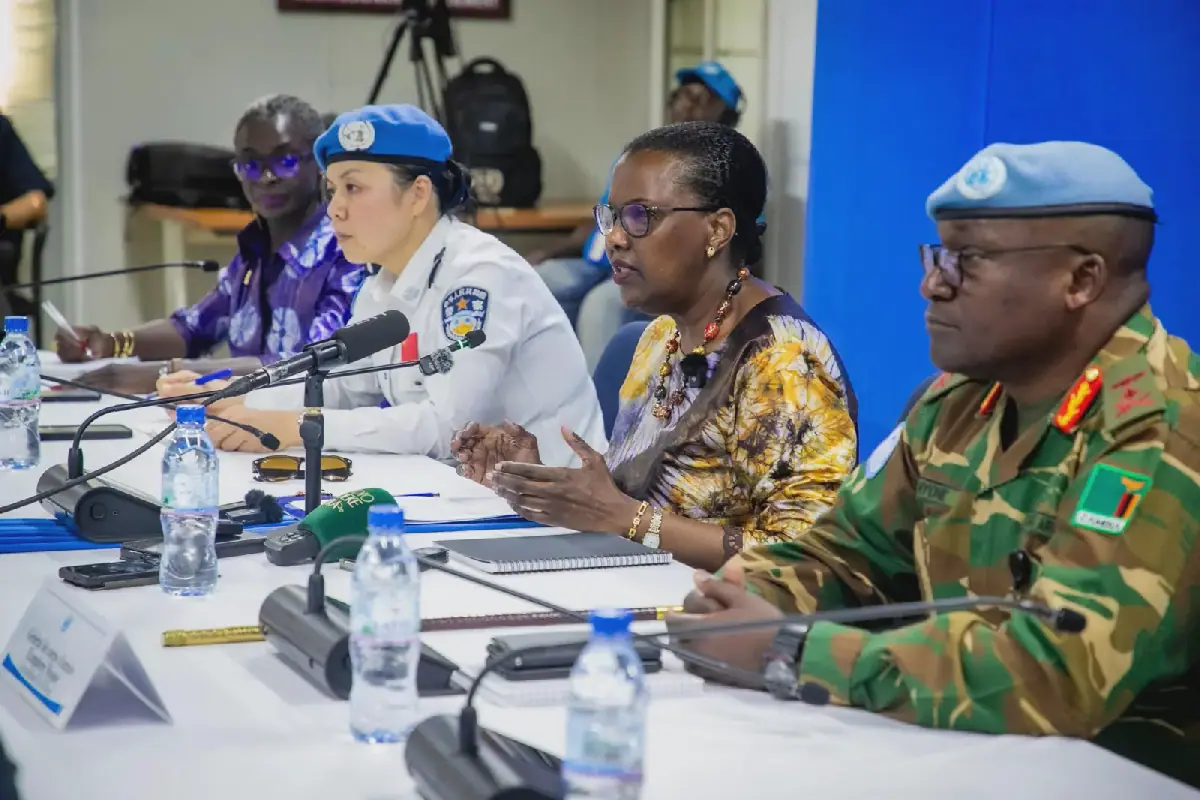
After four years at the helm of the United Nations Multidimensional Integrated Stabilization Mission in the Central African Republic (MINUSCA), Rwandan Ambassador Valentine Rugwabiza has concluded her term. During her tenure, which began in April 2022, significant progress was made in restoring peace and security to the country. Over 1,900 armed combatants from various groups laid down their arms, and 11 out of 14 armed groups that had signed the Political Agreement for Peace and Reconciliation (APPR) were disarmed.
Under Rugwabiza's leadership, MINUSCA supported the organization of local elections in 2025 and 2026, which took place across 85 territories, a significant increase from previous years. These elections marked the first local polls since 1988, representing a crucial step towards decentralization and greater representation of citizens in governance. Rugwabiza emphasized the importance of empowering elected officials with sufficient resources to fulfill their mandates and encouraged greater participation of women in decision-making processes.
Despite progress, challenges persist, particularly in border regions where insecurity and terrorist threats from neighboring countries, such as Sudan, continue to affect the Central African Republic. Rugwabiza called for sustained international support to address these security concerns and enable the country to consolidate its peacebuilding efforts. She also highlighted the need for the international community to provide adequate resources to help former combatants reintegrate into civilian life.
During her tenure, MINUSCA faced various challenges, including attacks from armed groups, rising living costs, and budget constraints. Despite a reduced budget in 2025 and 2026, the mission continued to support electoral processes, protect civilians, and enhance the government's capacity to deliver services across the country. However, some major infrastructure projects had to be postponed due to financial constraints.
The UN Security Council recently extended MINUSCA's mandate until November 15, 2027, with a focus on prioritizing civilian protection and gradually transferring responsibilities to national authorities. Rugwabiza's successor, Mohamed Ag Ayoya, will assume his role as Special Representative of the UN Secretary-General and head of MINUSCA on December 1, 2026.
In her farewell message, Rugwabiza urged young people to prioritize peacebuilding and avoid political divisions. She emphasized that peace cannot be imposed or outsourced but must be built by the people of the Central African Republic themselves. Rugwabiza also praised the role of local media in promoting peace and pledged continued support for press freedom.
Reflecting on her achievements, Rugwabiza noted that while significant progress had been made, much work remains to be done to consolidate peace and stability in the Central African Republic. She expressed her hope that the country will continue to make strides towards lasting peace and development, with sustained support from the international community.
Key points
- Over 1,900 armed combatants laid down their arms under MINUSCA's efforts.
- Local elections were successfully organized in 85 territories across the country.
- The UN Security Council extended MINUSCA's mandate until November 15, 2027.