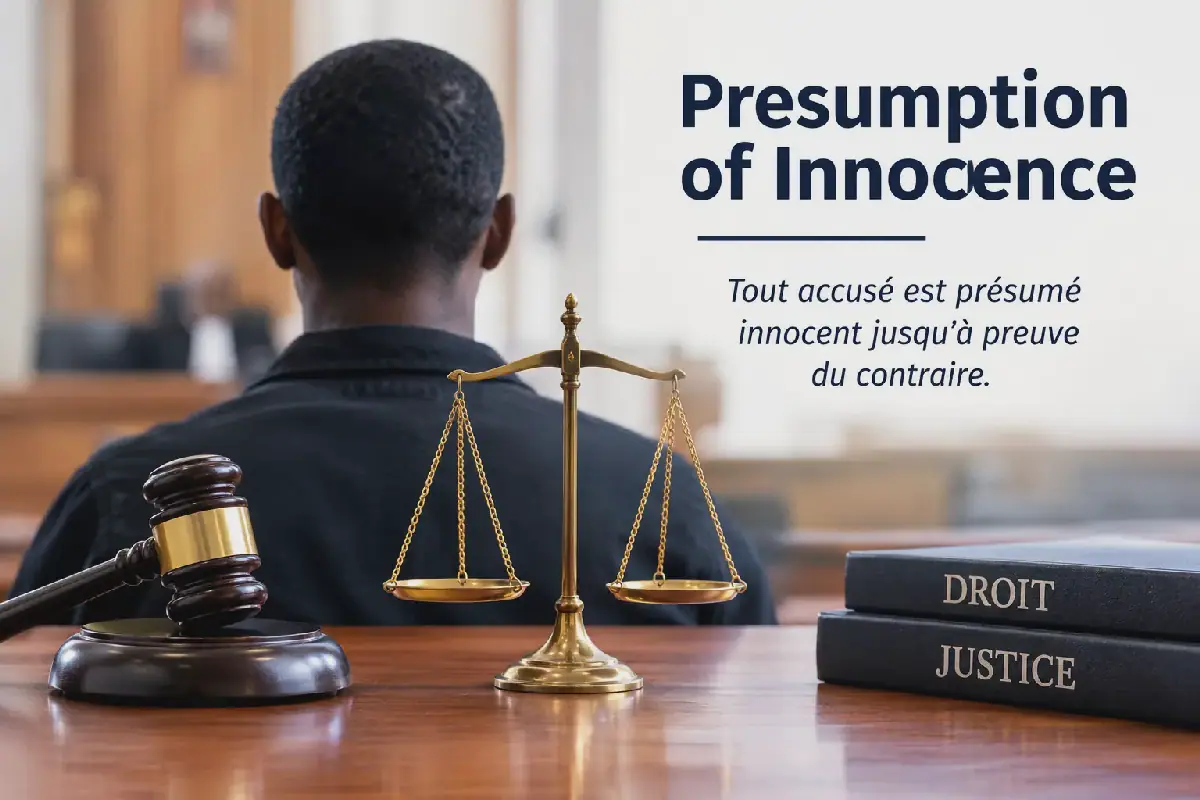
The Supreme Court of Rwanda has weighed in on the contentious issue of revealing suspects in the media, a practice that has sparked debate, particularly on social media platforms. Many have questioned whether this practice, commonly employed by law enforcement agencies, could potentially infringe upon the presumption of innocence. This concern arises because individuals may be portrayed in the media as suspects during investigations, only to be later acquitted by the courts. The Supreme Court has now provided clarity on this matter, emphasizing the need for law enforcement agencies to balance their duty to inform the public with the rights of suspects.
The presumption of innocence is a fundamental principle enshrined in Rwanda's Constitution, specifically under Article 29. This principle, also known as 'presumption of innocence,' dictates that an individual is considered innocent until proven guilty by a court of law. Furthermore, Article 107 of the law governing the prosecution of criminal cases stipulates that a person accused of a crime is presumed innocent until convicted by a court. Therefore, the critical issue is not merely whether a suspect can be disclosed in the media but how such disclosures are made and the potential impact on the individual's reputation and rights.
A recent case, RS/INCONST/SPEC 00001/2022/SC, brought before the Supreme Court by Me Murangwa Eduard, challenged certain provisions of the laws establishing the National Public Prosecution Authority (RIB) and the prosecution of criminal cases. The case specifically questioned the authority of investigative bodies to disclose suspects to the media and the potential for compelling them to engage with the media. The Court's decision has significant implications for how law enforcement agencies interact with the media when dealing with suspects.
In its ruling, the Supreme Court acknowledged that RIB has the mandate to provide information on its activities and is not prohibited from disclosing suspects to the media. However, the Court emphasized that providing information on investigative activities is distinct from convicting a person of a crime. Any information disclosed must be handled in a manner that respects the presumption of innocence. The Court's guidelines stress that the authority to provide information does not grant the right to present suspects in a way that prejudices their rights or implies guilt before a court verdict.
The Supreme Court's decision does not explicitly bar the media from reporting on suspects but underscores the importance of responsible reporting that adheres to the Constitution and the rights of suspects. The Court highlighted the need to consider the manner of disclosure, the language used, the reasons for disclosure, and the potential impact on the suspect's rights and reputation. This approach aims to strike a balance between the public's right to information and the rights of individuals suspected of crimes.
The issue of compensation for individuals wrongly accused and later acquitted may arise, particularly if their reputation has been significantly damaged. While being acquitted does not automatically entitle an individual to compensation, they may still have the right to seek redress. The Court's decision suggests that any claim for compensation would depend on the specifics of the case, including whether the actions of law enforcement were lawful, if fundamental rights were violated, and the extent of the impact on the individual.
Internationally, there have been instances where courts have awarded compensation to individuals whose reputations were damaged by premature or unjustified disclosures by law enforcement. For example, in Western Australia, the Supreme Court awarded substantial damages to Lloyd Rayney, who was wrongly implicated in the murder of his wife. Similarly, the European Court of Human Rights has emphasized the need for law enforcement agencies to exercise caution in making public statements about suspects to protect their rights and reputation.
Key points
- The Supreme Court of Rwanda has established guidelines for law enforcement agencies on disclosing suspects in the media, emphasizing the need to respect the presumption of innocence.
- The guidelines stress the importance of responsible reporting and the potential for individuals to seek compensation if their rights are violated.
- The decision aims to balance the public's right to information with the rights of suspects, promoting a fair and just process.