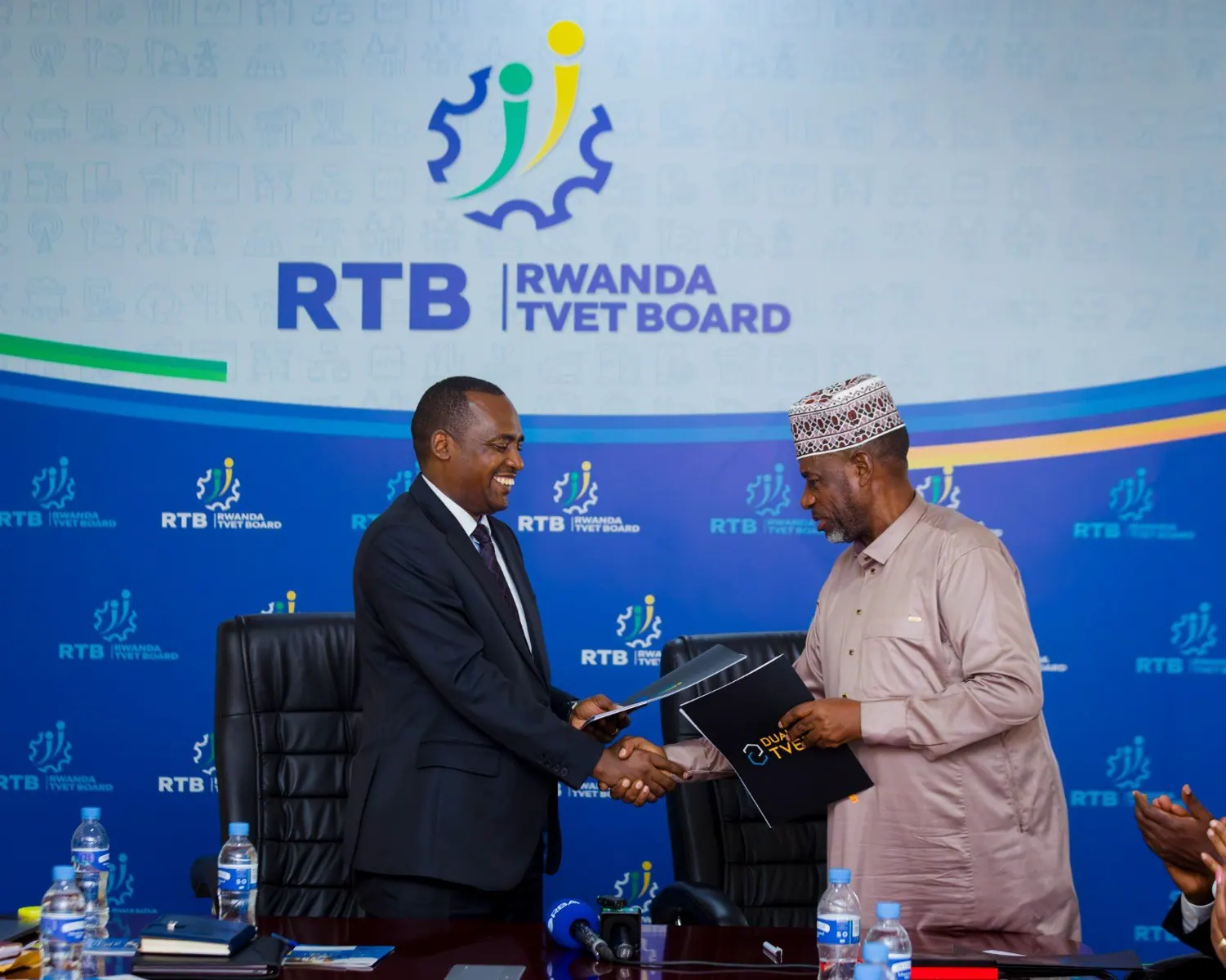
The Rwanda Technical and Vocational Education and Training Board (RTB) has announced plans to validate the skills of individuals who have acquired knowledge and experience through informal means or work experience but lack formal qualifications. This initiative aims to provide these individuals with recognized certificates that match their skills and experience in the job market. RTB's Chief Executive Officer, Paul Mukunzi, made this announcement after signing a cooperation agreement with four private sector associations.
The agreement, signed on October 1, 2026, seeks to increase the private sector's involvement in developing the skills and competencies of students in technical and vocational education and training (TVET). The associations that signed the agreement include the Rwanda Garage Association, Rwanda Wood Value Chain Association, Rwanda Tailors Association, and the Rwanda Association of Tourism and Hotels. These partnerships will enable students to gain practical experience in their chosen fields while still in school.
According to Mukunzi, many Rwandans are working in the private sector with diverse skills but lack formal qualifications. Through this initiative, RTB will assess their skills and provide them with relevant certificates. This move is expected to enhance the employability of these individuals and provide them with better career prospects. The certificates will be issued based on the individual's skills and experience, providing a formal recognition of their competencies.
The cooperation agreement is expected to benefit students by providing them with practical experience and skills that match the needs of the job market. As part of the agreement, private sector associations will work closely with RTB to ensure that students are equipped with the necessary skills and competencies. This collaboration will enable students to gain hands-on experience and increase their chances of employment after completing their studies.
Jean Gilbert Niyitegeka, Deputy Director of the Rwanda Garage Association, noted that previously, some students faced challenges in finding internship opportunities, which hindered their ability to gain practical experience. With this agreement, students will have better opportunities to gain experience in their chosen fields, enhancing their employability. The partnerships will also provide students with a clear pathway to acquire the skills and competencies required in the job market.
Abdu Karemera, CEO of the Rwanda Wood Value Chain Association, expressed optimism that the certification process will boost the confidence of skilled individuals and encourage them to start their own businesses. He noted that some individuals had been hesitant to start their own businesses due to the lack of formal qualifications. With the certification process, these individuals will have the necessary credentials to access loans and other forms of support.
The initiative by RTB to validate the skills of individuals without formal qualifications is expected to have a positive impact on the job market and the economy. By providing recognized certificates to skilled individuals, RTB aims to enhance their employability and create more opportunities for entrepreneurship. The partnerships with private sector associations will ensure that the skills and competencies acquired by students match the needs of the job market.
Key points
- RTB to issue certificates to individuals with skills and experience but lack formal qualifications
- Partnerships with private sector associations to enhance employability of students
- Initiative expected to boost entrepreneurship and job creation in Rwanda