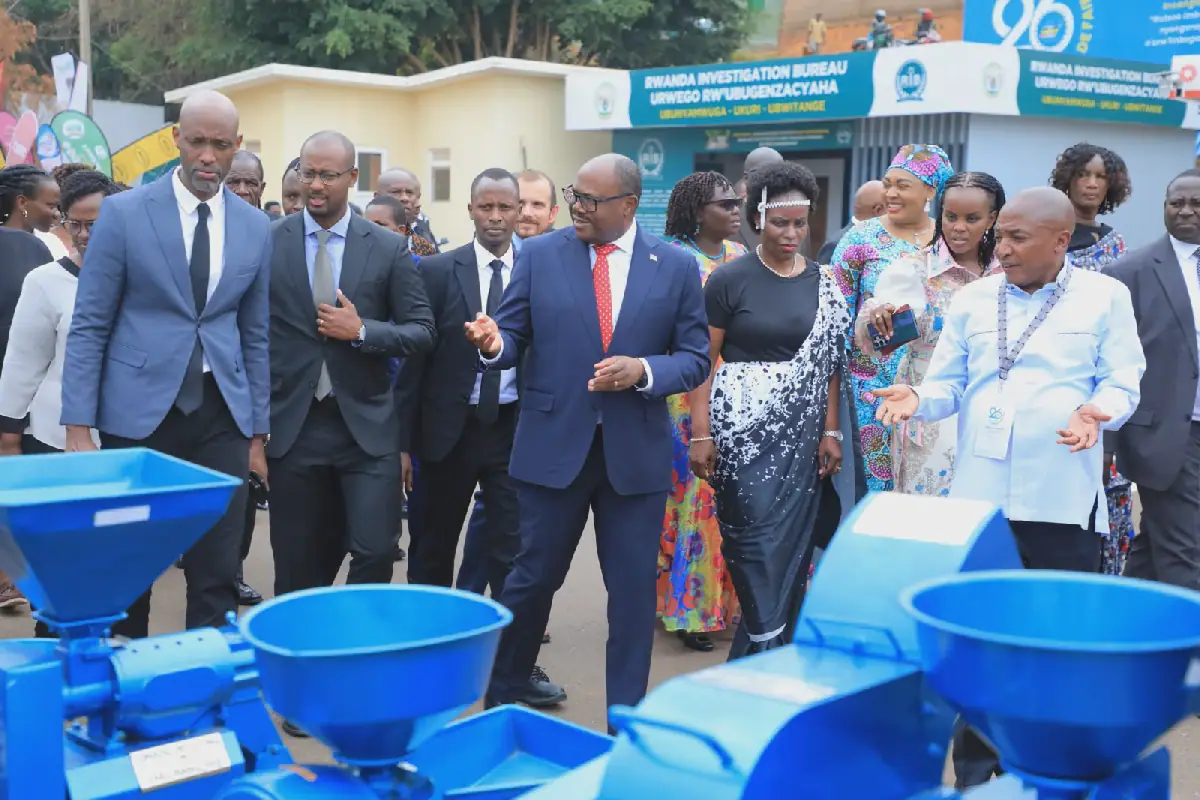
Prime Minister Justin Nsengiyumva has encouraged small businesses in East Africa to increase their production levels to meet the region's growing demands. He made the remarks at the 26th East African Community (EAC) Micro, Small and Medium Enterprises (MSMEs) Trade Fair in Kigali, which brought together 1,500 exhibitors from across the region. The fair, running from October 30 to November 8, focuses on advancing regional value chains in leather and horticulture.
East Africa faces a significant gap in meeting its demand for shoes, with a need for nearly 290 million pairs annually, but local manufacturers produce only about 17 million pairs. Nsengiyumva cited a Rwandan shoe manufacturer with an annual capacity of 6,000 pairs as an example of an enterprise that could grow with the right support. He emphasized that government institutions and financial partners are ready to help small enterprises expand their capacity and take advantage of the wider regional market.
The growth of MSMEs is linked to Rwanda's wider economic ambitions, including creating 250,000 jobs annually and increasing non-traditional exports from US$1.4 billion to US$3.2 billion over five years. In horticulture, Nsengiyumva highlighted the need for better storage, cold-chain facilities, packaging, processing, and distribution to help producers reach larger markets. The fair provides a platform for exhibitors to showcase their products and connect with potential partners.
For the first time, exhibitors at the fair have been grouped by economic sector rather than by country, an arrangement intended to encourage partnerships among businesses working in the same value chains across national borders. EAC Deputy Secretary General in charge of Customs, Trade and Monetary Affairs, Annette Mutawawe, said the change marked a shift from simply displaying products towards building commercial relationships that could strengthen regional production.
The EAC has made efforts to reduce border crossing times, with a reduction of up to 70 per cent, and transit time under the single customs territory has fallen from 18 days to four. Mutawawe also cited a 44 per cent increase in EAC exports to the rest of Africa, which reached US$7.2 billion. The effort to expand regional trade is also placing greater emphasis on women entrepreneurs, whose participation is essential to making integration more inclusive.
The EAC Women in Trade Champions Initiative, a six-month program, has been designed to strengthen the understanding of regional trade policies, market opportunities, and cross-border procedures among women entrepreneurs. Sixteen women from the eight Partner States were recognized as champion mentees under the initiative. The goal is for East Africans to increasingly consume products made within the region and support businesses that operate across national boundaries.
Language remains an important part of regional integration, particularly for small traders who need to understand customs requirements, tariffs, trade procedures, and information from EAC institutions. Dr Caroline Asiimwe, Executive Secretary and CEO of the East African Kiswahili Commission, emphasized the need for effective communication to enable traders to take advantage of the opportunities created by regional integration. The Commission is exploring digital innovations to help traders access information and services across language barriers.
Key points
- East Africa needs nearly 290 million pairs of shoes every year, but manufacturers across the region produce only about 17 million.
- The 26th East African Community (EAC) MSMEs Trade Fair in Kigali has brought together 1,500 exhibitors from across East Africa and beyond.
- Rwanda aims to create 250,000 jobs annually and increase non-traditional exports from US$1.4 billion to US$3.2 billion over five years.