The initiative was launched on November 28, 2026, in celebration of World Toilet Day, which is observed annually on November 19. The program aims to provide toilets that meet required standards to families who cannot afford them, promoting better health and hygiene. According to the 2025 DHS7 survey by the National Institute of Statistics, 3% of households in Nyamagabe lack toilets and use alternative methods for sanitation.
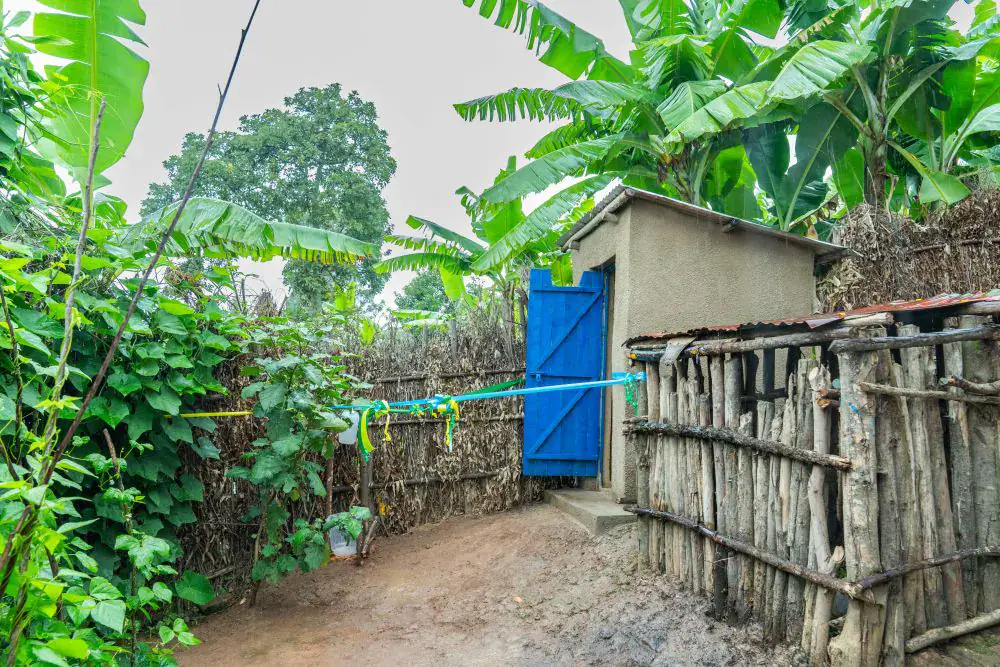
The construction of the toilets was carried out in partnership with organizations such as Rwanda Water Aid Rwanda and Water for People. Mukamana Chantal, a beneficiary of the program, said she previously had a toilet that did not meet standards, but now has a new one built with bricks and a concrete slab. She attributed her previous delay in constructing a proper toilet to a lack of awareness about its importance.
Dr. Kagimbangabo Jean Marie Vianney, representing the Ministry of Health, emphasized the need for continued efforts to improve sanitation and hygiene in the region. He cited statistics showing that 50,000 people in Nyamagabe have suffered from water-borne diseases in the past 10 months, highlighting the importance of proper toilets and hygiene practices.
Ngabo Auxille, a representative of Rwanda Water Aid Rwanda, stressed that having a proper toilet is a fundamental right. He encouraged people to change their mindset and prioritize sanitation and hygiene to achieve development goals. The organization has built 1,000 toilets in Nyamagabe, including 386 in the Cyanika sector.
The program also provided 170 additional toilet slabs to households. Ntirenganya Zakayo, another beneficiary, expressed gratitude for the new toilet, saying he previously felt embarrassed to host visitors due to his inadequate toilet. The initiative aims to improve the overall health and well-being of the community.
The district's mayor, Habimana Thaddée, praised the partnership with organizations such as Rwanda Water Aid Rwanda and Water for People, which has helped improve access to clean water and sanitation in the region. He reported that 8.8% of households in Nyamagabe previously had toilets that did not meet standards, while 1% used alternative methods such as open defecation.
The goal is to ensure that all households in Nyamagabe have access to toilets that meet required standards by 2029, as outlined in the Second National Strategy for Transformation (NST2). The Ministry of Health has set standards for toilets, including a sturdy structure with a concrete slab, walls, and a roof, as well as a pit with a depth of 3-6 meters and a diameter of 1 meter.
Key points
- The construction of 1,000 new toilets in Nyamagabe district aims to improve sanitation and hygiene for low-income families.
- The initiative is part of a broader effort to achieve 100% access to toilets that meet required standards by 2029.
- The program is a collaboration between the government and organizations such as Rwanda Water Aid Rwanda and Water for People.
Reporting sources
- Nyamagabe: Imiryango 1 000 itishoboye yahawe ubwiherero · Imvaho Nshya