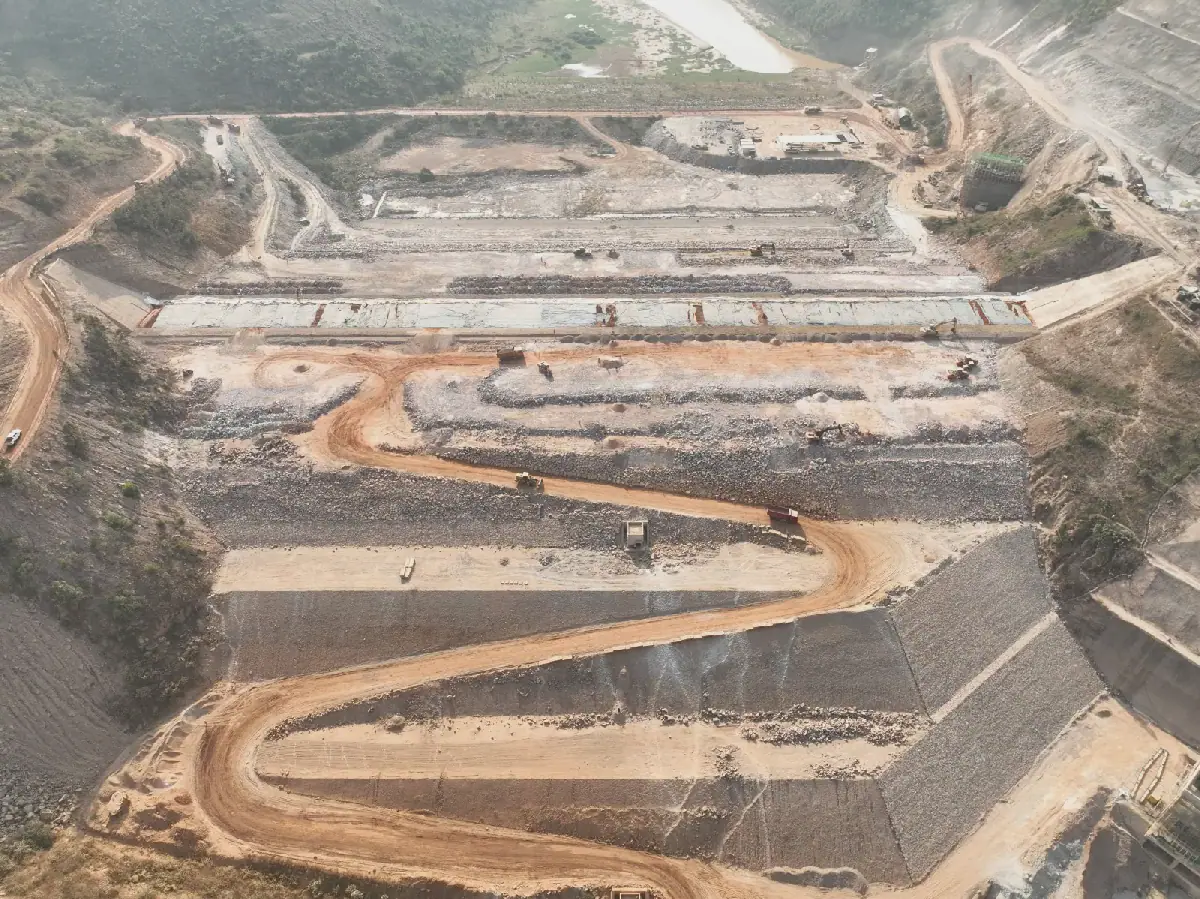
The Nyabarongo II hydroelectric project, located on the Nyabarongo River between Gakenke and Kamonyi districts, is being developed by China's Sinohydro Corporation. The project aims to address the water shortage in Kigali and provide 43.5 megawatts of electricity. REG, the national energy utility, recently released an update on the project's progress, showcasing aerial photos of the construction site. Workers are laboring day and night to ensure the project's timely completion.
According to EDCL, the project is 78.5% complete, with REG highlighting the project's potential to increase Rwanda's hydropower capacity. The dam will have a water reservoir with a capacity of 800 million cubic meters, spanning 67 kilometers in length, 30 square kilometers in surface area, and impacting five districts. The project also aims to mitigate flooding and provide irrigation for 18,000 hectares of land.
The project will not only generate electricity but also provide water for Kigali's residents and businesses. The water supply will be capable of delivering 5.4 cubic meters per second, potentially providing 450 million liters of water per day. This will help bridge the current water supply gap in Kigali, which stands at 65 million liters per day. Théoneste Higaniro, EDCL's managing director for energy generation and distribution, assured that the water supply will meet Kigali's needs for an extended period.
Once completed, Nyabarongo II will be Rwanda's largest hydroelectric power plant, surpassing the 28 megawatts generated by Nyabarongo I. Unlike Nyabarongo I, which uses the river's natural flow, Nyabarongo II will have a water reservoir to store water for power generation and other uses. The project is expected to support the government's goal of increasing renewable energy sources.
In addition to its primary objectives, the project will also support irrigation and agriculture. The water released from the reservoir will help farmers cultivate 18,000 hectares of land. Plans are underway to install floating solar panels on the reservoir, potentially generating an additional 200 megawatts of electricity. A feasibility study is being conducted to explore this possibility.
The project has already created jobs for over 1,000 people, mostly from local communities. However, the construction of the dam and reservoir requires the relocation of approximately 3,400 households. The government has allocated around RWF 70 billion for compensation and relocation efforts. The project is expected to be completed by the end of 2027.
Key points
- The Nyabarongo II hydroelectric project will generate 43.5 megawatts of electricity and provide water for Kigali's residents and businesses.
- The project is 78.5% complete and expected to be finished by the end of 2027.
- The project will also support irrigation and agriculture, and potentially generate additional electricity through floating solar panels.