Rwanda's Minister of Foreign Affairs and Cooperation, Ambassador Olivier Nduhungirehe, has addressed the circulation of a document purportedly written by US President Donald Trump to Rwandan President Paul Kagame. The letter, which has been spreading on social media, claims that the US will withdraw Rwanda's benefits under the African Growth and Opportunity Act (AGOA) effective January 1, 2027. Nduhungirehe stated on his social media platform that the document is not authentic.
The alleged letter, dated October 28, 2026, and supposedly written from the White House in Washington, accuses Rwanda of poor governance, human rights abuses, and involvement in the conflict in the eastern Democratic Republic of Congo (DRC). It specifically alleges that Rwanda provides military support, equipment, and other assistance to the M23 rebel group, contributing to instability in the region. The letter also claims that these actions undermine the sovereignty of the DRC and the security of the Great Lakes region.
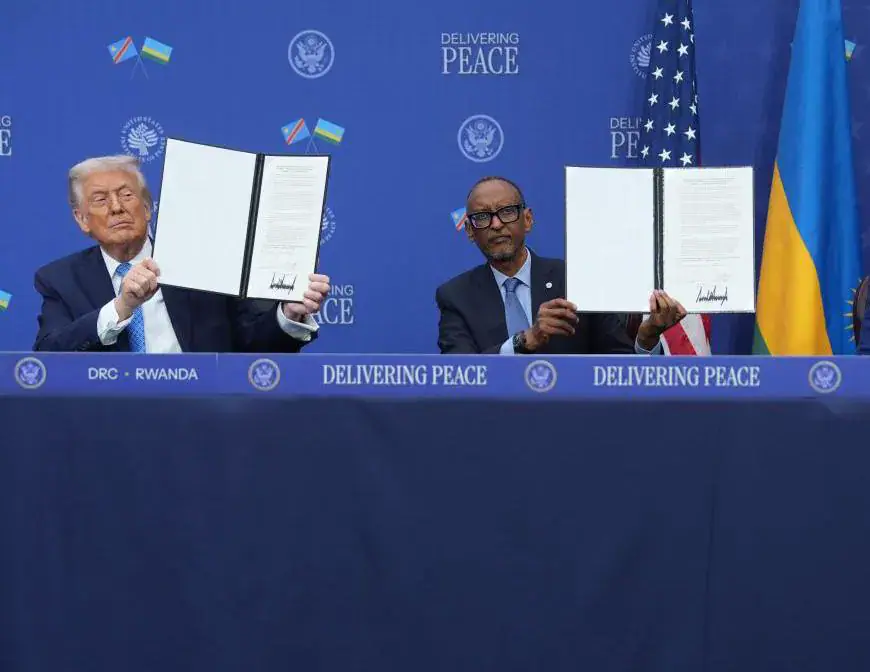
The document further asserts that President Trump demands Rwanda to address these concerns, including stopping support for M23 and withdrawing its troops from DRC. This comes amid Rwanda's repeated denials of involvement in the conflict in eastern DRC and its commitment to implementing the Washington peace agreement with DRC. Rwanda has also emphasized its willingness to enforce the agreement's provisions, provided that the DRC also adheres to its commitments.
The AGOA is a US program established in 2000 to facilitate exports from eligible sub-Saharan African countries to the US market with reduced tariffs. Rwanda, like other beneficiary countries, stands to lose preferential market access if it is removed from the program. The alleged letter's authenticity was questioned by Minister Nduhungirehe, who urged those disseminating it on social media to be aware of its falsity.
The controversy surrounding the letter emerges as Rwanda navigates its relations with the international community, particularly concerning its role in regional security and human rights. The government has consistently maintained that it adheres to international law and promotes peace and stability in the region. The incident highlights the challenges of misinformation in digital communication and the importance of verifying information, especially on sensitive topics.
The Rwandan government has expressed its commitment to upholding the terms of the Washington peace agreement and promoting cooperation with neighboring countries. The situation underscores the complexities of Rwanda's engagement with international partners and its efforts to address concerns about its activities in the region. The authenticity of the letter and its implications for Rwanda-US relations remain unclear.
The incident serves as a reminder of the potential consequences of misinformation and the need for vigilance in verifying information, particularly in the realm of international diplomacy. As Rwanda continues to navigate its relationships with global partners, it is essential to rely on credible sources and accurate information to inform public discourse and policy decisions.
Key points
- The Rwandan government denies the authenticity of a letter allegedly written by US President Donald Trump to President Paul Kagame.
- The letter claimed that the US would withdraw Rwanda's benefits under the African Growth and Opportunity Act (AGOA).
- The incident highlights the challenges of misinformation in digital communication and the importance of verifying information.