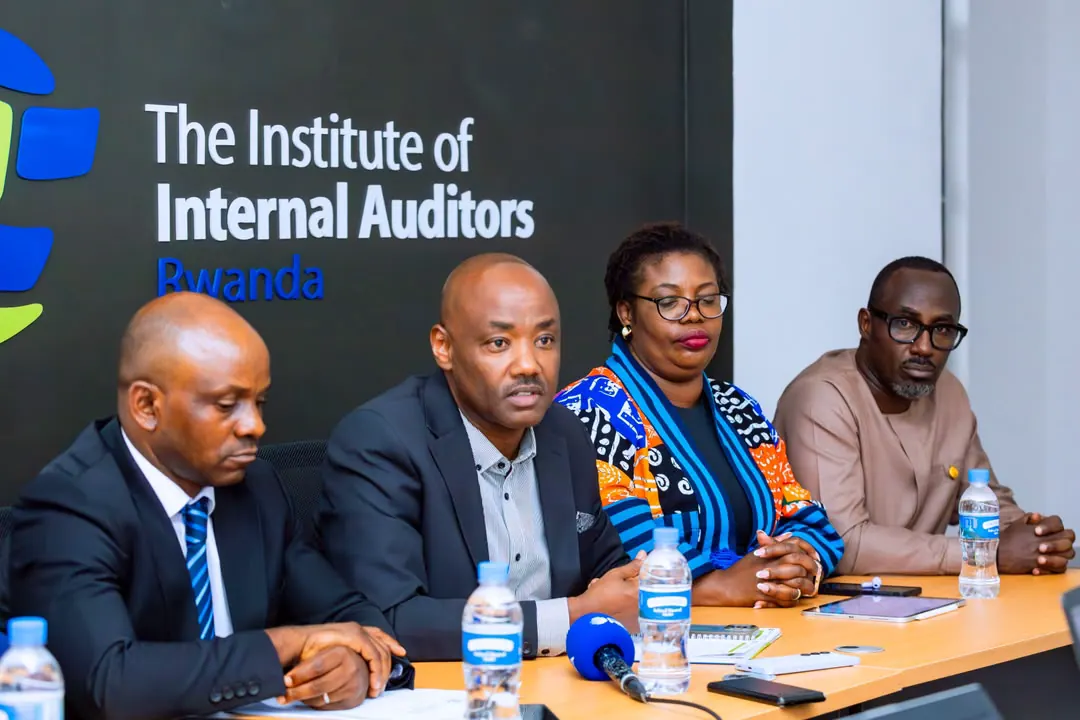
Rwanda's public institutions have shown significant improvement in their audit records, with 97% of entities receiving clean financial audits in 2025, up from 92% in 2023. Compliance with laws and regulations also increased from 69% to 83% over the same period. This progress indicates a positive trend in Rwanda's public institutional management. The Institute of Internal Auditors Rwanda (IIA Rwanda) attributes this improvement to stronger controls and effective risk management. The country's internal audit profession is now focusing on addressing new, more complex risks.
The IIA Rwanda is hosting the 9th Annual Internal Audit Conference in Kigali, which will discuss the challenges posed by emerging risks such as cybersecurity threats, fraud, data protection, and artificial intelligence. According to Richard Rutuku, CEO of IIA Rwanda, internal audit is about governance, risk management, and controls. He emphasizes that organizations need to have good governance, effective risk management, and a strong control environment to achieve their objectives. The conference aims to explore ways to address these new risks and ensure that internal audit systems remain effective.
The changing risk landscape requires internal auditors to be more proactive and forward-thinking. Thokozile Kuwali, Chairperson of the African Federation of Institutes of Internal Auditors, notes that auditors must understand an organization's aspirations and examine the quality and alignment of its decisions. She emphasizes that internal audit should be closer to the decision-making process to prevent problems before they become costly. This approach is particularly relevant for Rwanda's public sector, which is managing increasingly complex operations.
Jules César Hategekimana, Internal Auditor General at the Ministry of Finance and Economic Planning, highlights the importance of building internal audit systems that strengthen the way institutions manage public resources. He notes that internal audit in the public sector supports accountability, transparency, and proper management of public resources. The government is strengthening internal audit systems through capacity building, guidance, and oversight, improved methodologies and standards, and professional development.
The role of internal audit is becoming increasingly important as government institutions face more complex risks. Ruth Doreen Mutebe, Regional Director of the Alpha Group and Senior Internal Audit Leader, emphasizes that cleaner accounts and stronger compliance can show that controls are working. However, the harder test is whether those controls can continue working when risks are digital, interconnected, and less visible. The IIA Rwanda conference will explore ways to address these new challenges and ensure that internal audit systems remain effective.
The conference program features discussions on present-day fraud and smarter detection, as well as how technology is changing boards, audit committees, and internal audit procedures. The theme of the conference, "Internal Audit: Shaping Tomorrow," reflects the need for internal auditors to be proactive and forward-thinking in addressing emerging risks. The conference will bring together experts and professionals to share knowledge and best practices in internal audit.
The improvement in Rwanda's audit record is a positive trend, but it also presents new challenges. The country's internal audit profession must continue to evolve to address emerging risks and ensure that internal audit systems remain effective. The IIA Rwanda conference will provide a platform for experts and professionals to discuss these challenges and explore ways to address them. Key points include:
Key points
- Rwanda's public institutions show improved audit results, with 97% of entities receiving clean financial audits in 2025.
- The country's internal audit profession faces new complex risks such as cybersecurity threats, fraud, and artificial intelligence.
- Internal auditors must be proactive and forward-thinking to address emerging risks and ensure that internal audit systems remain effective.