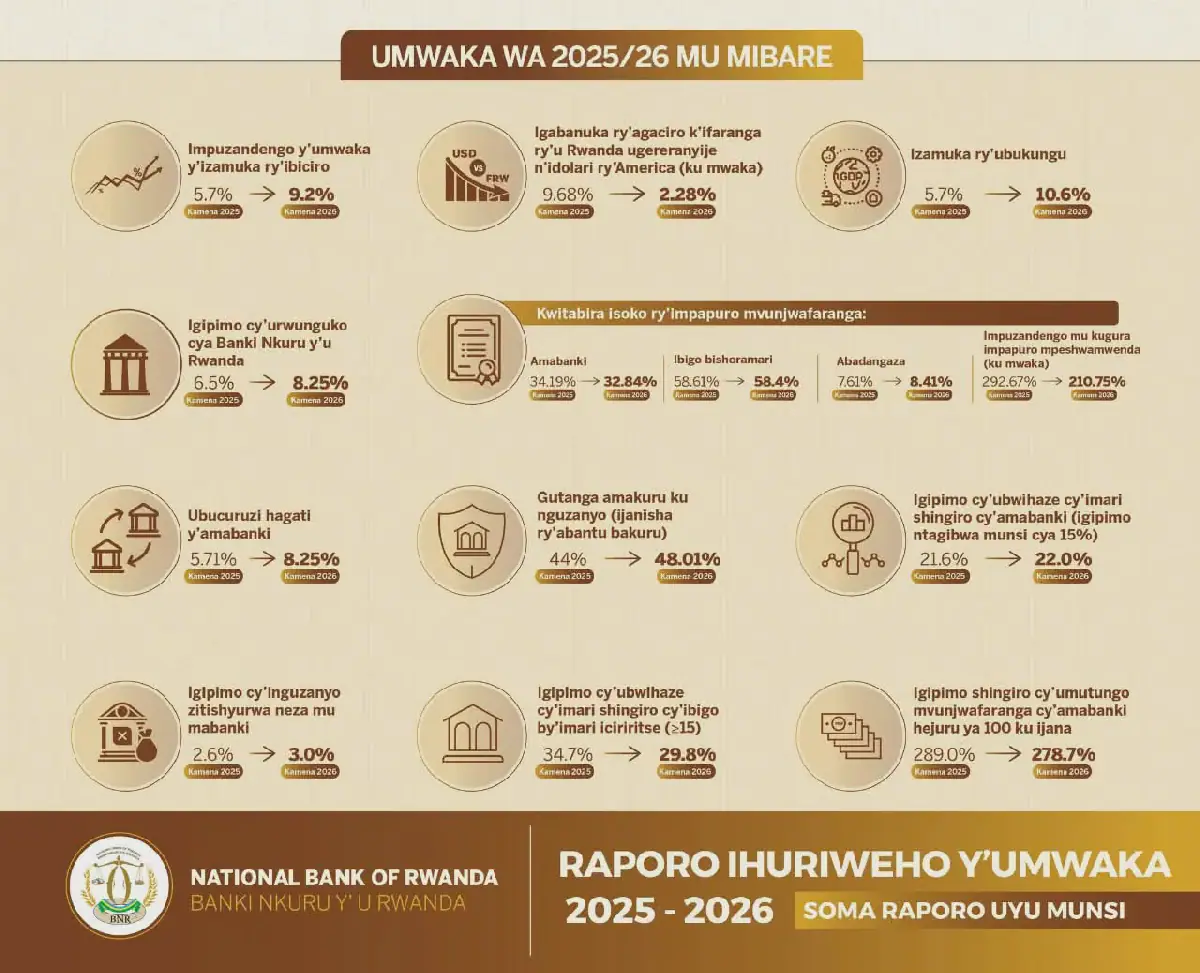
Rwanda's economy expanded by 10.6% in 2025/26, a significant increase from 5.7% in 2024/25, according to the National Bank of Rwanda's Annual Integrated Report for 2025/26. This growth reflects stronger economic activity during the reporting period. The country's foreign exchange reserves stood at $2,272.79 million, providing a crucial buffer to support external payments and help manage potential economic shocks.
The report highlights improvements in economic performance, financial sector stability, and access to financial services. However, average annual inflation also increased from 5.7% to 9.2%, indicating continued pressure on the cost of goods and services. The Rwandan franc depreciated by 2.28% against the US dollar during the year, while the country's international trade deficit narrowed by 2.8%.
The financial sector showed positive developments, with the central bank's policy rate increasing from 6.5% in 2024/25 to 8.25% in 2025/26. Access to credit improved, with the share of adults accessing loans through financial institutions rising from 44% to 48.01%, indicating progress in expanding financial inclusion.
Banks' capital adequacy ratio increased from 21.6% to 22%, remaining above the minimum regulatory requirement of 15%. This reflects the banking sector's capacity to absorb potential financial risks. The ratio of non-performing loans increased slightly from 2.6% to 3%, while the capital adequacy ratio for microfinance institutions declined from 34.7% to 29.8%.
The banking sector's liquidity ratio remained strong, although it declined from 289% to 278.7%, still considerably above the minimum requirement of 100%. The report also provides indicators on Rwanda's financial markets, including government securities and investment activities, reflecting the central bank's role in supporting monetary policy implementation and maintaining financial stability.
Through its annual report, the National Bank of Rwanda provides an overview of its monetary policy decisions, financial sector supervision, and other activities aimed at safeguarding the country's economic stability. The report serves as an accountability document, helping the public, investors, and other stakeholders understand the central bank's contribution to Rwanda's economic development and the management of its financial system.
The National Bank of Rwanda's report highlights the country's economic progress and challenges. Key areas of focus include sustaining economic growth, managing inflation, and maintaining financial stability. The central bank's efforts to promote financial inclusion and stability are crucial in supporting Rwanda's economic development.
Key points
- Rwanda's economy grew 10.6% in 2025/26, driven by stronger economic activity.
- Foreign exchange reserves reached $2.27 billion, providing a buffer to support external payments.
- Access to credit improved, with the share of adults accessing loans through financial institutions rising to 48.01%.