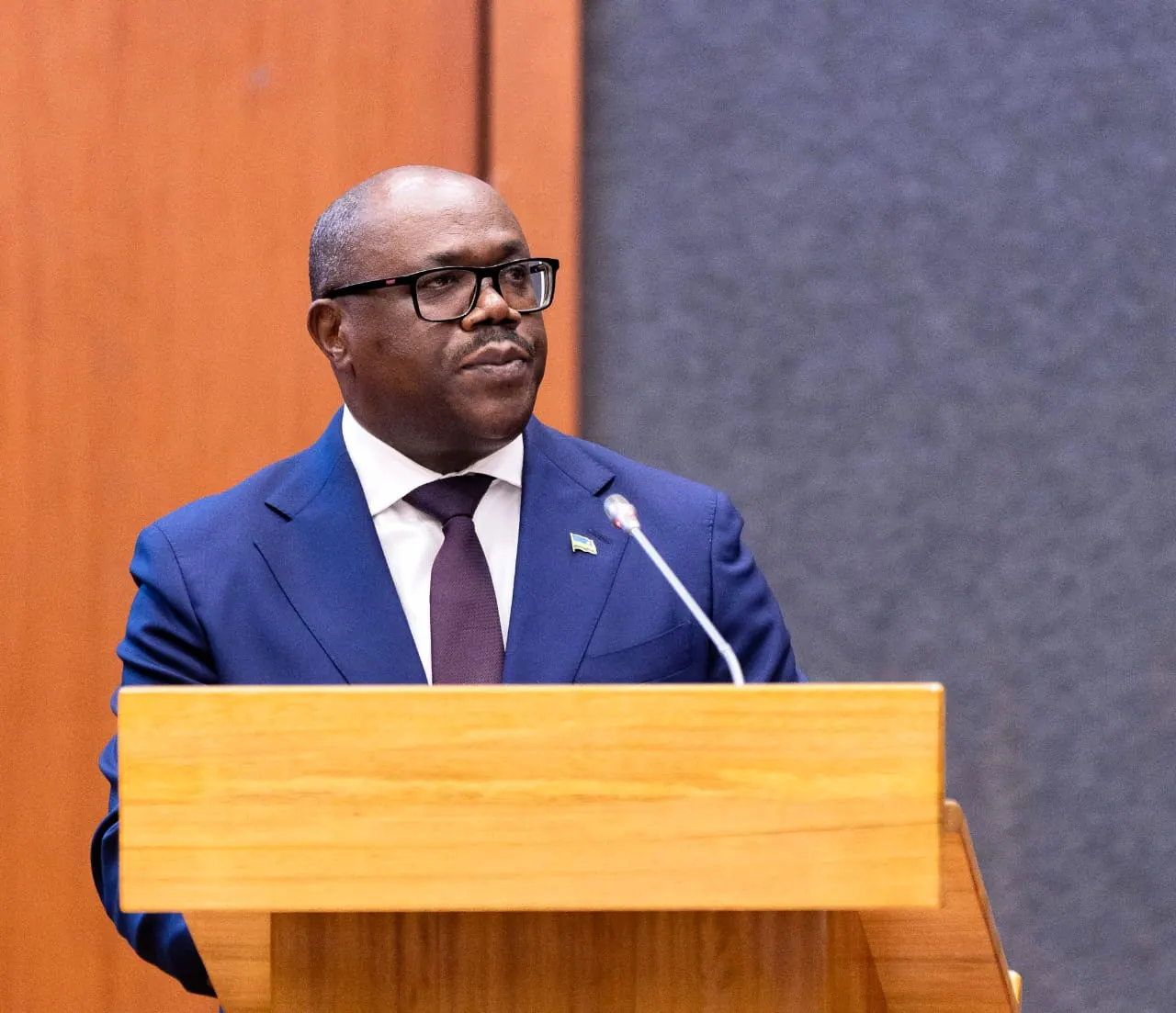
Rwanda's economy has experienced rapid growth in recent years, with a 9.4% growth rate in 2025, following 8.2% in 2023 and 7.2% in 2024. The country's economy grew by 10% in the first quarter of 2026 and 9.4% in the second quarter. However, Prime Minister Dr. Justin Nsengiyumva has emphasized that the country still needs to save more to create more businesses, investment, and jobs.
According to the Prime Minister, domestic savings have increased from 14.7% of GDP in 2017 to 22.8% in 2025, but this is still below the 25.9% target set for 2029. The government aims to encourage people to save for longer through banks, insurance, pensions, and the capital market. This will enable the financial sector to mobilize savings, finance entrepreneurs and new ventures, and support business productivity.
The financial sector in Rwanda has grown significantly, with assets increasing from Rwf4 trillion in 2017 to Rwf16 trillion in 2025. This represents growth from 53% to 68% of GDP. More people are also borrowing, with the number of borrowers rising from about 243,000 to over one million. Total loans have increased from Rwf1.6 trillion to Rwf5.5 trillion, with private-sector lending reaching Rwf5.275 trillion in 2025.
The Prime Minister has highlighted the importance of ensuring that more of the money being saved finds its way into businesses and investments that can produce more goods, services, and jobs. He noted that insufficient domestic investment and savings creates a large export-import gap and persistent price pressures. The government is promoting digital payments, with 73.7% of adults making digital payments in 2025.
Rwanda has made significant progress in increasing access to formal financial services, with 92% of the population having access to such services in 2024. When savings groups are included, this figure reaches 96%. The number of digital payment transactions has risen from about 256 million in 2017 to 3.1 billion, with a value of Rwf85.5 trillion. There are now 36 licensed fintech institutions, compared to just three in 2017.
The government has introduced eKash, an interoperable payment system linking financial institutions, which allows for transfers at a cost of no more than Rwf20, with a maximum transaction value of Rwf10 million. The Prime Minister emphasized that saving is not only about having money available to invest but also gives families a cushion when things go wrong and helps them prepare for the future.
The growth in pensions and other long-term savings is a positive trend, with the number of pension contributors more than doubling between 2017 and 2025. Pension-fund assets have grown from Rwf66 billion to Rwf2.2 trillion, and the government's Ejo Heza long-term savings scheme has attracted nearly four million members by 2025.
Key points
- The country's domestic savings have increased from 14.7% of GDP in 2017 to 22.8% in 2025.
- Rwanda's economy grew by 9.4% in 2025.
- The financial sector's assets have increased from Rwf4 trillion in 2017 to Rwf16 trillion in 2025.