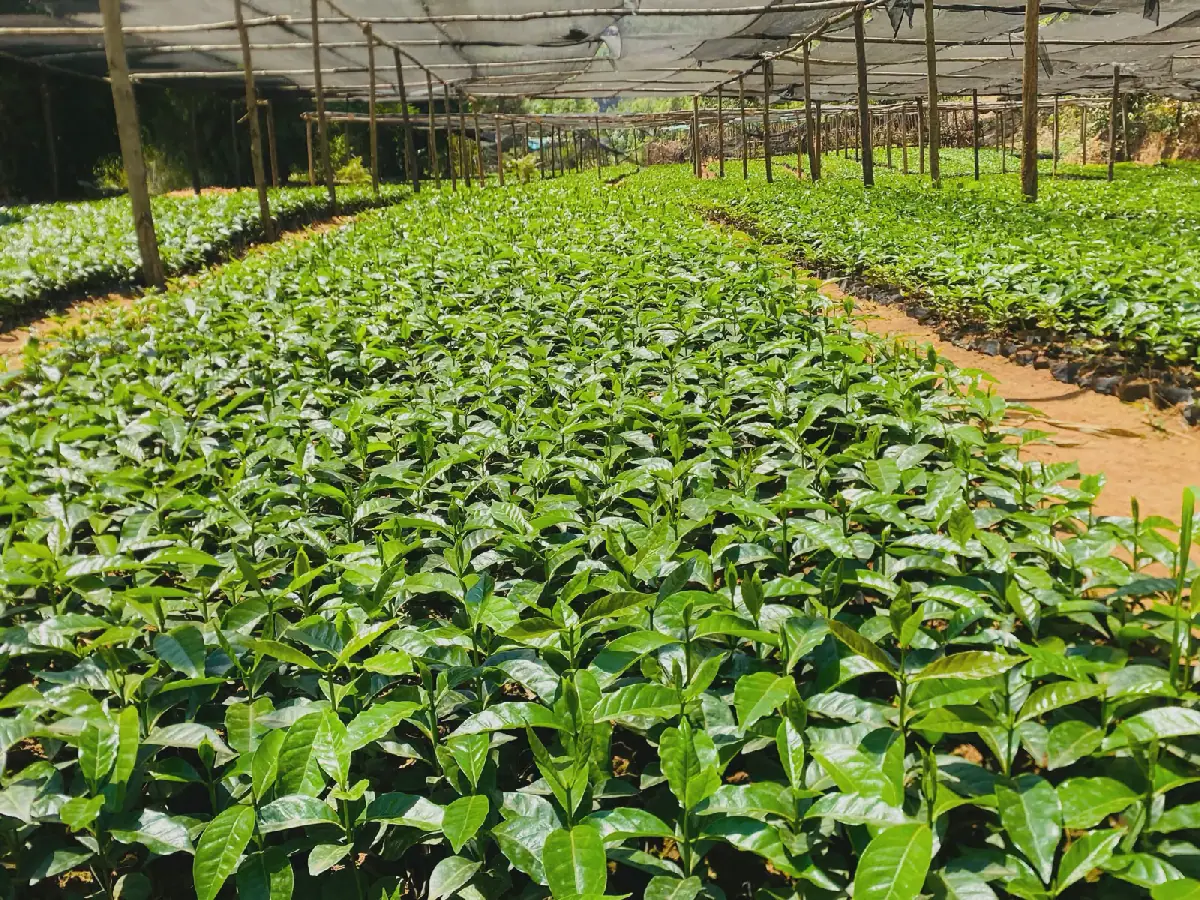
The Rwandan government has announced plans to plant 24 million coffee trees in the 2026/2027 season, as part of efforts to increase production and meet its target of exporting 32,000 tons of coffee per year by 2029. The National Agricultural Export Board (NAEB) will oversee the planting of 20 million trees to expand coffee cultivation areas, while 4 million trees will replace old, exhausted trees. This initiative is part of a broader strategy to boost coffee production and quality.
The government launched this program in 2024, which involves replacing coffee trees over 30 years old and planting new ones to increase production and quality. In the Gisagara district, 25,000 coffee trees were planted on 10 hectares of land on November 12, 2026. Similarly, in the Kinazi sector of Ruhango district, the Shyogwe Anglican Diocese planted 12,500 climate-resilient coffee trees. The diocese's bishop, Louis Pasteur Kabayiza, said the initiative aims to develop coffee farming and support local communities.
Bishop Kabayiza stated that the diocese's plan to develop coffee farming was born out of a 2015 assessment, which found that 85% of its Christians engage in agriculture. The diocese aims to support its Christians in overcoming poverty and improving their livelihoods through coffee farming. The bishop noted that coffee is a valuable cash crop that can help residents escape poverty. The diocese plans to plant 200,000 coffee trees on 80 hectares of land in different districts.
NAEB's Alexis Nkurunziza, who oversees the development of traditional crops like coffee, said the government is committed to supporting coffee farmers and improving production. The government provides training, equipment, and extension services to farmers, as well as promoting good agricultural practices through media campaigns. Nkurunziza expressed confidence that with continued government support, Rwanda can achieve its coffee production targets.
The coffee trees being planted are of the RAB C-15 variety, which is resistant to climate change and can produce high-quality coffee when properly cared for. Each tree can produce up to 5 kilograms of coffee. According to a 2015 survey, Rwanda has approximately 42,000 hectares of land dedicated to coffee production, although an ongoing census aims to determine the current actual area.
The government aims to increase the area under coffee production to 52,000 hectares by 2029, as part of its National Strategy for Transformation 2 (NST2). Coffee is a significant contributor to Rwanda's economy, generating $139 million in export revenue last year from 29,000 tons of coffee. NAEB projects that coffee exports will reach $192 million by 2029.
NAEB advises farmers to follow proper planting procedures to ensure the trees thrive. This includes mixing organic fertilizer with soil in planting holes at least two weeks before planting. The board also recommends planting trees in holes with sufficient space to allow for proper root growth. With continued support and good agricultural practices, Rwanda is optimistic about achieving its coffee production goals.
Key points
- The Rwandan government aims to plant 24 million coffee trees by 2026/2027 to boost production and meet its export targets.
- The National Agricultural Export Board (NAEB) will oversee the planting of 20 million trees to expand coffee cultivation areas and 4 million trees to replace old trees.
- Rwanda aims to export 32,000 tons of coffee per year by 2029, generating $192 million in revenue.
Reporting sources
- Mu 2026/2027 u Rwanda ruzatera ingemwe z’ikawa miliyoni 24 · Imvaho Nshya