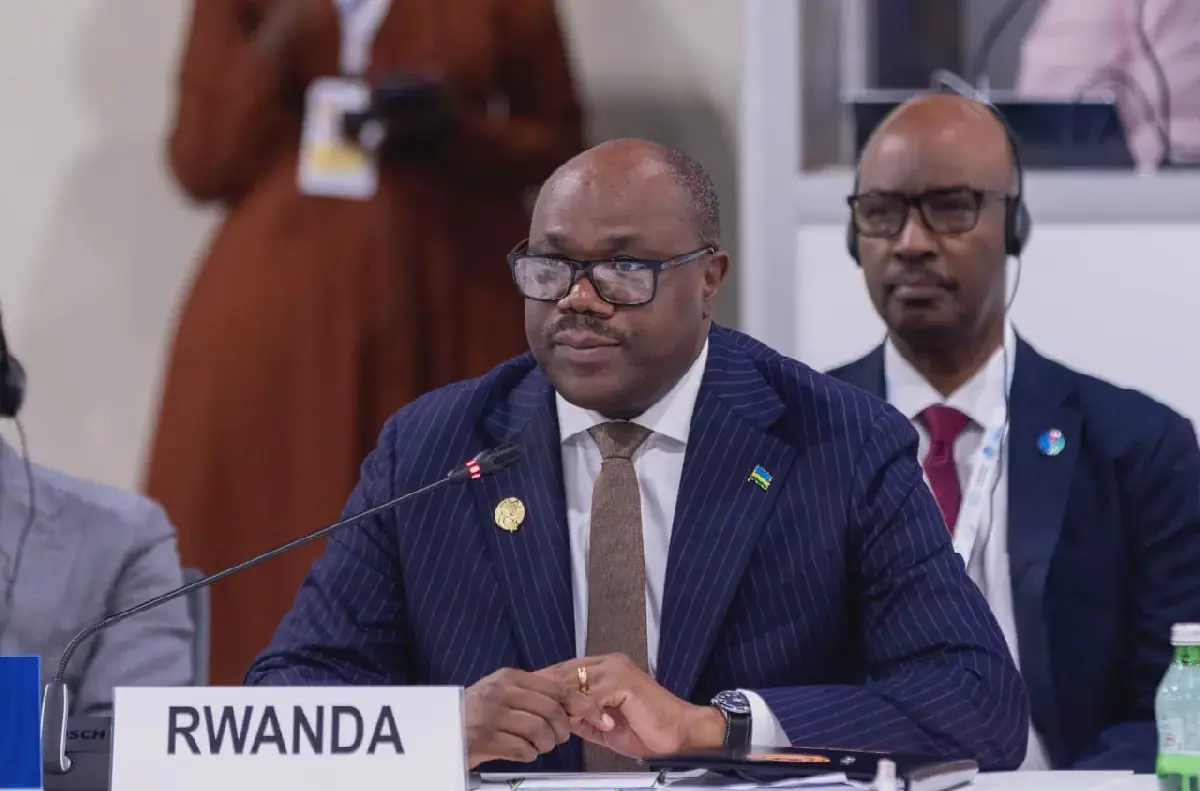
The government of Rwanda has announced that it needs approximately $1.3 billion, equivalent to nearly two trillion Rwandan francs, to invest in upgrading and expanding its electricity infrastructure. This investment is crucial to achieving the country's 2030 development targets for the energy sector. According to Prime Minister Dr. Nsengiyumva Justin, the funds will be used to revamp and expand the country's electricity infrastructure to increase access to electricity for its citizens and economic activities.
Dr. Nsengiyumva made the announcement at the Global Grids Accelerator, an international conference held in Antalya, Turkey, on November 12, 2026. The conference aimed to accelerate investments in global electricity grids, with the theme "Accelerating the Transition - Scaling Up Grids for a Secure and Prosperous Future." The Prime Minister emphasized that Rwanda is committed to expanding its electricity generation and distribution capacity, but this requires partnerships with international partners, financial institutions, and private investors.
The government's energy plan, known as the "Mission 300 National Energy Compact," aims to increase the country's electricity generation capacity by 70% and double its electricity trade with neighboring countries to 200 megawatts by 2030. Additionally, the plan targets to provide electricity to every household and economic activity by 2030, with 75% of households and businesses accessing electricity through the national grid. To achieve these targets, the government requires $3.05 billion in investments by 2030, with $1.3 billion allocated for electricity infrastructure upgrades.
The Prime Minister noted that the government faces challenges in securing funding for electricity infrastructure projects, as its fiscal space is limited, and borrowing costs are high. He appealed to private investors and international financial institutions to play a more significant role in financing electricity infrastructure projects in Africa. Dr. Nsengiyumva stressed that governments alone cannot fund these projects and that partnerships with the private sector and international organizations are essential.
Rwanda is implementing measures to reduce electricity losses in its grids, improve the efficiency of its electricity distribution companies, and use technology to monitor grid performance and set tariffs that reflect the cost of electricity generation. The Prime Minister called on international financial institutions and development organizations to support Rwanda's efforts to upgrade its electricity infrastructure and integrate its grids with those of neighboring countries.
Dr. Nsengiyumva requested that international financial institutions and development organizations provide financial and technical support to help Rwanda implement its energy plans. He also appealed to the United Nations and international partners to provide technical assistance and policy support to help countries achieve their energy development targets. The Prime Minister emphasized that Rwanda is committed to implementing the necessary reforms to achieve its energy targets.
The Global Grids Accelerator initiative was launched by UN Secretary-General António Guterres in November 2026 to accelerate investments in electricity grids in Africa and Southeast Asia. The initiative aims to support countries in developing their electricity infrastructure and achieving their energy development targets. Rwanda aims to have the initiative's framework in place by 2027, which will guide its long-term electricity infrastructure development and energy sector growth.
Key points
- The government of Rwanda requires approximately $1.3 billion to upgrade and expand its electricity infrastructure to meet its 2030 development targets.