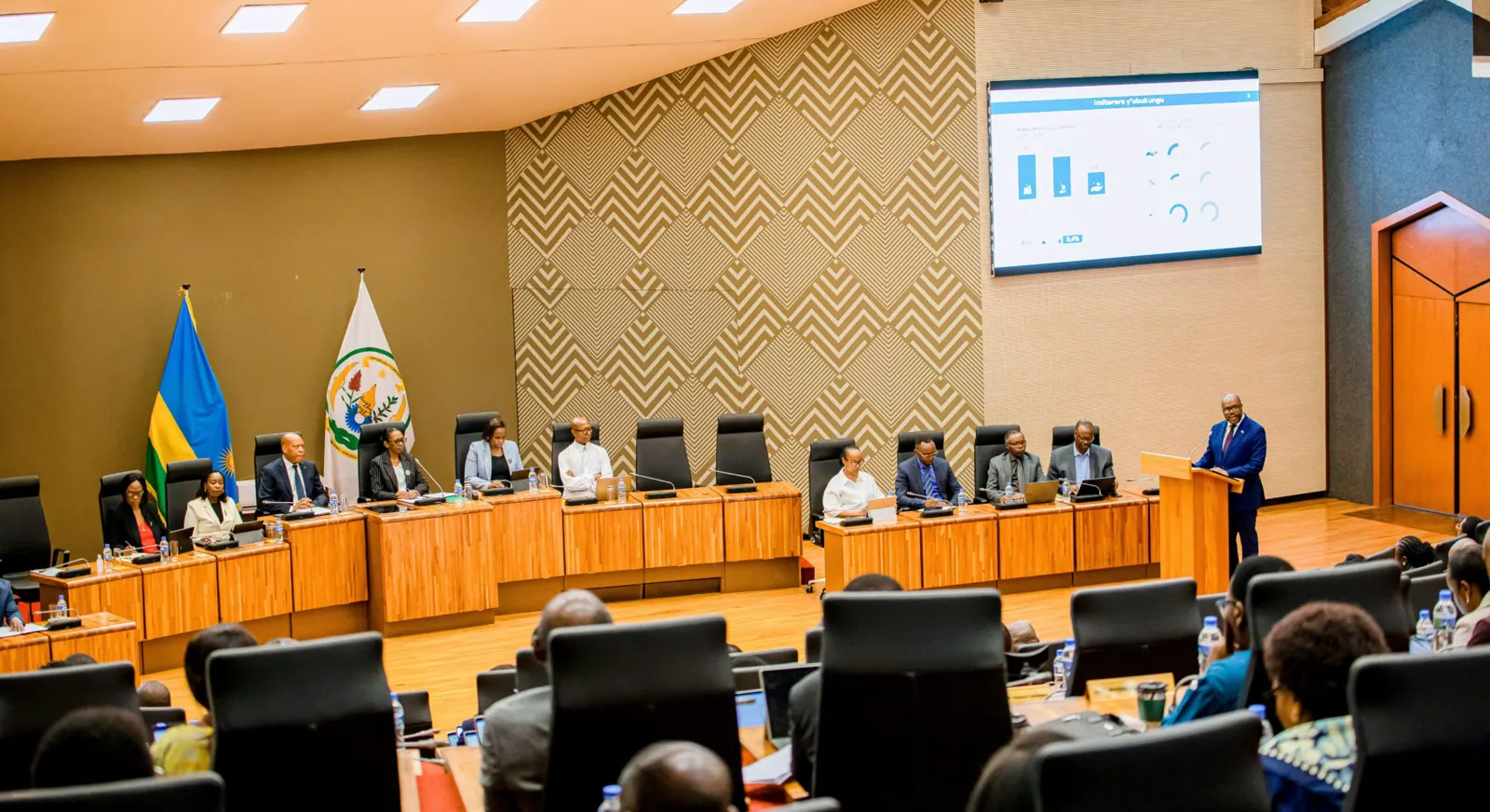
Rwanda's government has announced plans to improve the safety and transparency of informal savings groups, known as ibimina, which have become a significant part of the country's financial landscape. Prime Minister Dr Justin Nsengiyumva revealed that nearly 15,000 ibimina now hold close to Rwf54 billion. The government's goal is to increase transparency, prevent theft, and protect members' money. Ibimina have been used for generations as a simple way for people to support one another financially.
Ibimina are formed by groups of people, often friends, family members, workmates, or neighbors, who agree to contribute a certain amount of money at regular intervals. The arrangement can take different forms, with some groups collecting money for a specific purpose, while others provide financial support to members in need. Increasingly, ibimina are using banks and other financial institutions to hold their money, rather than keeping cash among members. The basic principle remains the same: members pool their resources to support one another.
The Ministry of Finance and Economic Planning has outlined a formal framework for the operation of tontines, another term used for such collective savings arrangements. The framework recognizes their role in Rwanda's social and economic life and sets out conditions for their operation, including a requirement for at least five members and an agreed common purpose. However, the government's wider financial-inclusion strategy still treats many ibimina as informal financial arrangements, outside direct regulation by the National Bank of Rwanda.
The government's focus is not only on how groups collect money but also on stronger safeguards against theft and other forms of abuse. The Prime Minister linked the measures to wider efforts to protect financial consumers, including new rules and procedures to prevent and address financial fraud. Reported financial-fraud complaints fell from 4,128 in the second quarter of 2025 to 2,879 in the same quarter of 2026, a fall of about 30%. However, problems remain, including phone-based fraud and attempts to trick people into revealing confidential information.
The government plans to strengthen payment infrastructure and develop policies to respond to cyberattacks as more financial services move online. Rwanda's use of digital financial services is expanding rapidly, with the number of digital-payment transactions rising from 256 million in 2017 to 3.1 billion in 2025. The value of these transactions rose from Rwf2.9 trillion to Rwf85.5 trillion over the same period. The number of FinTech companies also increased from three to 36.
For ibimina, the challenge is to adapt to the growing amounts involved, with Rwf54 billion spread across nearly 15,000 groups. The government wants the groups to operate transparently, reduce opportunities for theft, and give members greater confidence that their savings are safe. The approach fits into Rwanda's broader effort to move more people from informal financial arrangements into safer and more reliable financial systems. However, ibimina are likely to remain part of that system, serving a social purpose that goes beyond banking.
The government's task is to make the system safer without removing the flexibility that has made ibimina useful for generations. The communal-support principle remains at the heart of the system, with many members valuing not only the savings but also the ability to mobilize money when needed. The government launched eKash in 2026 to connect financial institutions and make transfers cheaper, with transfers through the system costing a maximum of Rwf20 and a single transaction reaching Rwf10 million.
Key points
- The Rwandan government has announced plans to improve the safety and transparency of informal savings groups, known as ibimina, which have become a significant part of the country's financial landscape.
- The government wants the groups to operate transparently, reduce opportunities for theft, and give members greater confidence that their savings are safe.
- The approach fits into Rwanda's broader effort to move more people from informal financial arrangements into safer and more reliable financial systems.