A 2026 comparative study highlights the significant gap in rural electrification between Rwanda and Papua New Guinea. Both countries began the 2000s with around 10% electricity access, facing challenges such as dispersed rural populations and difficult terrain. However, their trajectories diverged sharply, with Rwanda making substantial progress and Papua New Guinea lagging behind. The study attributes Rwanda's success to disciplined policy coordination and effective state capacity.
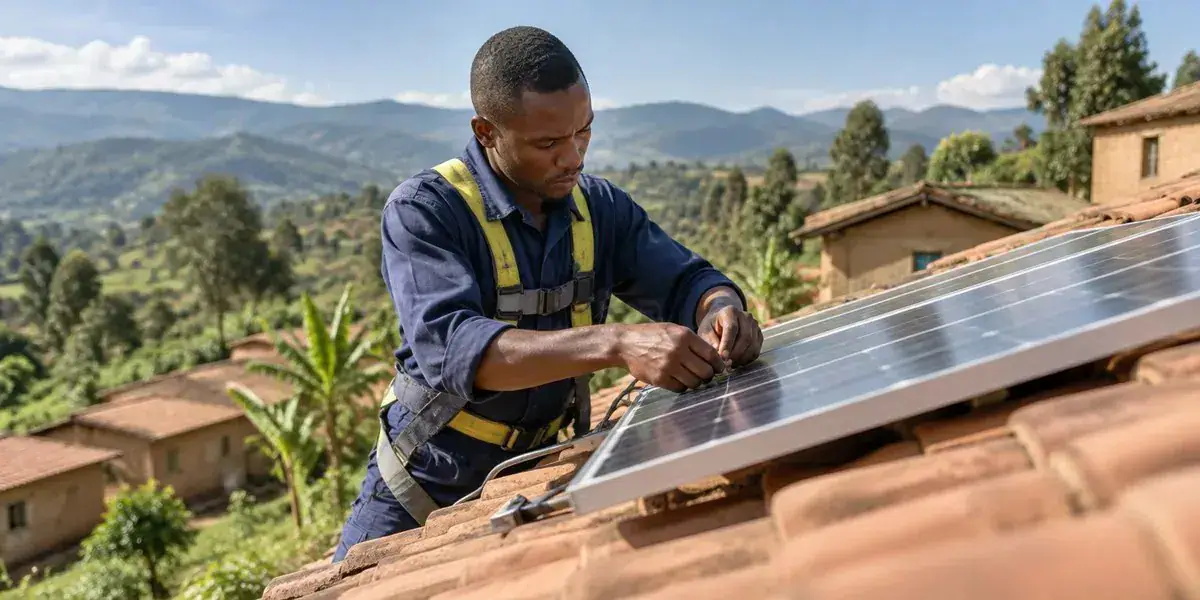
Rwanda's electrification drive led to the addition of 41 power plants, primarily hydro and solar, resulting in household connectivity of 84.6% by July 2025. This covers both grid and off-grid systems, demonstrating a comprehensive approach to energy access. The government's commitment to electrification, launched through the Energy Access Roll-out Programme in 2008, played a crucial role in this achievement. The programme pooled government and donor funding under a structured five-year expansion plan.
A key factor in Rwanda's success was its ability to raise over $1.4 billion between 2009 and 2024, according to the study's figures. Government agencies received annual electrification targets through performance contracts, ensuring accountability across administrations. In contrast, Papua New Guinea did not approve its National Electrification Roll-Out Plan until 2022, despite conceiving it in 2011. This decade-long delay reflected political instability and weak administrative coordination.
The study highlights the importance of delivery capacity and consistent execution across public institutions. Rwanda's experience shows that reducing private-sector risk through long-term power purchase agreements was crucial in attracting investment. These contracts, typically running for 25 years, included fixed payments for contracted electricity volumes, denominated in US dollars, protecting investors from local currency depreciation.
The central government in Rwanda further mitigated risk by agreeing to cover the utility's obligations if the state buyer failed to pay. In contrast, Papua New Guinea offered fewer protections, with agreements lacking equivalent state guarantees and tariffs set and paid in local currency. This exposed investors to payment and currency risk, as cited by one power producer describing the country's utility as effectively insolvent.
The 2026 study notes that Rwanda's electrification advance came from shifting project risk towards the public balance sheet, attracting private capital but also creating fiscal exposure. Guarantees can accelerate infrastructure delivery while transferring future liabilities to government, a trade-off policymakers must manage deliberately. Similar dynamics are emerging elsewhere on the continent, with the ECOWAS RAISE project testing comparable approaches to rural electrification.
The ECOWAS RAISE project, backed by $160 million in development funding, aims to replicate Rwanda's success in other countries. By adopting a similar approach to rural electrification, these countries can potentially accelerate their own progress. The study's findings emphasize the importance of state capacity, policy coordination, and effective risk management in achieving successful electrification outcomes.
Key points
- Rwanda's state capacity and sovereign risk-sharing drove its rural electrification success, reaching 84.6% energy access by mid-2025.
- Papua New Guinea's delayed National Electrification Roll-Out Plan and weak administrative coordination hindered its progress.
- The study highlights the importance of delivery capacity, consistent execution, and effective risk management in achieving successful electrification outcomes.
Reporting sources
- Rwanda Leads PNG in Rural Electrification Study · FurtherAfrica