Rwanda has made significant investments in research centers, innovation hubs, and funding programs aimed at turning scientific ideas into practical solutions for its development needs. However, despite these efforts, ensuring that research produces tangible results that people, businesses, and public institutions can use remains a challenge. The country's first Innovation Survey, covering 2022 to 2024, found that 89% of higher education institutions were actively engaged in innovation, with 86.1% introducing new innovations during the period.
The National Research and Innovation Fund has invested nearly Rwf8 billion in 126 projects across various sectors, including health, agriculture, energy, local production, and digital services. More than 20 of these projects have been identified as having commercialization potential. The National Council for Science and Technology has also collaborated with the University of Rwanda to attract private-sector investment and connect academic research with market needs.
Experts across the continent argue that research in health systems often produces publications and pilot projects without changing how services are delivered. Professor Nahya Salim, Director of Research, Publication, and Innovation at Tanzania's Muhimbili University of Health and Allied Sciences, emphasized that research needs to examine not only whether an intervention works but also whether hospitals and communities can realistically use it.
Professor Salim also warned that promising programs can disappear when donor funding runs out because governments were not involved early enough to incorporate them into national budgets. She stressed the need for governments to create budget lines for programs to ensure their sustainability. Professor Eli Katunguka, Vice Chancellor of Uganda's Kyambogo University and chairman of EARIMA, argued that African countries must become better at converting research and resources into economic value.
The University of Rwanda has established specialized centers in areas such as data science, energy, biodiversity, and biomedical engineering, with innovation hubs aimed at helping researchers develop and test solutions with commercial potential. In January 2026, the African Development Bank approved $29.85 million in financing for the second phase of Rwanda's Centre of Excellence for Biomedical Engineering and e-Health.
Professor Abraham Haileamlak Mitike, Principal of the University of Rwanda's College of Medicine and Health Sciences, emphasized that universities must become partners in entrepreneurship, innovation, and national development. He stressed that universities can no longer be viewed solely as places for teaching and academic inquiry but must become drivers of innovation ecosystems and catalysts for entrepreneurship.
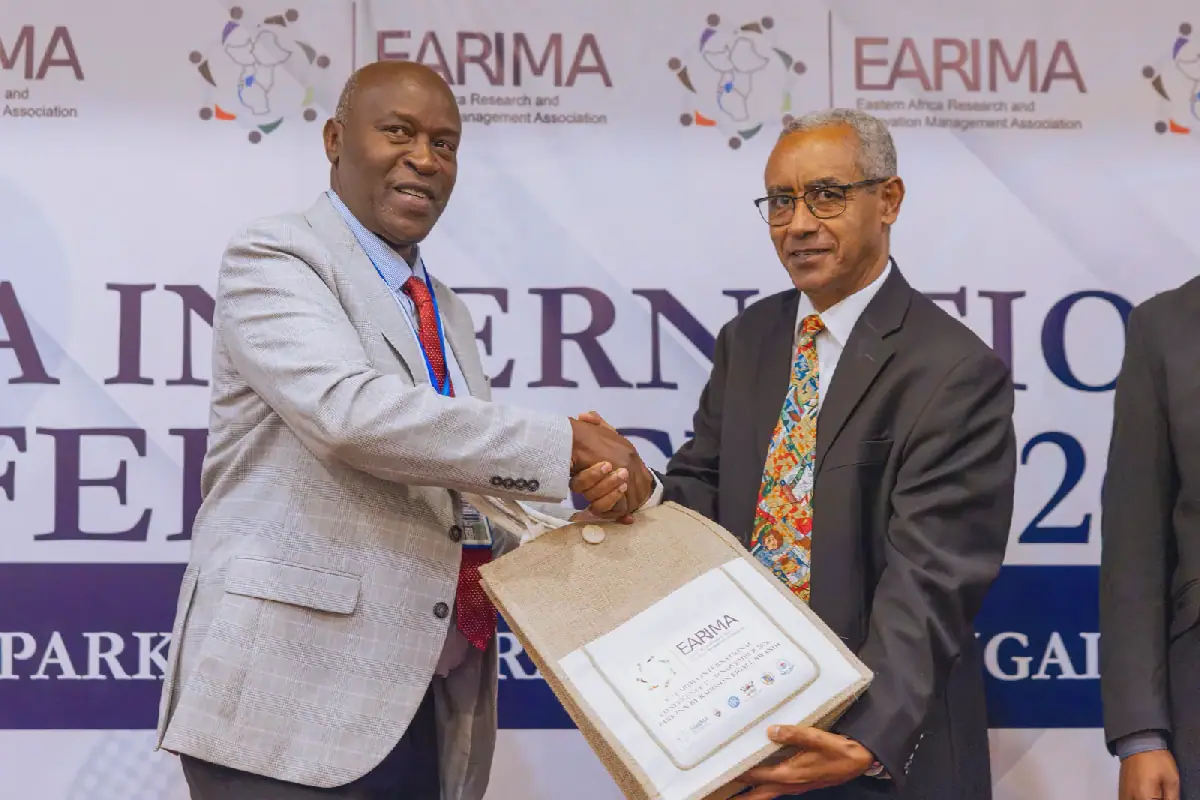
The revised science and technology strategy in Rwanda acknowledges the limited translation of research into scalable solutions and evidence-based decisions. It calls for stronger pathways to move ideas from research and prototypes towards adoption and wider use. The EARIMA conference, which concluded on November 19, brought together researchers and research managers to examine how institutions can create a difference in advancing research and innovation management for African socio-economic transformation.
Key points
- Research in Africa often fails to translate into practical solutions due to limited resources and lack of government involvement.
- Rwanda has made significant investments in research and innovation but struggles to implement findings.
- Experts emphasize the need for stronger pathways to move ideas from research and prototypes towards adoption and wider use.