The Rwandan government has initiated a pilot scheme to provide ready-cooked meals to schools in Rwamagana District. The project, launched on November 13, serves 15,014 students and 266 teachers across five public schools. Meals are prepared at a central kitchen and transported to the schools in electric vehicles, replacing the need for each institution to cook its own food. This approach aims to improve nutrition, reduce reliance on firewood, and lower the cost of school feeding.
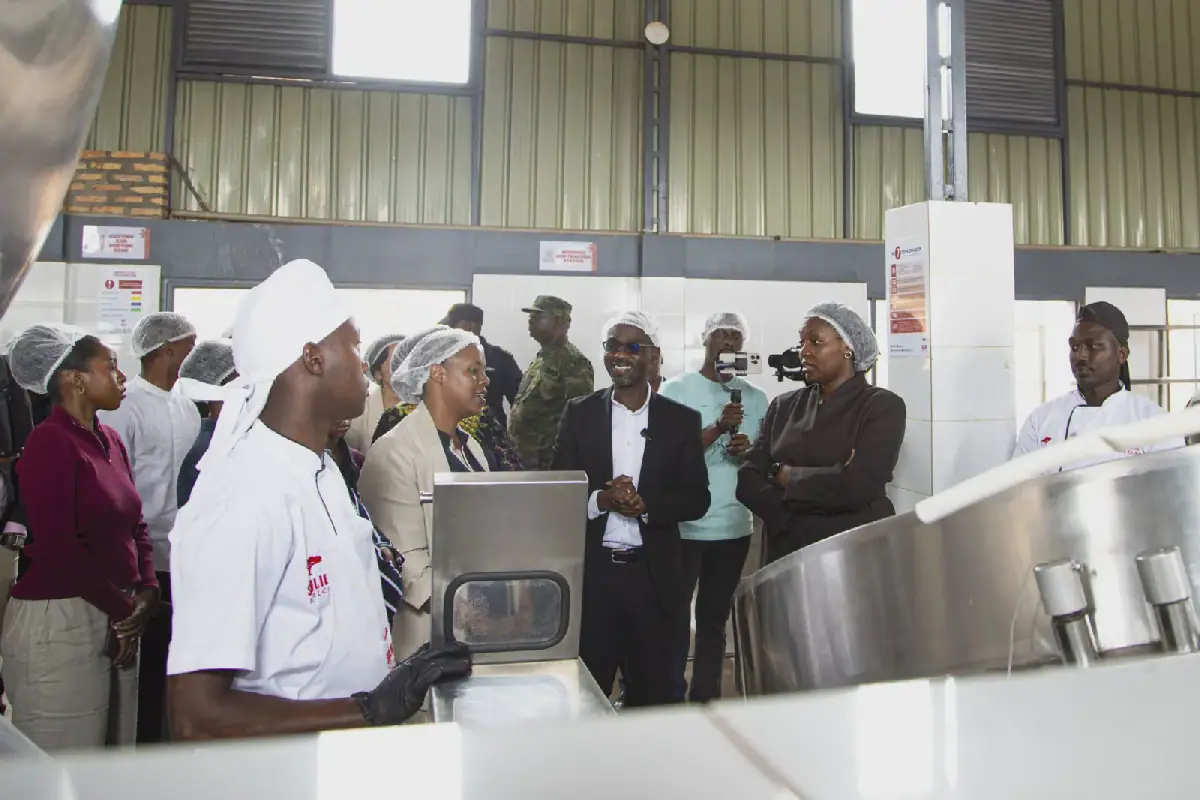
The central kitchen, located at GS Bujyujyu in Muyumbu Sector, was inaugurated by Minister of State for Education Claudette Irere and representatives of Solid'Africa, the local social enterprise implementing the project. The facility operates within a one-hour delivery radius of the five schools and prepares meals using industrial electric cooking equipment, reducing energy costs and eliminating harmful smoke from cooking facilities. The energy system combines rooftop solar panels with electricity from the national grid.
The pilot project adapts a hub-and-spoke model used in Japan and South Korea, where municipal school lunch centers prepare meals for distribution to several schools. Rwanda's approach emphasizes clean energy and integrates local agricultural production into the supply chain. The kitchen purchases fresh produce from agricultural cooperatives representing approximately 1,000 smallholder farmers in the surrounding region, providing a reliable market for their harvests.
The project also includes school gardens, which supplement food supplies and give students practical lessons in nutrition and food production. This approach is similar to Japan's Shokuiku, or food and nutrition education, which treats school meals as an opportunity to teach children about healthy diets, food production, and the value of local ingredients. The program aims to support Rwanda's target of phasing out biomass cooking in public institutions by 2030.
Minister Irere emphasized that access to nutritious meals is directly linked to children's ability to learn and perform well in school. "Every child in Rwanda deserves a good education, and no child should have to sit through a lesson on an empty stomach," she said. The government and technical partners will monitor the pilot's performance over the coming school terms, assessing energy efficiency, meal delivery logistics, and the cost of preparing each meal.
The findings from the pilot will inform decisions on whether to establish additional regional kitchen hubs across Rwanda. The project follows a partnership agreement signed between the Government of Rwanda and Solid'Africa in November 2023. Supported by catalytic funding from The Rockefeller Foundation, the facility serves as a testing ground for the model. Unlike Japan and South Korea, which have operated nationwide school feeding systems for decades, Rwanda is starting with a limited pilot.
The centralized school meal system has the potential to reduce duplication of kitchens, cooking equipment, staffing, and storage facilities across individual schools. The project's success could lead to a wider rollout, providing an opportunity to assess the model before expanding it. Key stakeholders, including the government, Solid'Africa, and The Rockefeller Foundation, are working together to ensure the project's success and scalability.
Key points
- The pilot project serves 15,014 students and 266 teachers across five public schools in Rwamagana District.
- The project aims to improve nutrition, reduce reliance on firewood, and lower the cost of school feeding.
- The centralized kitchen operates using clean energy, combining rooftop solar panels with electricity from the national grid.