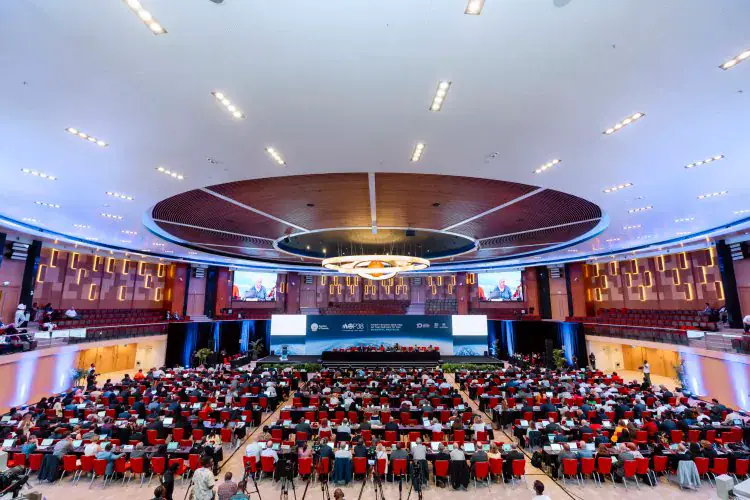
The 38th meeting of countries that have signed the Montreal Protocol, known as MOP38, kicked off in Kigali on November 2, 2026, and will run until November 6, 2026. The meeting is being co-organized by the Rwandan government and the United Nations Secretariat for the Montreal Protocol. Over 1,000 participants from various countries are expected to attend the meeting, which aims to review the implementation of the Montreal Protocol and discuss ways to strengthen efforts to protect the ozone layer.
The Montreal Protocol was signed on September 16, 1987, in Montreal, Canada, and has since been ratified by nearly all countries worldwide. The protocol aims to reduce and eliminate the production and consumption of substances that deplete the ozone layer, such as chlorofluorocarbons (CFCs) and other halogenated gases. The agreement has been successful in reducing the production and consumption of these substances, and has played a crucial role in protecting the ozone layer.
In 2016, the Montreal Protocol was amended in Kigali, Rwanda, to include a new set of targets to reduce the production and consumption of hydrofluorocarbons (HFCs), which are potent greenhouse gases. The Kigali Amendment aims to reduce the global production and consumption of HFCs by 85% by 2036. The meeting in Kigali will provide an opportunity for countries to review progress made in implementing the Montreal Protocol and the Kigali Amendment.
The meeting in Kigali is taking place at a time when the protection of the ozone layer is more important than ever. The ozone layer plays a critical role in protecting life on Earth by absorbing harmful ultraviolet radiation from the sun. The depletion of the ozone layer can have serious consequences for human health, including increased risk of skin cancer and cataracts.
Rwanda's hosting of the MOP38 meeting is seen as an opportunity for the country to demonstrate its commitment to protecting the environment and combating climate change. The country has made significant progress in recent years in reducing its greenhouse gas emissions and promoting sustainable development.
The Montreal Protocol has been hailed as one of the most successful international environmental agreements, with many countries having already phased out the production and consumption of CFCs and other ozone-depleting substances. However, there is still work to be done to ensure that the ozone layer is fully protected, and that the implementation of the Montreal Protocol and the Kigali Amendment is effective.
The MOP38 meeting will provide a platform for countries to share best practices and experiences in implementing the Montreal Protocol and the Kigali Amendment. It will also provide an opportunity for countries to discuss challenges and obstacles to implementation, and to identify areas for further cooperation and support.
Key points
- The Montreal Protocol has been successful in reducing the production and consumption of substances that deplete the ozone layer.
- The Kigali Amendment aims to reduce the global production and consumption of HFCs by 85% by 2036.
- Rwanda's hosting of the MOP38 meeting demonstrates its commitment to protecting the environment and combating climate change.