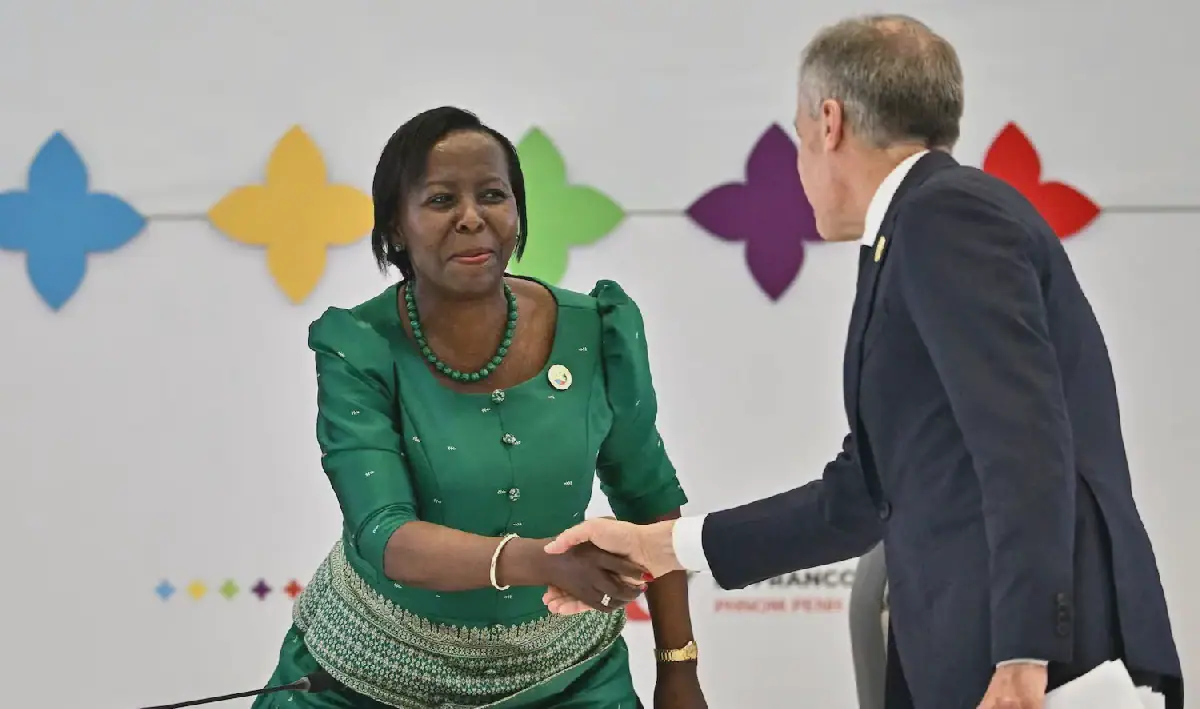
The recent 20th summit of the International Organization of La Francophonie (OIF) in Phnom Penh, Cambodia, concluded with a decision to extend Louise Mushikiwabo's term as Secretary-General for 12 months. This move comes after intense negotiations among member states. Rwandan Foreign Minister, Ambassador Olivier Nduhungirehe, explained that prior to the summit, there were disagreements on the election process for the new Secretary-General. Some countries, supported by France and the Democratic Republic of Congo (DRC), wanted Mushikiwabo to step down.
The DRC had threatened to leave the OIF if Mushikiwabo was re-elected, prompting France to pressure her to withdraw her candidacy and support Dacian Cioloș of Romania instead. Nduhungirehe revealed that he was surprised by France's concession to DRC's demands. He also discussed a letter from French President Emmanuel Macron to Rwandan President Paul Kagame, urging him to reach an agreement with DRC President Félix Tshisekedi by November 14. The letter suggested that if no agreement was reached, the candidates from both countries would be excluded.
Nduhungirehe stated that Rwanda could not accept Macron's request, as it would undermine the OIF's electoral rules. Instead, Rwanda proposed extending Mushikiwabo's term by two years, allowing for reforms to the organization's electoral laws. This proposal was initially met with resistance from DRC, which sought a shorter transition period and the appointment of an interim leader. However, after negotiations with President Kagame and other African leaders, an agreement was reached to extend Mushikiwabo's term by 12 months.
The agreement was reached after President Kagame engaged in discussions with Senegal's President Bassirou Diomaye Faye, Togo's President Faure Gnassingbé, and Benin's President Romuald Wadagni. Rwanda had initially proposed a two-year extension, but compromised on 12 months. In return, Rwanda committed to not fielding a candidate for the Secretary-General position after Mushikiwabo's extended term.
The OIF summit ultimately adopted the decision to extend Mushikiwabo's term, allowing her to continue leading the organization until 2027. During this period, she will oversee reforms to the electoral laws, including the length of the Secretary-General's term, the rotation of the position among member states, and the electoral process. These reforms aim to prevent similar disputes in the future.
The extension of Mushikiwabo's term was seen as a compromise solution, avoiding a potentially divisive election process. The OIF, comprising 84 member states, aims to promote French language and culture, as well as democracy and human rights. The organization's leadership has been a subject of contention, with some member states pushing for greater representation.
The agreement on Mushikiwabo's extended term has provided a temporary solution to the OIF's leadership crisis. The organization will now focus on implementing the agreed-upon reforms, ensuring a smoother transition of power in the future. Key points include:
Key points
- Louise Mushikiwabo's term as OIF Secretary-General extended for 12 months
- Agreement reached after intense negotiations among member states
- Reforms to electoral laws to prevent future disputes