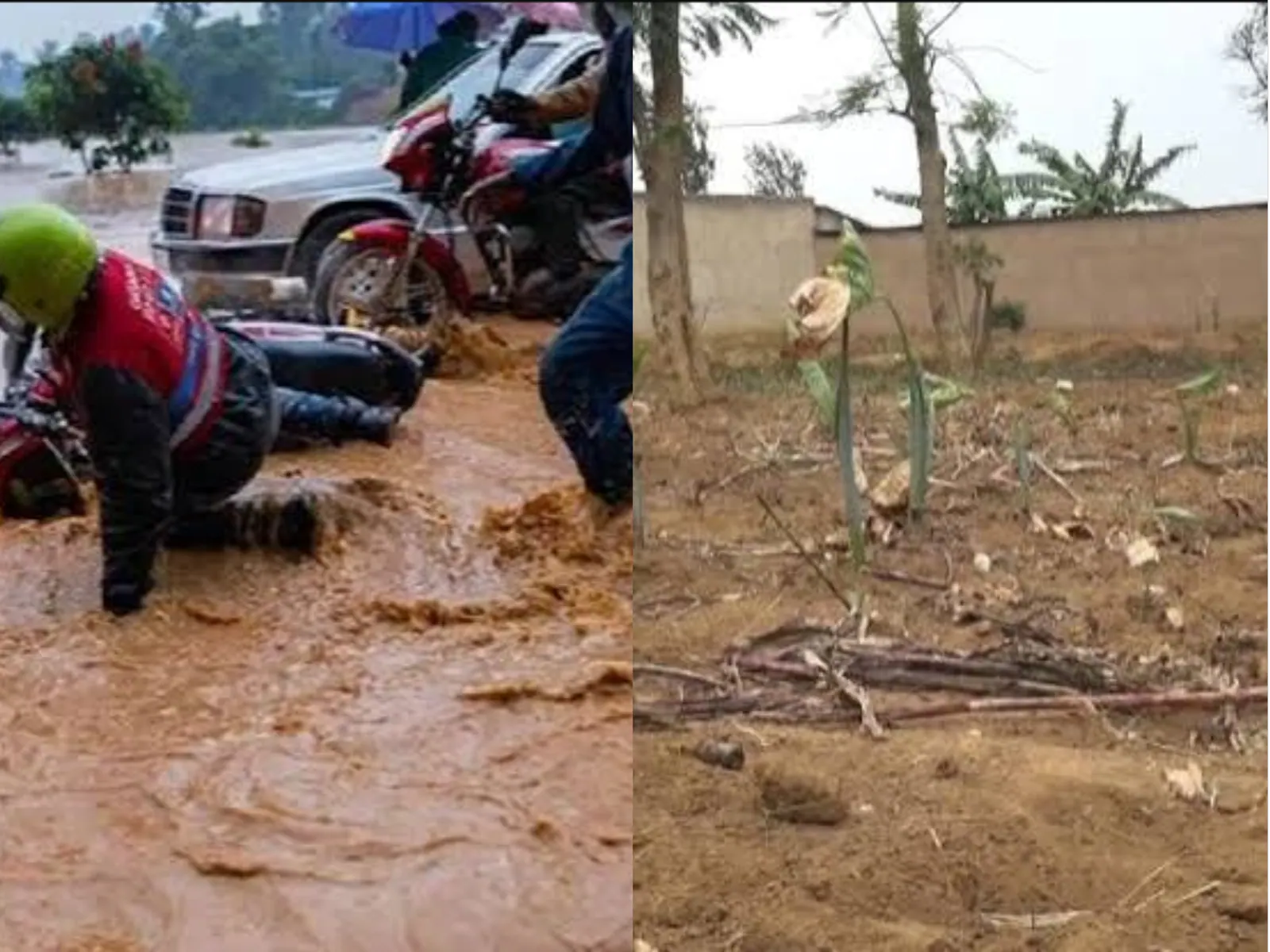
Rwanda, known as the "Land of a Thousand Hills," is experiencing unpredictable rainfall patterns, affecting farmers' ability to plan and manage their crops. In recent years, rainfall has become increasingly irregular, with periods of drought followed by heavy rainfall, leading to landslides and floods. This unpredictability is not limited to a lack of rainfall, but also the way it falls. The country's climate is changing, with rising temperatures and longer dry seasons, leading to more frequent and intense rainfall events.
The Food and Agriculture Organization (FAO) reported in September and October 2025 that rainfall in Rwanda was 30% below average, impacting the 2026A planting season, particularly in the Eastern Province. Climate change is one of the main causes of these challenges, with rising temperatures and changing weather patterns leading to more frequent and intense rainfall events. This can cause water to flow over the hillsides, rather than being absorbed into the soil, leading to erosion, landslides, and floods.
However, the problem is not solely caused by climate change. Deforestation, soil degradation, and poor water management also contribute to the severity of rainfall-related disasters. The country's forests are being cleared, and its soil is being degraded, making it more vulnerable to erosion and landslides. Additionally, the increasing urbanization and population growth are putting pressure on the country's water resources, making it essential to develop effective water management strategies.
To address these challenges, Rwanda needs to adopt a more proactive approach to managing its water resources. This includes investing in irrigation systems, water harvesting, and soil conservation techniques. The government and farmers must work together to develop and implement effective water management strategies, including the construction of dams, reservoirs, and other water storage infrastructure.
Farmers in Rwanda also need access to reliable weather information to plan and manage their crops effectively. This includes information on rainfall patterns, temperature, and other weather conditions. The government and international organizations can provide support to farmers by providing them with accurate and timely weather information, as well as training on climate-resilient agricultural practices.
The issue facing Rwanda is not a lack of rainfall, but rather how to manage it effectively. While it is not possible to control the weather, the country can take steps to prepare for and respond to rainfall-related disasters. This includes developing early warning systems, improving water management infrastructure, and promoting climate-resilient agricultural practices.
Ultimately, the question facing Rwanda is not "why is the rain not falling?" but rather "how can we make the most of the rain when it does fall?" By adopting a proactive approach to water management and climate change, Rwanda can reduce the risks associated with rainfall-related disasters and promote sustainable agricultural practices.
Key points
- Rwanda's changing rainfall patterns pose significant challenges for farmers and the country's water resources.
- Climate change, deforestation, and poor water management are contributing to the severity of rainfall-related disasters.
- The country needs to adopt a more proactive approach to managing its water resources, including investing in irrigation systems, water harvesting, and soil conservation techniques.