The Rwandan government has expressed concerns over the reappointment of Major General Sylvain Ekenge as spokesperson for the Armed Forces of the Democratic Republic of Congo (FARDC). Ekenge was reappointed to the position on September 25, 2026, after being removed in December 2025. His removal was prompted by comments he made on national television, RTNC, which were perceived as inflammatory and divisive.
Ekenge's comments, made on December 27, 2025, suggested that men seeking to marry Tutsi women should be cautious, implying that they may face challenges from the woman's family. These remarks sparked widespread criticism and were seen as perpetuating ethnic divisions. The FARDC leadership subsequently removed him from his position, citing that his comments were his own and not representative of the military.
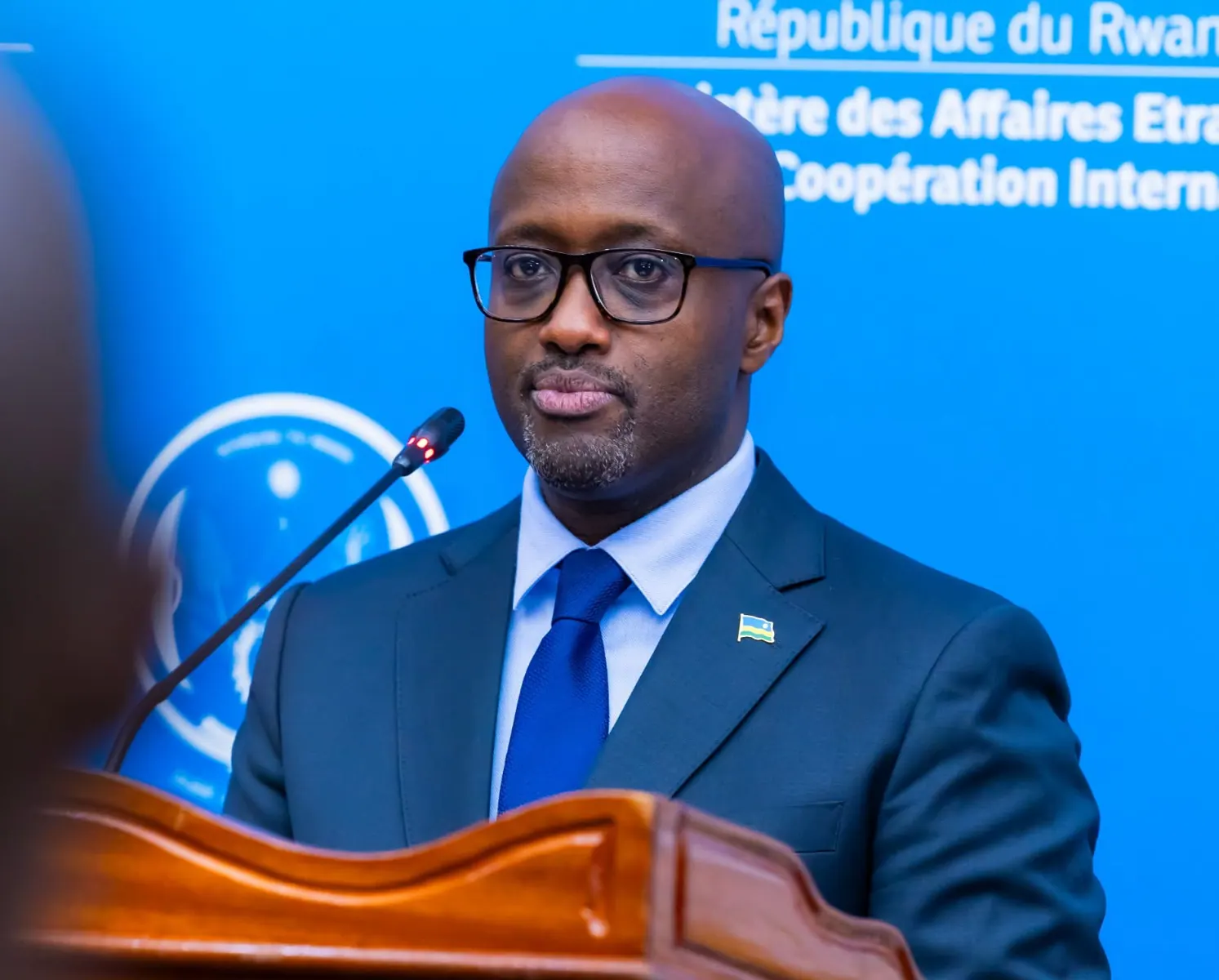
The Rwandan government, through its Minister of Foreign Affairs and Cooperation, Amb. Nduhungirehe Olivier Jean Patrick, has raised two key concerns regarding Ekenge's reappointment. Firstly, the minister stated that Ekenge's comments were part of a larger pattern of hate speech targeting Congolese Tutsis, which was not an isolated incident but rather a state-sponsored policy.
The minister also noted that the timing of Ekenge's reappointment, which was announced in a low-key manner, coincided with the death of two high-ranking military officers, Lt. Gen Lucien René Likulia and Lt. Gen. Joseph Mutombo, in a plane crash. The minister suggested that this was an attempt to distract from criticism of Ekenge's reappointment and to intimidate those who would speak out against it.
Ekenge's comments have been compared to the "Ten Commandments for Hutus," a document published in 1990 by Hassan Ngeze, a convicted genocide perpetrator. The document was seen as a precursor to the 1994 genocide against Tutsis in Rwanda. The Rwandan government is concerned that Ekenge's reappointment will embolden similar extremist ideologies in the Democratic Republic of Congo.
The conflict in eastern Democratic Republic of Congo has a complex history, with ethnic tensions and armed groups contributing to ongoing instability. The Rwandan genocide has had a lasting impact on the region, with many perpetrators fleeing to the Democratic Republic of Congo and continuing to influence local politics. The reappointment of Ekenge has raised concerns that these tensions will continue to simmer.
The international community has been critical of Ekenge's comments, and his reappointment has sparked concerns about the commitment of the Democratic Republic of Congo to promoting tolerance and combating hate speech. The Rwandan government has called for greater accountability and action to address these issues, which remain a major challenge to regional stability.
Key points
- The Rwandan government has expressed concerns over the reappointment of Sylvain Ekenge as spokesperson for the FARDC, citing his past comments on inter-ethnic marriage.
- Ekenge's comments were seen as perpetuating ethnic divisions and were compared to the "Ten Commandments for Hutus," a document published in 1990 by a convicted genocide perpetrator.
- The reappointment of Ekenge has raised concerns about the commitment of the Democratic Republic of Congo to promoting tolerance and combating hate speech.