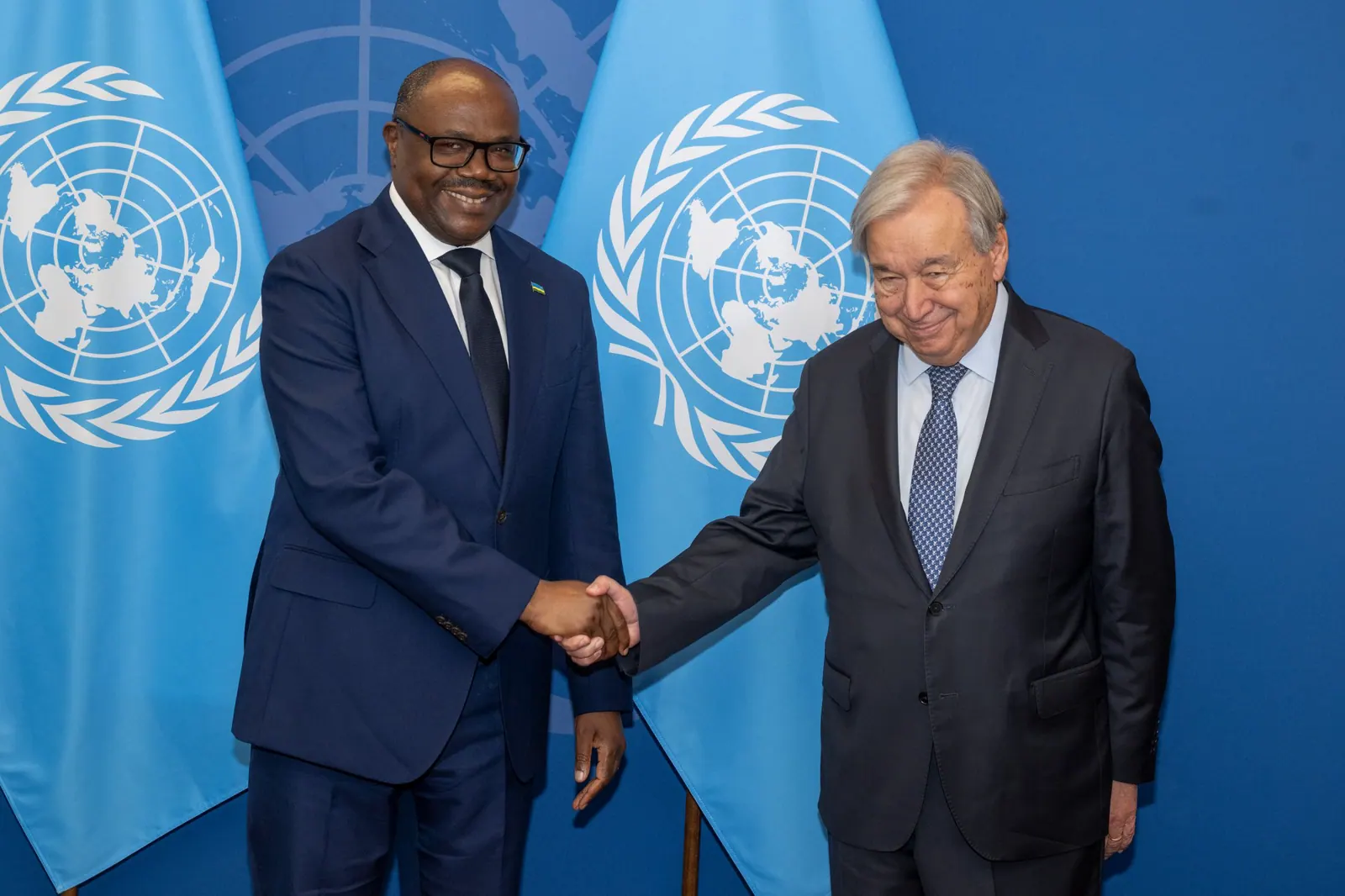
At the 81st UN General Assembly in New York, Rwanda's Prime Minister Dr. Justin Nsengiyumva called on the United Nations to redefine its legitimacy by focusing on tangible results rather than mere promises. He emphasized that in a world grappling with conflict, climate shocks, pandemics, and technological disruption, the multilateral system must demonstrate its ability to anticipate and address challenges proactively. Nsengiyumva's statement resonated with the assembly as he highlighted the need for practical action to tackle problems before they escalate.
Nsengiyumva drew from Rwanda's own experience of emerging from the Genocide against the Tutsi and rebuilding with a driven understanding that institutions earn legitimacy through delivery, not just declarations. He stressed that the UN must adapt to a changing and uncertain world, and it is up to Member States to make this a reality. The Prime Minister's remarks reflected Rwanda's commitment to proactive problem-solving and its desire to see the UN adopt a similar approach.
The Prime Minister cited the consequences of weak prevention in various global challenges, including pandemics, climate shocks, and technological disruption. He pointed to the eastern Democratic Republic of Congo as a clear example, where the FDLR has spread genocidal ideology, committed grave abuses, and directly threatened Rwanda's security. Nsengiyumva emphasized that the roots of the conflict in Eastern DRC are political and lie in long-standing grievances, exclusion, and failures of governance.
Nsengiyumva reaffirmed Rwanda's commitment to diplomatic efforts aimed at resolving the conflict in Eastern DRC, including the Washington accords and the Doha process. He called on all actors, including the UN Security Council, to support these efforts and honor their commitments. The Prime Minister stressed that lasting peace requires compromise and addressing the root causes of the conflict.
The principle of prevention should also apply to economic and development challenges that leave countries vulnerable to poverty, economic shocks, and exclusion from opportunity. Nsengiyumva emphasized that an international system giving countries a fair opportunity to determine their own development pathways should be a key aspect of the UN's reform agenda. He questioned whether multilateral institutions are prepared to adapt to the challenges of the century and deliver meaningful results.
Nsengiyumva's address at the UNGA81 also included meetings with other high-profile leaders, including UN Secretary-General António Guterres and Kuwait's Crown Prince, Sheikh Sabah Khaled Al-Hamad Al-Sabah. These discussions focused on strengthening cooperation and bilateral relations between Rwanda and these countries. The Prime Minister's engagements at the UNGA81 underscored Rwanda's commitment to collaborative problem-solving and its desire to see the UN become more effective in addressing global challenges.
Ultimately, restoring trust in multilateralism will depend on the UN's ability to demonstrate its effectiveness in anticipating crises, addressing underlying causes, and delivering tangible outcomes. Nsengiyumva's call for the UN to focus on results rather than promises resonated with the assembly, and his remarks reflected Rwanda's commitment to proactive problem-solving and collaboration. The credibility of the international system must be earned through positive results, not just declarations.
Key points
- Nsengiyumva urges UN to focus on delivering results, not promises, in addressing global crises.
- Rwanda's PM highlights need for proactive problem-solving in addressing conflict, climate shocks, and pandemics.
- Nsengiyumva emphasizes importance of adapting to a changing and uncertain world to ensure multilateralism's relevance.