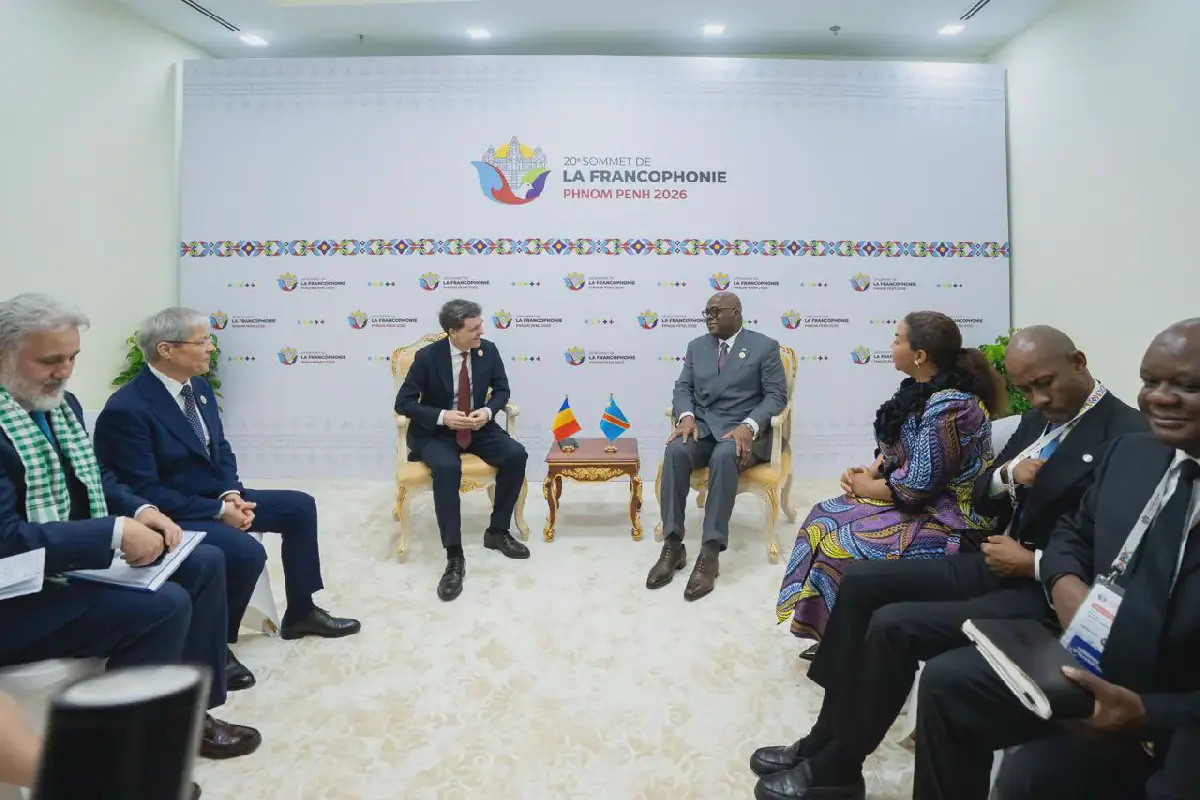
The Francophonie is set to choose its next secretary-general, with Romanian candidate Dacian Cioloș receiving support from the Democratic Republic of Congo. Cioloș thanked Kinshasa for its backing, citing "trust in my vision and its commitment to consensus." However, Rwanda's Foreign Minister, Olivier Nduhungirehe, has challenged Cioloș's claim, arguing that an African country backing a non-African candidate after withdrawing its own nominee cannot describe that candidate as a consensus choice.
Nduhungirehe's objection is not to Cioloș's eligibility, but to the language of consensus. He argues that a candidate may be legitimate under the organisation's rules without representing the position African states have agreed to take. The African Union had endorsed three African candidates for the post: Rwanda's Louise Mushikiwabo, the DRC's Juliana Amato Lumumba, and Mauritania's Coumba Bâ. The resolution called on African OIF members to choose among the three.
The dispute follows Kinshasa's withdrawal of Lumumba's candidacy and its support for Cioloș. The Congolese government described the move as an effort to encourage a broader consensus. However, Nduhungirehe argues that this move contradicts the African Union's decision. He also criticized European countries for warning that a vote could be dangerous, saying it is "rather amusing" that they are promoting a consensus approach while discouraging a vote.
The confrontation has exposed two competing ideas of unity within the Francophonie. Kinshasa's offer casts consensus as a compromise between rival camps, while Kigali's response says that compromise cannot erase a regional commitment already made. The organisation's rules allow for a simple-majority vote when consensus cannot be reached. The next secretary-general is due to be chosen in Phnom Penh on November 16.
For Cioloș, the challenge is to build support without allowing that support to be portrayed as a breach of African solidarity. He has thanked Lumumba for her "commitment to the unity of the Francophonie," adding that dialogue remains open to all. However, Rwanda's criticism has raised questions about the legitimacy of Ciološ's claim to consensus support.
The Francophonie's preference for consensus is being tested, with some members pushing for a vote if members fail to agree. The organisation's rules allow for a simple-majority vote, but the emphasis on consensus has created tension among member states. The dispute has highlighted the challenges of balancing regional commitments with the need for a unified approach.
The outcome of the Francophonie's decision will have implications for the organisation's future. The choice of secretary-general will determine the direction of the organisation and its approach to issues such as democracy and electoral competition. As delegates gather to decide, the concept of "consensus" may no longer be a neutral diplomatic term, but a contentious issue that has exposed divisions within the organisation.
Key points
- Rwanda challenges Romanian candidate Dacian Ciološ over his claim of consensus support from the DRC.
- The dispute exposes two competing ideas of unity within the Francophonie.
- The organisation's rules allow for a simple-majority vote when consensus cannot be reached.