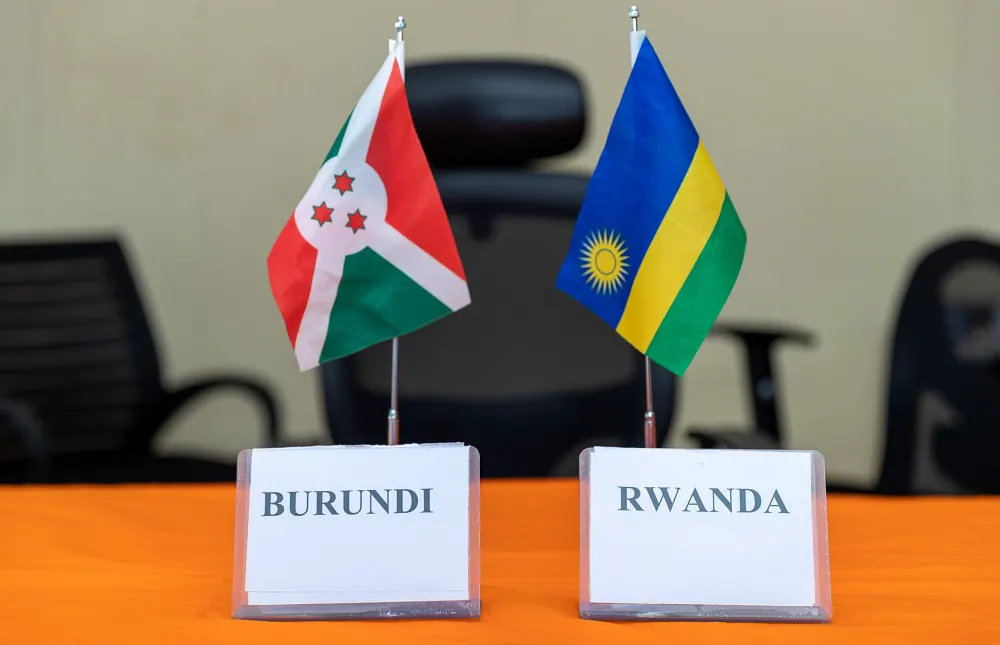
Rwanda's Minister of Foreign Affairs and Cooperation, Ambassador Olivier Nduhungirehe, has expressed concerns over Burundi's unpredictable behavior, which he says is straining diplomatic relations between the two neighboring countries. In a recent interview with a local YouTube channel, Agasaro Kaburaga, Nduhungirehe stated that Burundi's inconsistent actions have made it challenging for the two nations to engage in meaningful talks. This development comes after a period of relative calm in their relations, marked by talks in late 2025.
The last round of talks between Rwanda and Burundi took place in late 2025, following the capture of the city of Uvira in the Democratic Republic of Congo. However, since the beginning of this year, there have been no further discussions between the two countries. Burundian President Evariste Ndayishimiye recently announced that talks had taken place, but Nduhungirehe disputed this claim, stating that no such discussions had occurred. The two countries have been at odds over several issues, including allegations of support for rebel groups.
Burundi has accused Rwanda of supporting the RED-Tabara militia, which Rwanda has consistently denied. In turn, Rwanda accuses Burundi of collaborating with the FDLR militia, which has been active in eastern DRC. The FDLR has been a source of tension in the region, with Rwanda calling for its disarmament and removal. Nduhungirehe emphasized that the FDLR's ideology and actions pose a significant threat to regional stability.
Burundian Foreign Minister Dr. Edouard Bizimana recently stated that the FDLR was not a terrorist group, but rather a Rwandan armed group. Nduhungirehe countered that this stance was at odds with the African Union's position on the matter. He expressed disappointment that a senior AU official would contradict established AU resolutions, which call for the disarmament and removal of the FDLR.
The strained relations between Rwanda and Burundi have significant implications for regional stability. Rwanda has long considered the FDLR a major security threat, citing its role in perpetuating instability in eastern DRC. Nduhungirehe stressed that the FDLR's activities must be addressed comprehensively, rather than simply reducing its capabilities.
The impasse in Rwanda-Burundi relations highlights the challenges of addressing regional security issues. The two countries have a long history of tensions, exacerbated by their complex relationships with various militia groups. As the situation continues to unfold, diplomatic efforts will be crucial in resolving the outstanding issues and restoring stability to the region.
The international community has been watching the developments in Rwanda and Burundi with concern. The UN and other regional organizations have called for calm and urged both countries to engage in dialogue. As the situation continues to evolve, it remains to be seen whether Rwanda and Burundi can find common ground and work towards a more stable and secure future.
Key points
- Rwanda's Foreign Minister Olivier Nduhungirehe disputes Burundian President Evariste Ndayishimiye's claim of recent talks between the two countries.
- Burundi accuses Rwanda of supporting the RED-Tabara militia, while Rwanda accuses Burundi of collaborating with the FDLR militia.
- The FDLR militia's activities pose a significant threat to regional stability, with Rwanda calling for its disarmament and removal.