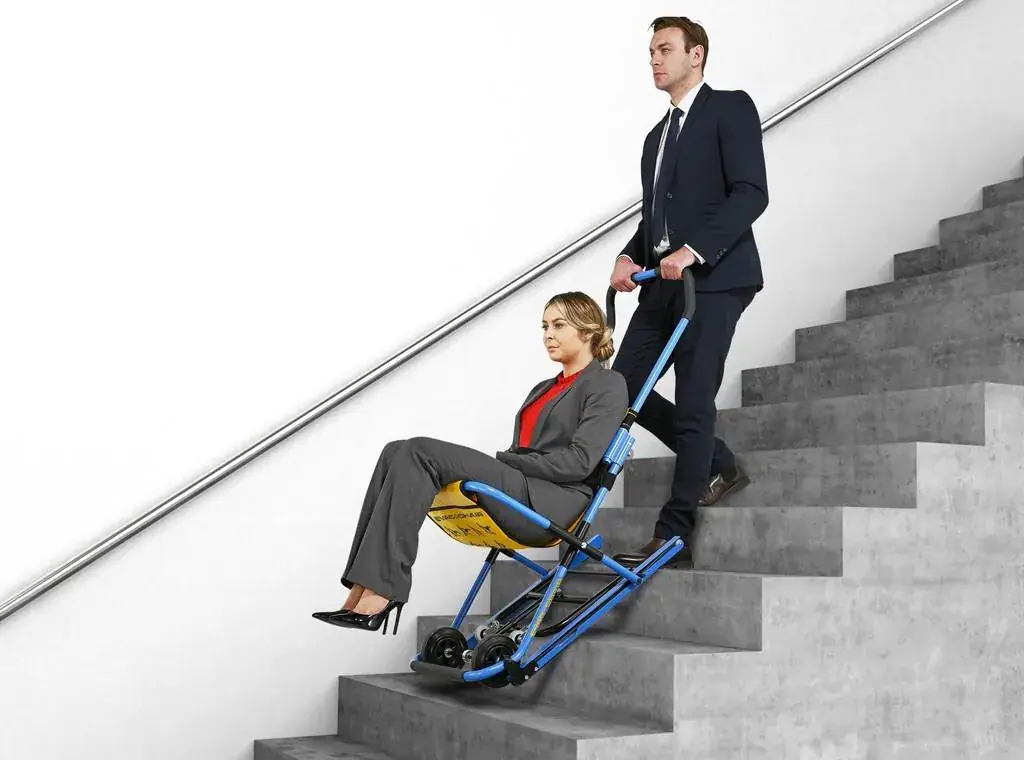
In Rwanda, people with disabilities face significant challenges evacuating buildings during emergencies like fires due to inaccessible infrastructure. During emergencies, every minute counts in saving lives. However, for people with disabilities, the challenge is not only the potential for fire to reach them but also the lack of preparedness in evacuation procedures. Individuals using wheelchairs or with limb disabilities may struggle to use stairs during building emergencies.
The issue of inaccessible infrastructure for people with disabilities is not limited to accessing certain services but also affects their safety and right to be rescued during emergencies. On October 10, 2026, a fire broke out at GOICO Plaza, a major shopping center in Musanze City, causing significant damage. The fire reached the upper part of the five-story building, spreading to the lower floors.
Emergency response efforts took place until the next morning. The Ministry of Interior announced that no lives were lost, but two people suffered minor injuries, and 15 others received assistance due to panic caused by the fire. The estimated value of damaged goods was over 24 billion Rwandan francs. Following this incident, other commercial buildings in Kigali, including Sport Light Lounge, Gisozi Trading Centre, and Agakiriro, were also affected by fires.
These incidents highlight the importance of preparing evacuation procedures for all building occupants, including people with disabilities. Yvonne Uwamahoro, who has a limb disability, expressed concerns about the lack of designated emergency evacuation routes for people with disabilities. She emphasized that in the event of a fire, people with disabilities would be at a greater risk if there are no designated evacuation routes.
Faustin Renzaho, Executive Director of the Association of People with Disabilities in Rwanda (AGHR), stated that building accessible infrastructure for people with disabilities should go hand-in-hand with designing safe evacuation routes. He emphasized that during emergencies, elevators often stop working, leaving people with disabilities at greater risk. Renzaho stressed the need for building codes to be enforced to ensure accessible and safe evacuation routes.
The 2009 Ministerial Order No. 1 regulates the construction of buildings to ensure accessibility for people with disabilities. The order stipulates that all buildings providing services to the public must be designed to facilitate access for people with disabilities. The Rwanda Building Code 2019 provides detailed guidelines on building construction, including accessibility and evacuation procedures for people with disabilities.
The code requires that all buildings, including commercial, educational, healthcare, and residential buildings, be designed to facilitate access and evacuation for people with disabilities. It also stipulates that emergency evacuation plans must be in place, taking into account the needs of people with disabilities, and that evacuation routes and emergency exits must be clearly marked and easily accessible.
Key points
- Buildings in Rwanda are not adequately prepared for emergency evacuations of people with disabilities.
- Existing regulations and building codes emphasize the importance of accessibility and evacuation procedures for people with disabilities.
- Enforcing these regulations is crucial to ensuring the safety and rights of people with disabilities during emergencies.
Reporting sources
- ATI IKI? 13 NOV, 21:23 Mutabarize abafite ubumuga...iyo inkongi y'umuriro yadutse, ubuzima bwabo bujya mu kaga · https://www.kigalitoday.com/