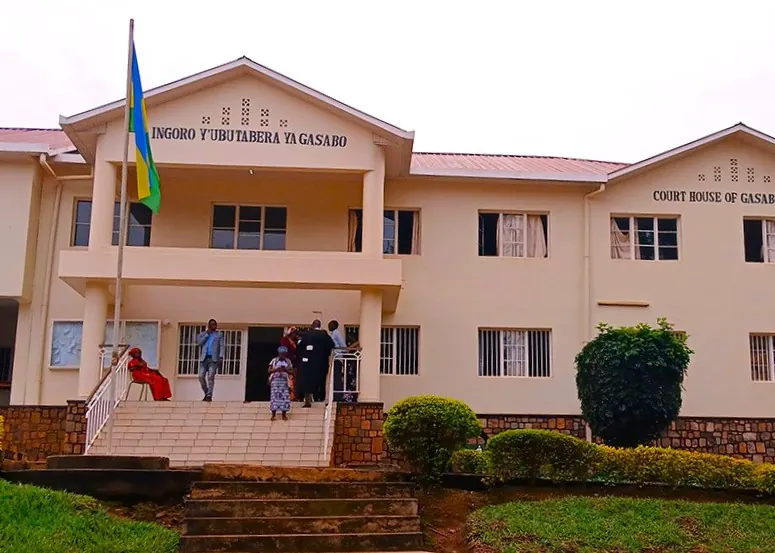
The judiciary in Rwanda has introduced new guidelines to create a more child-friendly environment in court proceedings involving minors. As of November 1, uniformed security personnel will no longer be present during court sessions involving children, unless their presence is deemed necessary for security reasons. This move aims to make the justice system less intimidating and more focused on rehabilitation.
The new rules, issued by Chief Justice Domitilla Mukantaganzwa on October 1, 2026, require courts to consider a child's age, vulnerability, psychological wellbeing, and individual circumstances. Judges, prosecutors, and lawyers will also not wear their professional robes in such proceedings and must communicate with children in a language they understand. The rules also emphasize the need for child-friendly settings and greater privacy during court proceedings.
Cases involving children will generally be heard in camera, meaning the public will not be allowed to attend. Those permitted to attend include judges and court staff, parties to the case, lawyers, necessary witnesses, parents or guardians, child-protection officers, and others specifically authorized by the court. The rules also restrict the publication of a child's identity.
The new framework directs courts to prioritize rehabilitation over punishment where the law allows. Judges are encouraged to consider diversion, plea bargaining, amicable settlement, and restorative justice. When punishment is imposed, judges must consider the child's background, circumstances, and potential for rehabilitation and explain those considerations in the judgment.
Rwanda's approach to juvenile justice is mirrored in its separate correctional system for children. The Nyagatare Juvenile Correctional Facility provides primary, O-Level, and A-Level education alongside vocational training in areas such as carpentry, masonry, and tailoring. In the 2023/24 academic year, all 20 juvenile inmates who sat national examinations passed.
The facility has seen significant progress among its inmates. One inmate who had dropped out in Primary Five progressed through primary education at Nyagatare, passed the Primary Leaving Examinations, completed O-Level in 2026, and qualified for A-Level. Good conduct and academic performance are also linked to presidential clemency.
The new court rules establish a broader principle: children should not experience the justice system in the same way as adults. Their dignity, privacy, wellbeing, views, and prospects for rehabilitation must be considered throughout the process. As of September 2026, 515 children aged 14 to 18 were held at Nyagatare Juvenile Correctional Facility.
Key points
- Uniformed security personnel banned from court sessions involving minors in Rwanda
- New rules prioritize rehabilitation over punishment for children
- Rwanda's juvenile correctional facility provides education and vocational training to inmates