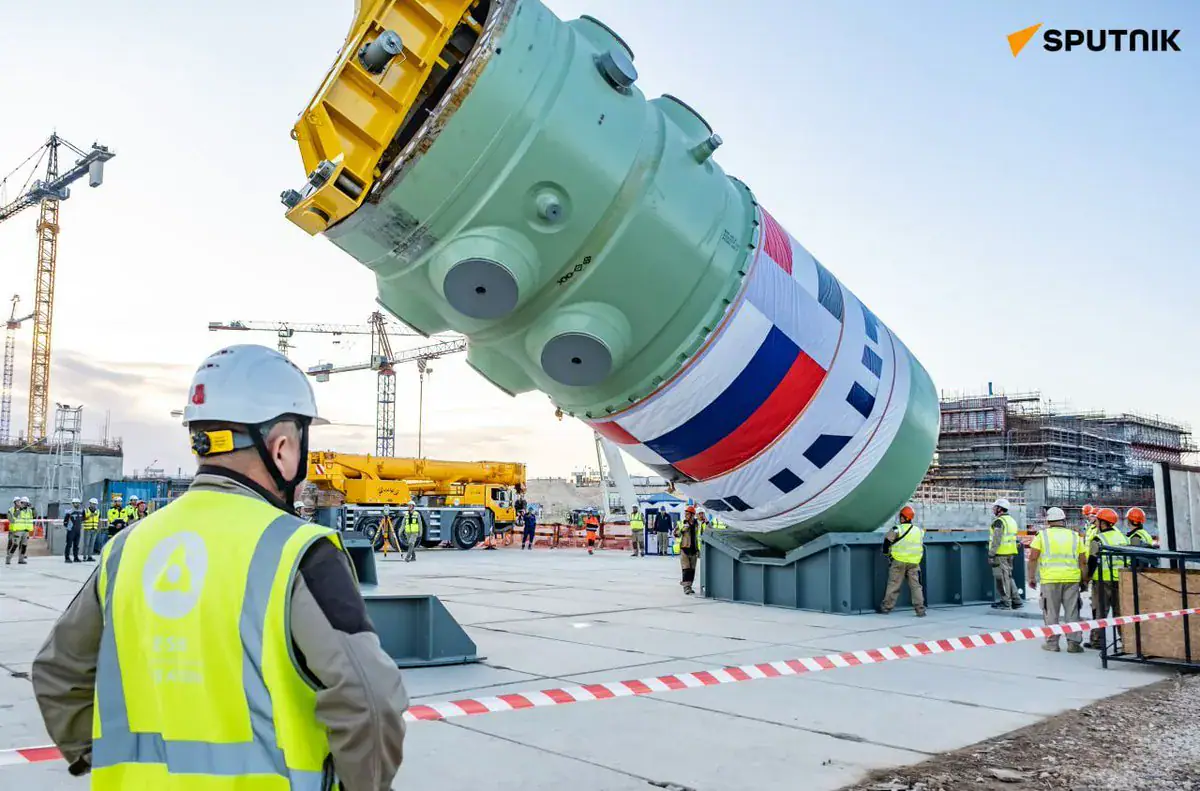
Rwanda and Russia have signed a new agreement to advance plans for developing small modular nuclear power plants, a Centre for Nuclear Science and Technology, and training Rwandan nuclear specialists. The memorandum of understanding was signed during the third Russia-Africa Summit in Moscow by the Rwanda Atomic Energy Board and Russia's state-owned nuclear corporation, Rosatom. This agreement marks a significant step in Rwanda's nuclear energy ambitions.
The agreement was signed by Rwanda's Ambassador to Russia, Maj Gen (Rtd) Joseph Nzabamwita, and Nikolay Spassky, Rosatom's Deputy Director General for International Activities. Prime Minister Dr Justin Nsengiyumva led Rwanda's delegation to the summit on behalf of President Paul Kagame. According to Rosatom Director General Alexey Likhachev, the corporation will assist Rwanda in developing the infrastructure and expertise required for a civilian nuclear energy programme.
The cooperation will focus on three main areas: developing small modular nuclear power plants, creating a Centre for Nuclear Science and Technology, and training national personnel to operate and regulate the facilities. The agreement provides for an assessment of Rwanda's existing nuclear infrastructure and identification of the technical, institutional, and regulatory requirements needed to advance the programme. This will ensure that Rwanda's nuclear programme is implemented in line with international standards.
The planned science centre is expected to support cancer diagnosis and treatment, production of medical materials, preservation of agricultural produce, geological surveys, and mineral processing. It will also train scientists, engineers, and technical personnel needed for Rwanda's nuclear ambitions. Ambassador Nzabamwita said the partnership would help Rwanda develop clean and reliable electricity while expanding the use of nuclear technology in various sectors.
However, the document signed in Moscow is an infrastructure development memorandum rather than a final reactor construction contract. Details concerning the reactor technology, location, financing, licensing, and construction timetable have not yet been publicly confirmed. The latest agreement builds on nuclear cooperation between Rwanda and Russia dating back to 2018.
Rwanda plans to introduce nuclear-generated electricity into its energy mix in the early 2030s, targeting an initial 110 megawatts of nuclear generation between 2030 and 2033. President Kagame placed nuclear energy at the centre of Rwanda's long-term development strategy, highlighting its potential to diversify the country's energy mix and provide stability for industrial growth.
The projects will still require substantial financing, strict regulatory supervision, qualified personnel, secure management of radioactive waste, and long-term arrangements for cooling, emergency response, and environmental protection. Rwanda says its nuclear programme is exclusively for peaceful civilian purposes, including electricity generation, medicine, agriculture, mining, research, and technical education.
Key points
- Rwanda and Russia's Rosatom have signed a deal to develop small modular nuclear power plants and a Centre for Nuclear Science and Technology.
- The agreement aims to support Rwanda's nuclear energy ambitions, with plans to introduce nuclear-generated electricity into the country's energy mix in the early 2030s.
- The partnership will also focus on training national personnel and developing the necessary infrastructure for a civilian nuclear energy programme.