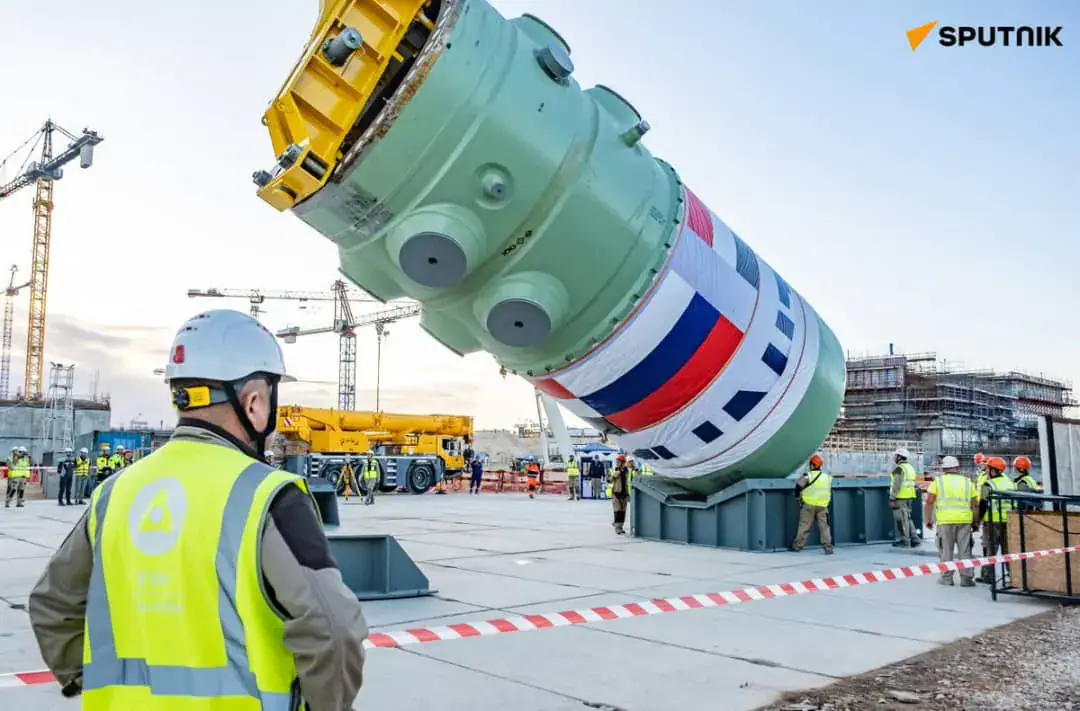
The Russian state-owned nuclear energy corporation, Rosatom, has committed to assisting Rwanda in developing the necessary infrastructure for nuclear energy, including building capacity, training personnel, and advancing research in the field. This agreement was reached after Rosatom and the Rwanda Atomic Energy Board (RAEB) signed a cooperation agreement aimed at developing nuclear energy infrastructure in Rwanda, in accordance with the principles of the International Atomic Energy Agency (IAEA).
The agreement was signed during the third Russia-Africa summit, which aims to strengthen cooperation between the two parties in various sectors. According to Rwandan Ambassador to Russia, Gen. Maj. Joseph Nzabamwita, this cooperation in nuclear technology is expected to play a significant role in Rwanda's development, particularly in areas such as healthcare, agriculture, mining, energy, and education focused on science and technology.
The use of nuclear technology in healthcare is expected to improve the diagnosis and treatment of various diseases, including cancer. In agriculture, nuclear technology will help preserve crop yields, prevent spoilage, and extend shelf life, thereby reducing losses and improving food security. Additionally, nuclear technology will enhance mineral exploration, extraction, and processing in the mining sector.
The partnership with Rosatom is also expected to expand Rwanda's energy options and increase its electricity generation capacity. Furthermore, the adoption of nuclear technology is anticipated to improve education in science, technology, engineering, and mathematics (STEM) fields, as well as enhance the skills and expertise of Rwandans in specialized fields.
Ambassador Nzabamwita emphasized that these initiatives will contribute to Rwanda's development goals, including those outlined in the Second National Strategy for Accelerated Development (NST2) and Vision 2050. Rwanda aims to commission its first nuclear power plant by 2030, with a planned capacity of 1,500 megawatts by 2050, making it one of the few countries in Africa to utilize nuclear energy.
Currently, South Africa is the only country in Africa that uses nuclear energy. Rwanda's partnership with Russia marks a significant step towards diversifying its energy mix and achieving its development objectives. The implementation of nuclear energy infrastructure is expected to have a positive impact on Rwanda's economy, healthcare, agriculture, and education sectors.
The cooperation agreement between Rosatom and RAEB demonstrates Rwanda's commitment to harnessing nuclear energy for peaceful purposes, in line with international standards and best practices. As Rwanda moves forward with its nuclear energy plans, it is expected to reap significant benefits from this partnership, including improved energy security, economic growth, and enhanced scientific capabilities.
Key points
- Rwanda and Russia have partnered to develop nuclear energy infrastructure, with Rosatom committing to help Rwanda build capacity and develop research in the sector.
- The partnership aims to improve energy security, economic growth, and scientific capabilities in Rwanda.
- Rwanda plans to commission its first nuclear power plant by 2030, with a planned capacity of 1,500 megawatts by 2050.