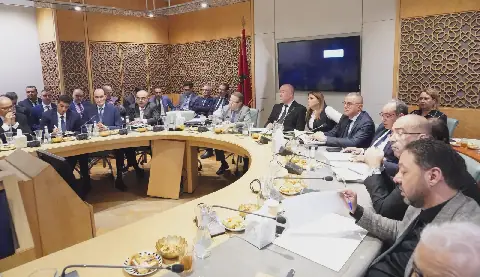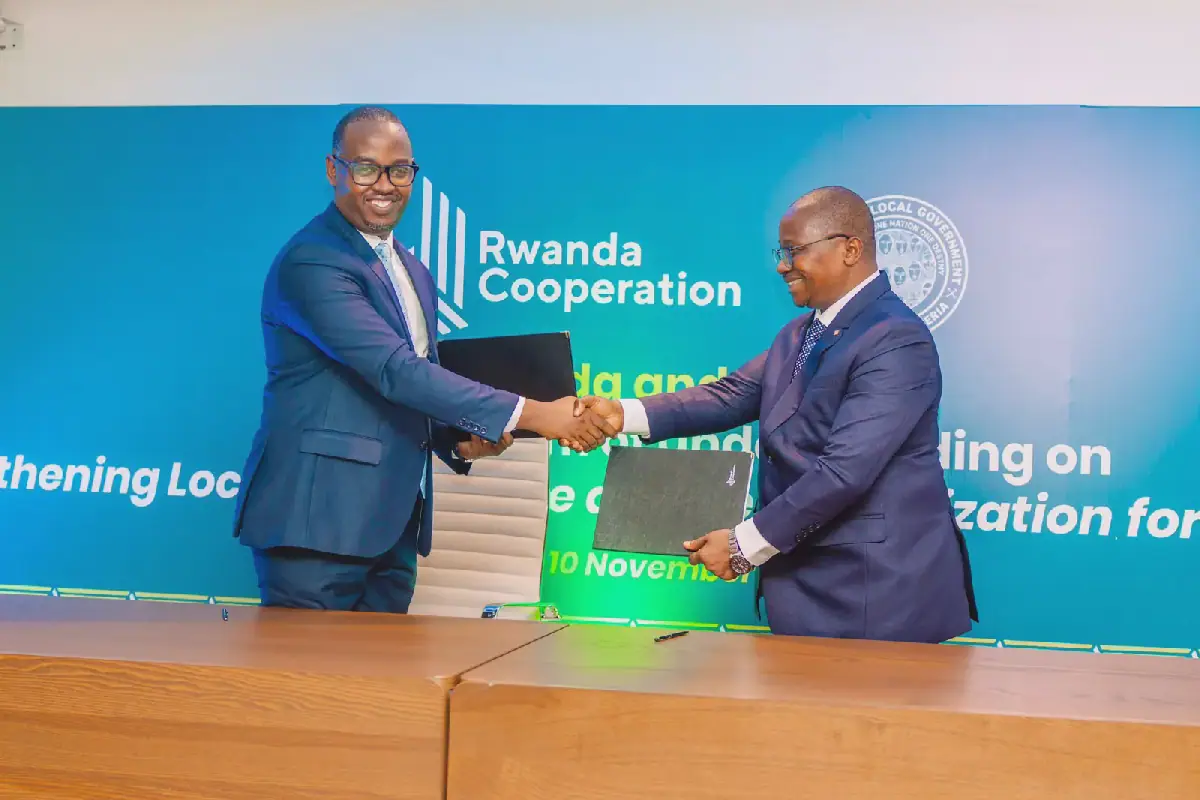
On November 10, 2026, Rwanda and Liberia signed a cooperation agreement aimed at strengthening governance and economy. The agreement was signed by Richard Niwenshuti, Chief Executive Officer of Rwanda's Governance and Economic Reforms, and Edward Mulbah, Liberia's Minister of State for Governance and Public Policy. The agreement focuses on four key areas: digital transformation and public service reform, natural resource management and economic development, decentralization and local governance, and domestic revenue mobilization.
The agreement aims to enhance governance and economy in Liberia by leveraging Rwanda's experience in digital transformation and public service reform. Liberia's Minister of State for Governance and Public Policy, Edward Mulbah, noted that his country has learned a lot from Rwanda in terms of using technology to improve governance. He cited Rwanda's Irembo platform, a one-stop shop for government services, as an example of how technology can be used to improve service delivery.
Rwanda's Minister of State for Governance, Habimana Dominique, said that the agreement underscores the strong relations and cooperation between the two countries. He noted that the agreement will provide an opportunity for Rwanda and Liberia to share experiences and best practices in governance and economic development. The agreement is expected to promote sustainable cooperation between the two countries and enhance their capacity to deliver quality services to citizens.
The cooperation agreement is expected to have a positive impact on Liberia's economy and governance. The country's economy has faced significant challenges in recent years, including a decline in GDP and a shortage of foreign exchange. The agreement is expected to help Liberia address these challenges by leveraging Rwanda's experience in economic development and governance.
Rwanda and Liberia have a long-standing relationship in various fields, including politics and education. The two countries have a strong relationship between their parliaments, and there are several Rwandan-Liberian cooperation programs in the education sector. Many Liberian students are currently studying in Rwandan universities, and the two countries have a number of exchange programs.
The agreement is also expected to promote decentralization and local governance in Liberia. Rwanda has made significant progress in decentralization, with many local government functions transferred to local authorities. Liberia hopes to learn from Rwanda's experience in this area and improve its own decentralization process.
The cooperation agreement between Rwanda and Liberia is a significant step towards enhancing governance and economy in both countries. The agreement is expected to promote sustainable cooperation and enhance the capacity of both countries to deliver quality services to citizens. Key areas of cooperation include digital transformation, public service reform, natural resource management, and decentralization.
Key points
- The agreement focuses on four key areas: digital transformation and public service reform, natural resource management and economic development, decentralization and local governance, and domestic revenue mobilization.
Reporting sources
- U Rwanda na Liberia basinyanye amasezerano y’ubufatanye · Imvaho Nshya