The Rwandan government has expressed confidence in resolving the country's persistent power shortages by 2029. According to Infrastructure Minister Damien Murwanashyaka, the government is working to increase electricity production from solar energy to mitigate the effects of reduced water levels during the dry season. Murwanashyaka made the statement while addressing the Senate's Economic and Financial Commission on September 22, 2026.
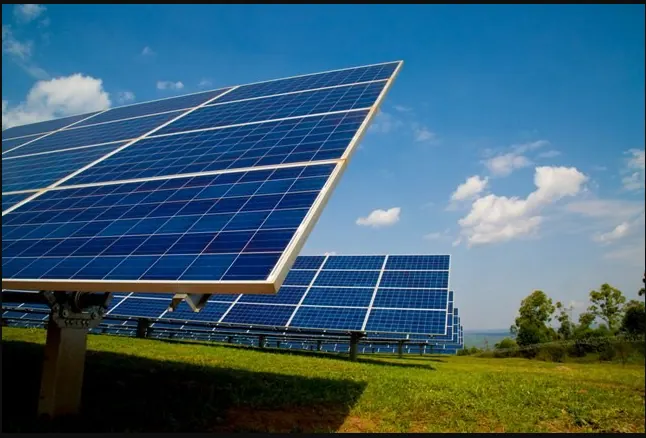
During the dry season, water levels decrease, resulting in reduced electricity production from hydroelectric power plants, sometimes dropping to nearly half of the normal capacity. To address this issue, the government is exploring alternative energy sources, primarily solar power. Murwanashyaka stated that solar energy will supplement the reduced power supply during the dry season.
The minister emphasized that the necessary capacity and projects are in place to achieve this goal, with some initiatives already underway. He mentioned that the required capacity is available, and efforts are being made to ensure that the power shortage is resolved by 2029. The government is working on a strategy to store excess solar energy generated during the day for use during periods of high demand.
Murwanashyaka explained that the plan is to store excess energy produced during the day for use when needed. He added that in the next five years, the country will focus on increasing electricity production from various sources, including hydroelectric power, solar energy, methane gas, and wind power. Nuclear energy will be explored after 2030.
According to the Rwanda Energy Group (REG), the country currently has a power generation capacity of 472 megawatts. However, by the end of the second National Strategy for Transformation (NST2) in 2029, this capacity is expected to increase by 523.73 megawatts. The additional capacity will come from various sources, including 58.76 megawatts from hydroelectric power, 300 megawatts from solar energy, and 165 megawatts from methane gas.
Some projects are already underway, with one exceeding 50% completion, inspiring confidence that they will start producing electricity within the planned timeframe. However, Senator Fulgence Nengiyumva, chairperson of the Senate's Economic and Financial Commission, suggested that REG should consider using diesel-powered generators to address the power shortage. Murwanashyaka replied that this solution is not sustainable due to high costs.
The government aims to increase access to electricity to 100% by 2029, with 88% of households currently connected. Additionally, 25 villages remain without electricity, but Murwanashyaka promised that they will be connected by the end of the 2026/2027 fiscal year. The government is also working with private sector partners to manufacture equipment for energy projects, including solar panels and batteries, in Rwanda.
Key points
- The government aims to resolve Rwanda's power shortages by 2029 through increased solar energy production and other initiatives.
- The country currently has a power generation capacity of 472 megawatts, expected to increase by 523.73 megawatts by 2029.
- Rwanda targets 100% electricity access by 2029, with 88% of households currently connected.