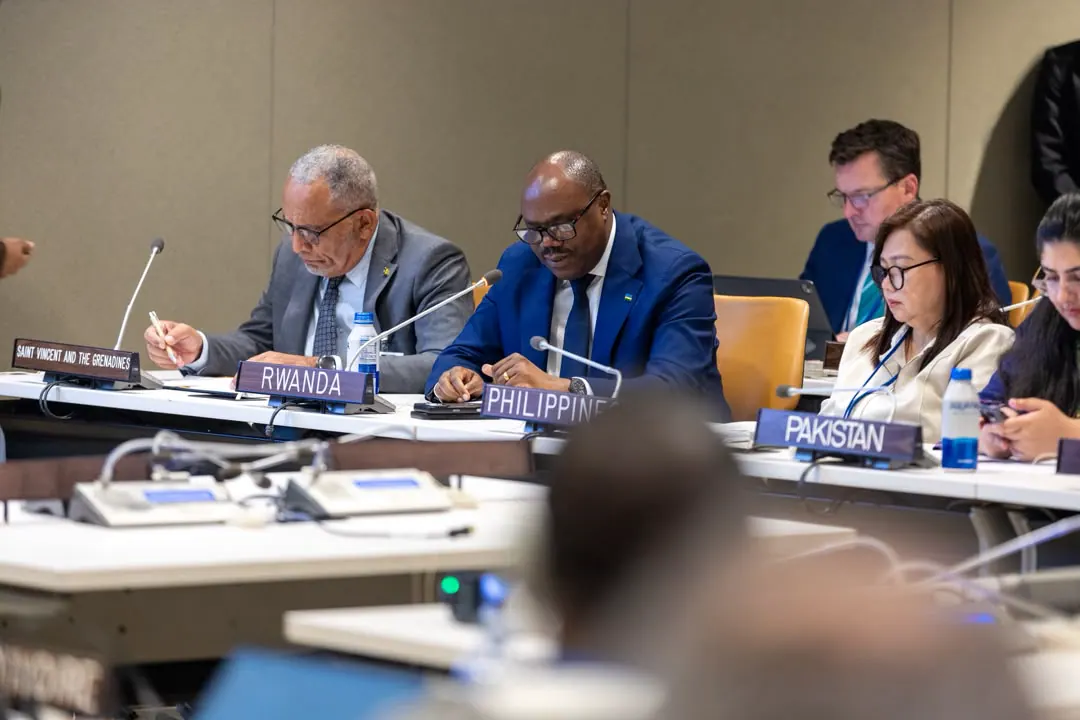
On September 23, 2026, Rwandan Prime Minister Dr. Justin Nsengiyumva addressed the United Nations General Assembly, emphasizing the persistent threat to regional security posed by the Forces Démocratiques de Libération du Rwanda (FDLR) and Burundian forces. The FDLR, comprising individuals accused of participating in the 1994 genocide against the Tutsi population, continues to operate in eastern Democratic Republic of Congo (DRC).
Dr. Nsengiyumva stated that the FDLR, in collaboration with Burundian forces and armed groups supported by the DRC government, continues to propagate genocidal ideology and commit serious crimes in eastern DRC. This has resulted in a significant threat to Rwanda's security, including cross-border attacks. The Prime Minister condemned these actions, citing violations of the 1989 UN Convention and the 1977 Organization of African Unity (OAU) Convention against mercenaries.
The Prime Minister attributed the ongoing conflict in eastern DRC to poor governance and historical, political, and social issues. He emphasized that a political solution is necessary to address these complex problems. Dr. Nsengiyumva expressed Rwanda's support for diplomatic efforts aimed at finding a peaceful resolution to the conflict.
Dr. Nsengiyumva welcomed recent agreements, including the Washington accord signed between Rwanda and DRC, as well as the Doha agreement between DRC and the Alliance des Forces Armées du Congo et du M23 (AFC/M23). He praised these initiatives as positive steps towards achieving peace in the region.
The Prime Minister extended gratitude to key international leaders, including former US President Donald Trump, Qatari Emir Sheikh Tamim bin Hamad Al Thani, and Togolese President Faure Gnassingbé, for their roles in promoting peace in the region. Their efforts have contributed to the ongoing diplomatic initiatives.
The FDLR's continued presence and collaboration with Burundian forces have raised concerns about regional stability. The group has been accused of maintaining a genocidal ideology and committing human rights abuses. Rwanda has consistently urged the international community to take action against the FDLR and other armed groups operating in eastern DRC.
The conflict in eastern DRC has a long and complex history, with multiple factors contributing to the ongoing instability. A lasting solution will require a comprehensive approach that addresses the root causes of the conflict, including poor governance, historical grievances, and social tensions.
Key points
- FDLR and Burundian forces pose a threat to regional security.
- Rwanda supports diplomatic efforts to resolve the conflict in eastern DRC.
- Poor governance and historical issues contribute to the ongoing conflict in eastern DRC.