President William Ruto of Kenya has stated that the international financial architecture has failed the welfare of the world's children. He expressed regret that public debt, resulting from an unfair global financial system, becomes a children's rights issue when interest payments crowd out investment in essential services such as classrooms, healthcare, nutrition, and social protection.
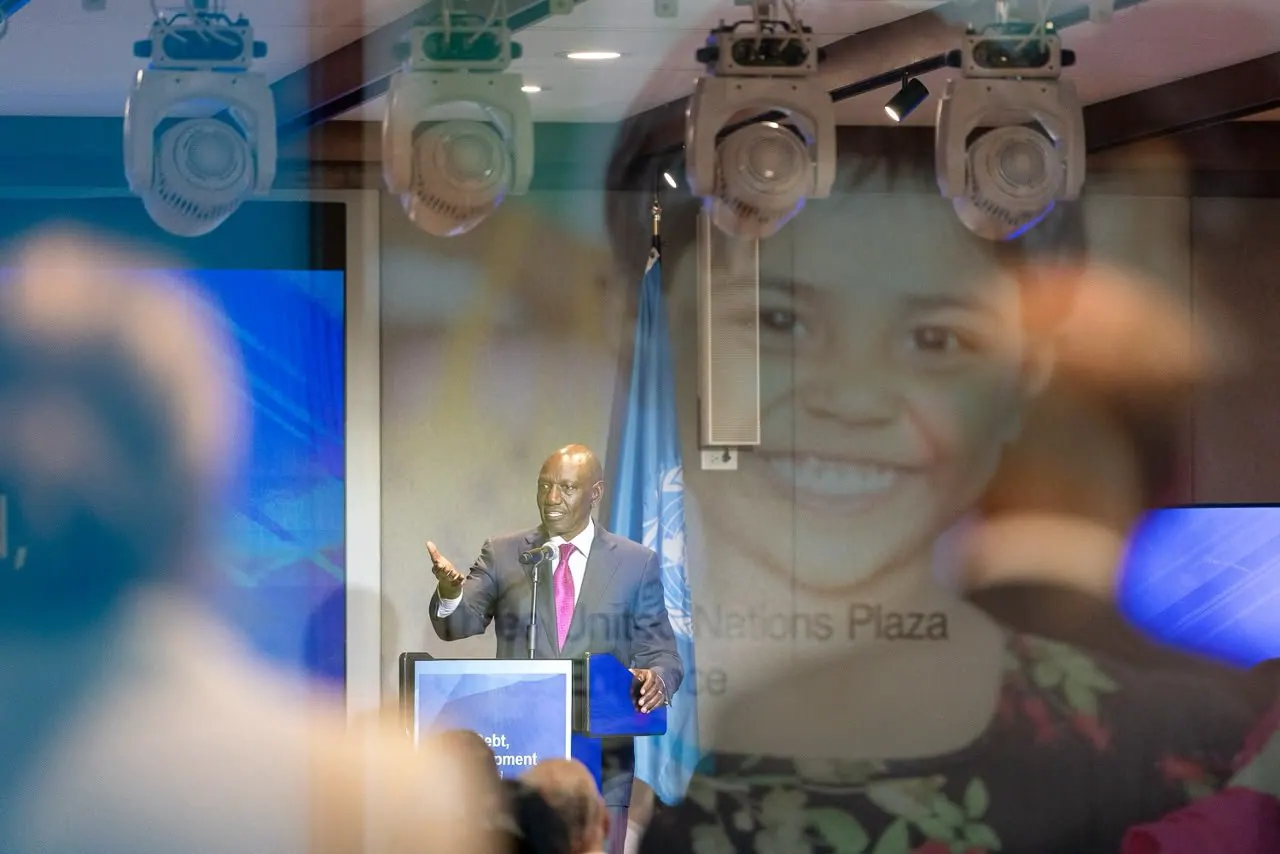
The President made these remarks at the High-Level Dialogue – From Debt Service to Child Investment, hosted by the United Nations Children's Fund (UNICEF) on the sidelines of the UN General Assembly in New York. He emphasized that fiscal responsibility must protect the foundations of future prosperity, arguing that developing countries face high borrowing costs and lack affordable long-term financing.
President Ruto pointed out that debt vulnerability is worsened by climate shocks, economic disruption, and external crises. He stated that real reform is needed to give every country an equal chance to finance growth, create jobs, and build a resilient future. This, he added, is a shared responsibility grounded in fairness and mutual prosperity.
The President emphasized that no country should be compelled to trade its children's future for the demands of the past. He noted that Kenya and many developing nations face a silent emergency, with rising debt service squeezing budgets allocated for health, education, nutrition, and social protection. This situation, he warned, affects children first when budgets tighten.
President Ruto reported that global public debt reached $102 trillion in 2024, with developing countries paying an estimated $921 billion in net interest. He highlighted that in 46 developing countries, interest payments now exceed spending on health or education, resulting in fewer classrooms, health workers, and opportunities for millions of children.
To address these challenges, President Ruto proposed a child-responsive approach to debt and development finance, placing children at the center of debt sustainability. He called for the ringfencing of essential social spending during fiscal adjustment and the expansion of affordable, predictable, and concessional financing.
President Ruto also emphasized the need to strengthen public finance systems so that funds meant for children reach them on time. He suggested that governments, development banks, UNICEF, and other partners should work together on child budget tagging, expenditure tracking, and monitoring to ensure that investments in children are prioritized and effective.
Key points
- President Ruto calls for reforms to the global financial system to prioritize investments in education, healthcare, and social protection.
- Global public debt reached $102 trillion in 2024, with developing countries paying an estimated $921 billion in net interest.
- President Ruto proposes a child-responsive approach to debt and development finance, placing children at the center of debt sustainability.