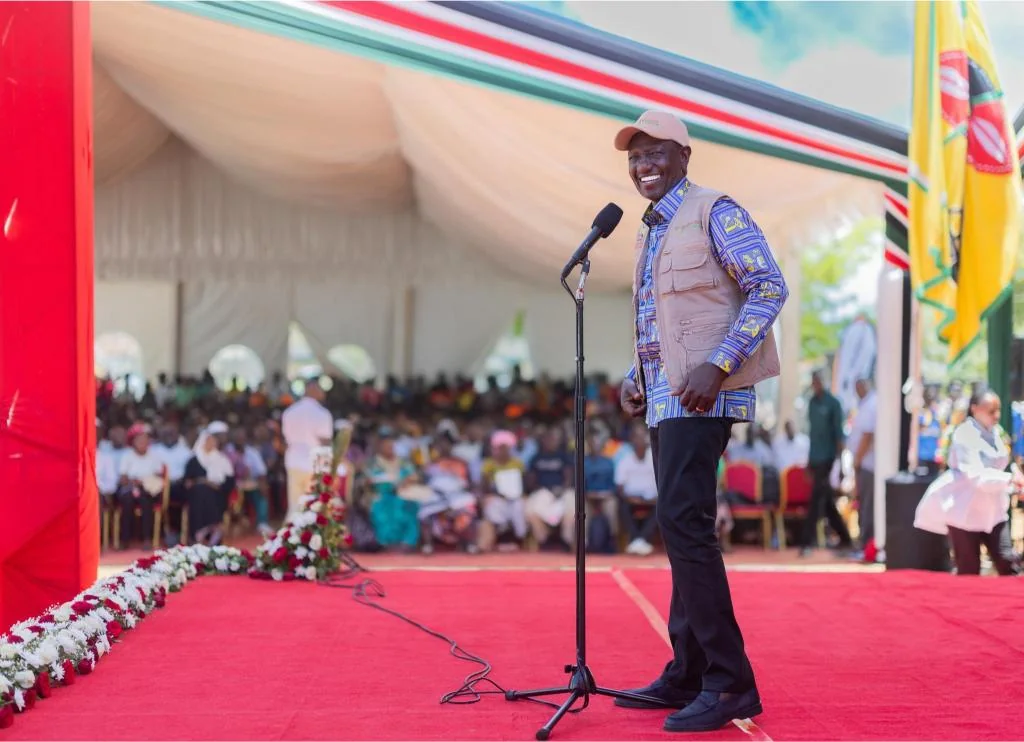
On September 29, 2026, President William Ruto addressed residents in Kilifi, warning those opposing the planned Lamu oil refinery against using court cases to block the project. He accused unnamed critics of working behind the scenes to frustrate major investments in Kenya, citing "selfishness" and "extortionism" as motivations. Ruto emphasized that his administration would not allow further efforts to derail investments.
The President's remarks came after the Malindi Environment and Land Court ordered parties to maintain the status quo on the land where the refinery is proposed until October 14. A case brought by 133 Chandavai residents, who claim ancestral land rights and are challenging the project, will be heard on that date. Ruto's comments highlight the controversy surrounding the project.
Ruto took issue with critics who have questioned the economic case for the refinery, accusing them of attempting to discourage investment through economic arguments. He cited an increase in foreign direct investment in Kenya from $1.6 billion in 2022 to $3.1 billion. The planned Dangote investment could raise the figure to between $6 billion and $7 billion.
The President cited Dangote's previous efforts to establish a cement factory in Kenya, as well as Uganda's decision to route its crude oil pipeline through Tanzania rather than Kenya, as examples of attempts to undermine investment through "extortion". He emphasized that his administration would not allow sabotage of the Lamu oil refinery investment.
Ruto rejected calls for investors to meet additional conditions, suggesting instead that Kenyans who want a stake in the refinery should buy shares through the Nairobi Securities Exchange. This approach would provide an equal opportunity for Kenyans to invest in the refinery.
Despite a court order, Dangote Group CEO Aliko Dangote maintained that the planned September 30 groundbreaking ceremony for the 700,000-barrel-per-day refinery would go ahead. However, activities at the site may be affected by the requirement for parties to maintain the status quo. The proposed refinery is estimated to cost between $15 billion and $16 billion and is expected to be completed by 2030.
The Lamu oil refinery project has sparked controversy, with residents expressing concerns over land rights and compensation. Ruto's administration will need to balance the interests of investors and local communities to ensure the project's success. The project's outcome will have significant implications for Kenya's economy and energy sector.
Key points
- President William Ruto warns against sabotage of Lamu oil refinery investment.
- The project has sparked controversy over land rights and compensation.
- The refinery is expected to cost between $15 billion and $16 billion and be completed by 2030.