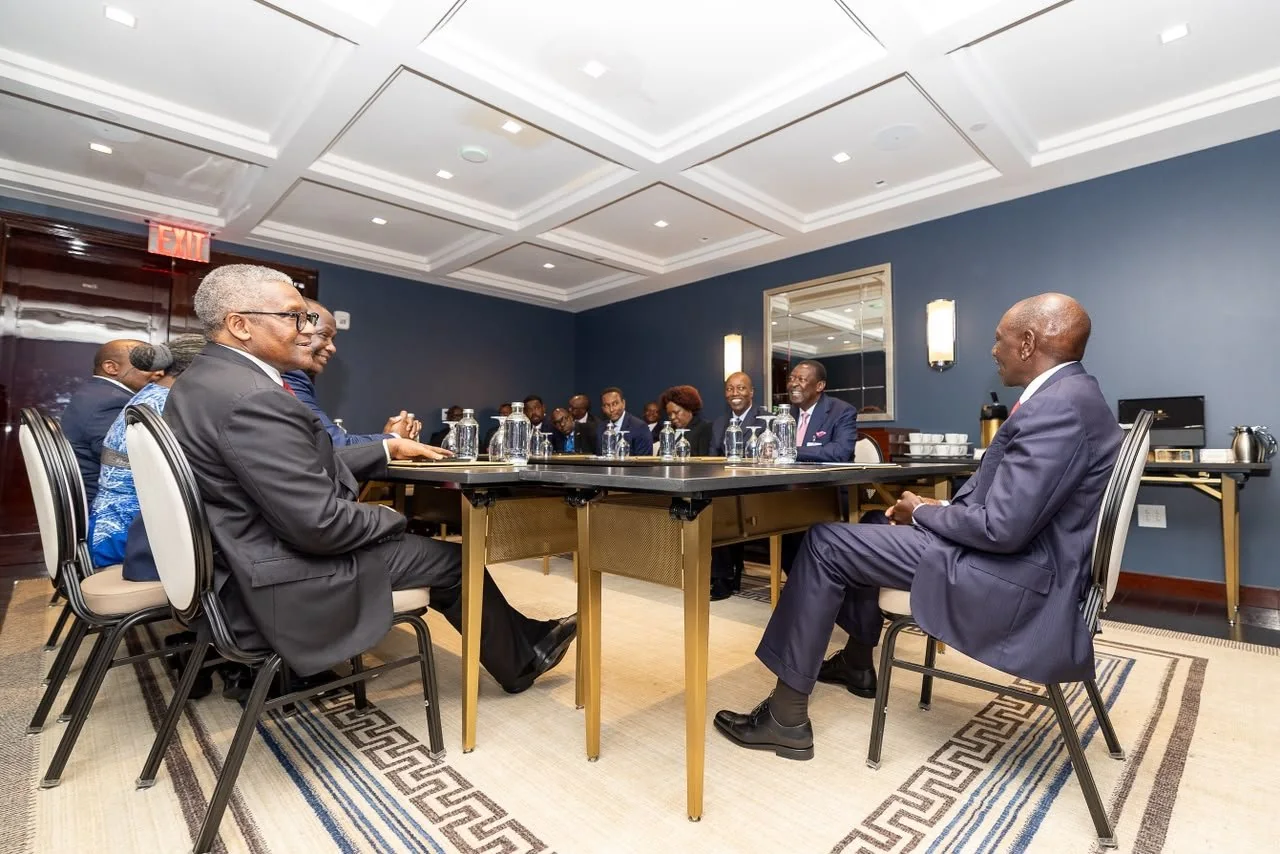
On September 21, 2026, President William Ruto addressed the "Africa We Build" high-level roundtable in New York, emphasizing the need for changes to Africa's financial regulations. He stated that Africa's challenge is no longer a shortage of capital but rather the rules determining where the money can be invested. Ruto highlighted that African non-bank domestic capital pools have surpassed $2 trillion, while pension and insurance assets have crossed $1 trillion for the first time.
According to President Ruto, African regulators, insurers, rating agencies, and financial institutions should collaborate to make local infrastructure investments more attractive to domestic investors. He cited Kenya's pension sector as an example, with the industry holding about Sh3.2 trillion, and only 0.02 percent invested in infrastructure debt. Ruto emphasized that a teacher in Eldoret, who has paid into a pension fund for twenty years, is more likely to have her savings invested in a Treasury bill than in a geothermal plant near her classroom.
President Ruto contrasted Africa's domestic capital with external concessional and commercial capital, which flowed into Africa between 2014 and 2024, totaling $1.7 trillion. He urged the financial sector to make investments in productive African assets routine rather than treating each major project as an exceptional transaction. Ruto emphasized that the continent must urgently expand its infrastructure and industrial base to meet future demand.
By 2050, Africa's population is expected to approach 2.5 billion people, and the continent must build power systems, transport networks, and industries to employ this growing population. President Ruto stated that this goal cannot be achieved one exceptional transaction at a time. He called for African risk to be assessed using actual default and recovery data, more affordable insurance for productive assets, and financial rules that do not discourage long-term investments.
To achieve these goals, President Ruto offered Kenya's data and collaboration with international financial institutions and regulators to test existing risk-rating methodologies. He aimed to determine whether these methodologies accurately reflect African realities. The Head of State emphasized the need for urgent action to address Africa's infrastructure and industrial needs.
President Ruto's call for financial rule changes aims to unlock Africa's domestic capital for infrastructure and development projects. He met with Nigerian businessman Aliko Dangote on the sidelines of the United Nations General Assembly, highlighting the importance of partnerships in achieving Africa's development goals. The President's remarks at the "Africa We Build" roundtable underscored the need for innovative solutions to Africa's financing challenges.
The Kenyan government's efforts to boost domestic investment in infrastructure and development projects align with President Ruto's vision for Africa's economic growth. By working with international partners and leveraging domestic capital, Africa can accelerate its development trajectory and achieve its goals for 2050. The President's advocacy for financial rule changes will likely continue to resonate with African leaders and international stakeholders.
Key points
- President Ruto calls for changes to Africa's financial rules to allow more local savings to finance infrastructure and development projects.
- African domestic capital pools have surpassed $2 trillion, while pension and insurance assets have crossed $1 trillion for the first time.
- The continent must urgently expand its infrastructure and industrial base to meet future demand, with a population approaching 2.5 billion people by 2050.